








À propos de nous
Si vous rencontrez des problèmes lors de l'utilisation du produit, n'hésitez pas à nous contacter


Faites défiler vers le bas

 September 05, 2026
 Les entreprises de biotechnologie travaillent fréquemment avec des partenaires externes de remplissage-finition lorsqu’un projet injectable nécessite un traitement aseptique, des équipements spécialisés ou une capacité de production flexible. Dans ce modèle opérationnel, le flacon pharmaceutique en verre sélectionné doit répondre à la fois aux exigences de conditionnement du développeur du médicament et aux conditions de la ligne de remplissage de la CDMO.
Prêt à l’emploi Flacons RTUglass peuvent simplifier une partie de cette coordination en arrivant sans lavage, sans dépyrogénation et pré-stérilisés. Cela réduit le travail de préparation des contenants requis sur le site de remplissage et permet à l’équipe projet de se concentrer sur le transfert stérile, l’intégration à la ligne de remplissage et les exigences relatives au produit pharmaceutique.
Cependant, le format RTU ne rend pas automatiquement un flacon adapté à tous les projets de remplissage externalisés. Les équipes de biotechnologie et de CDMO doivent toujours aligner la taille du flacon, le format de conditionnement RTU, l’interface avec la ligne de remplissage, la gestion de la barrière stérile, la documentation du projet et la stratégie de production future.
RTU glass vials may support fill-finish outsourcing when the CDMO operates a compatible aseptic filling process and can receive the selected Nest & Tub or Tray configuration. Final selection still requires confirmation of vial size, filling-line fit, sterile transfer, closure components and project documentation.
Un projet de remplissage et de finition externalisé ne se résume pas à l’envoi d’une formulation médicamenteuse à une unité de remplissage. Le conditionnement primaire doit passer par les étapes d’achat, de réception et de manipulation à l’arrivée, de transfert stérile, de remplissage, de bouchage, de scellage, d’inspection et de libération du produit fini.
The biotech company and CDMO may also approach the packaging decision from different perspectives.
L’équipe de biotechnologie se concentre sur :
The CDMO may focus on:
These requirements need to be aligned before the packaging order is finalized. Selecting a sterile vial only by nominal capacity or glass type may overlook how the container is presented to the CDMO’s filling line.
An Flacon en verre RTU is supplied in a filling-ready sterile packaging format. LINUO states that its RTU glass vials are delivered washing-free, depyrogenation-free and pre-sterilized for applicable aseptic filling workflows.
The published product range includes: 2R,4R,6R,8R,10R,15R,20R,25R,30R,50R
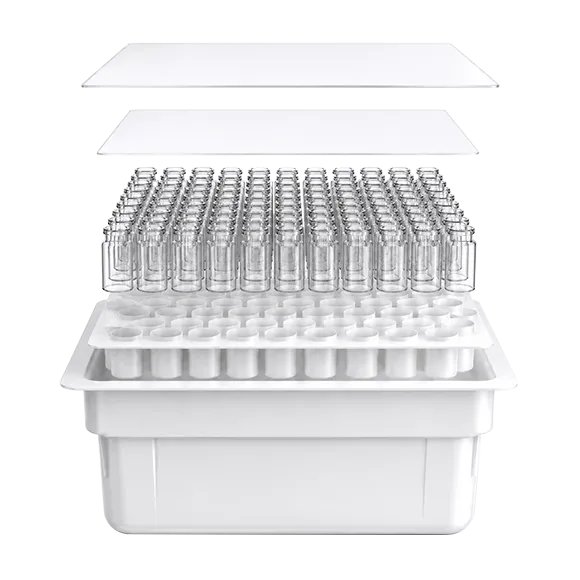
Available packaging presentations include standardized RTU Nest & Tub and RTU Tray formats.
Conventional Bulk glass vials may require the filling facility to perform container washing, depyrogenation, sterilization and associated handling according to its validated process.
Les flacons en verre RTU de LINUO sont préparés avant leur livraison. Pour un projet d’externalisation compatible, cela peut réduire la charge du CDMO liée aux éléments suivants :
This can be relevant when a biotech company uses a CDMO that is configured for filling-ready containers or when the project does not justify establishing a separate vial-preparation process.
L’externalisation peut devenir complexe lorsque les parties n’ont pas clairement défini qui est responsable de chaque activité de conditionnement.
Using an RTU format can establish a clearer starting point because vial washing, depyrogenation and terminal ETO sterilization have already been performed before delivery. The biotech company and CDMO can then focus their project discussion on the delivered RTU configuration and downstream filling operations.
The following example shows how responsibilities may be discussed. Actual responsibilities should be defined in the project agreement:
| Project activity | Biotech team | CDMO team | Vial supplier |
| Drug-product requirements | Define formulation, fill volume and project needs | Review manufacturing feasibility | Provide relevant vial information |
| Vial-size selection | Confirm product requirements | Confirm line and process suitability | Provide available sizes and specifications |
| RTU format selection | Review project strategy | Confirm Nest & Tub or Tray handling | Supply the selected available configuration |
| Sterile-barrier transfer | Review contamination-control expectations | Define receiving and transfer procedure | Provide applicable packaging information |
| Filling-line trial | Support project decisions | Perform equipment and process evaluation | Provide samples or technical information where agreed |
| Documentation relative aux lots | Define required document package | Confirm site documentation requirements | Provide applicable product and batch documents |
| Final qualification | Approve project-specific requirements | Execute site-specific qualification | Support with relevant supplier documentation |
This table is a coordination framework, not a statement that every project uses the same contractual division. Responsibilities should be documented between the participating organizations.
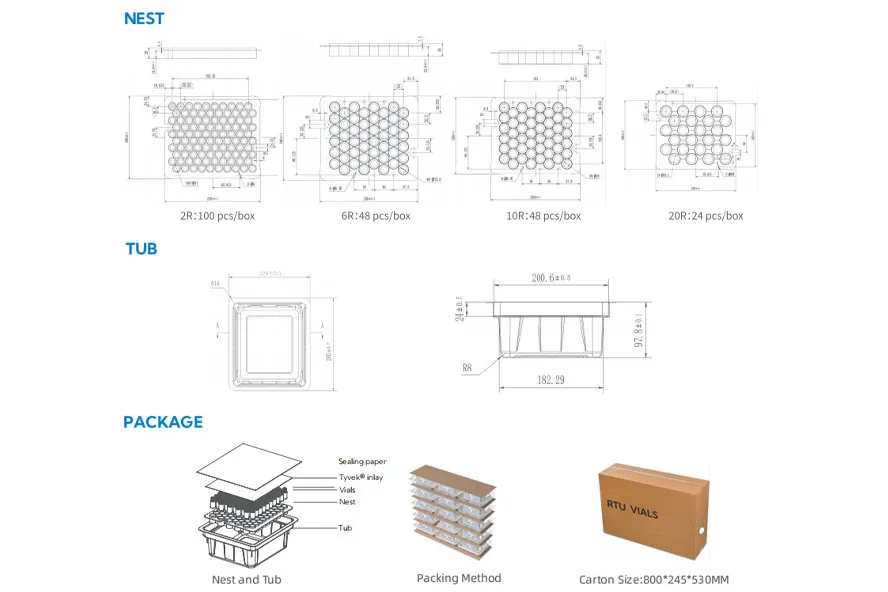
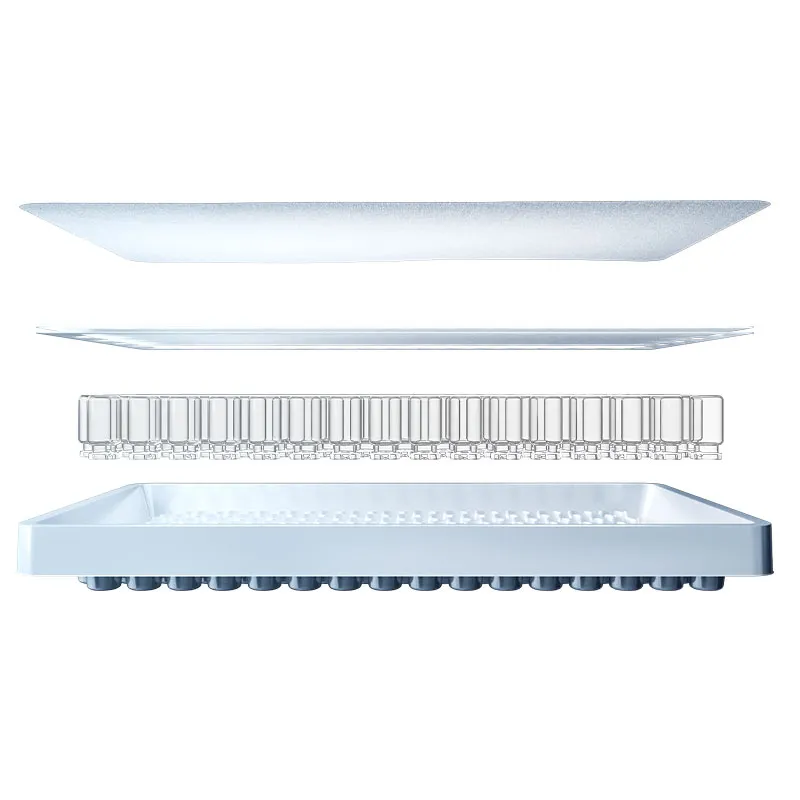
LINUO provides both RTU Nest & Tub and RTU Tray formats. The appropriate option depends on the CDMO’s filling-line configuration and handling process.
Nest & Tub packaging keeps individual vials positioned in separate cavities. LINUO states that its independent cavity suspension system prevents direct glass-to-glass contact during transport, decrating and filling-line loading.
A CDMO evaluating Nest & Tub should confirm:
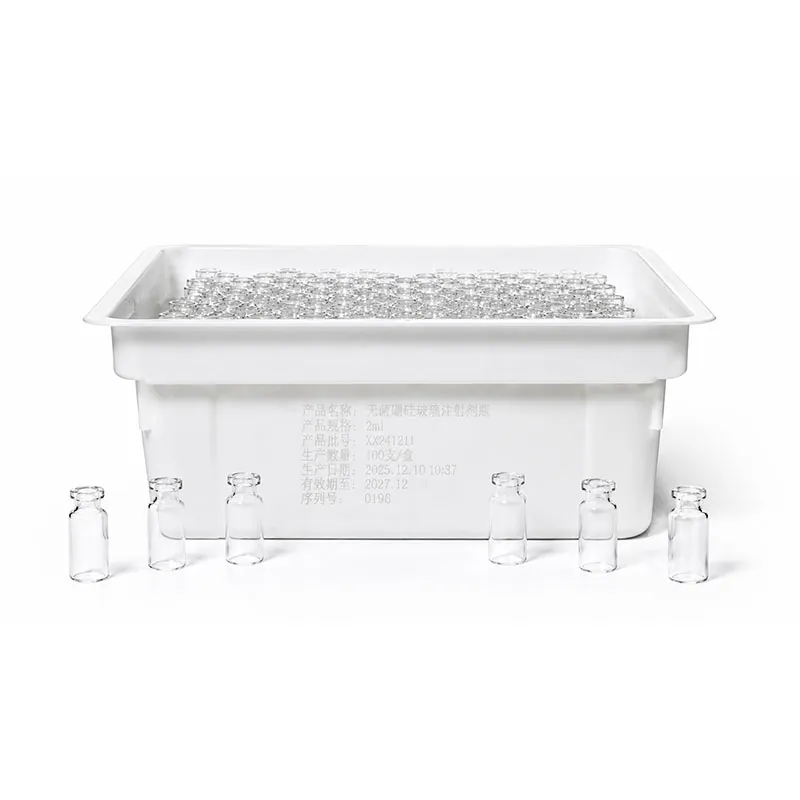
RTU Tray packaging provides another filling-ready presentation for compatible filling operations. It may be relevant when the CDMO’s equipment and material flow are designed for Tray handling.
The project team should confirm:
The CDMO should review the exact RTU configuration against its equipment and operating procedures.
The biotech company should obtain confirmation from the fill-finish partner before fixing the commercial order.
Important questions include:
LINUO describes its standardized RTU formats as designed for integration with mainstream automated filling machinery. This should not be interpreted as universal compatibility with every CDMO line. Actual equipment and project conditions still require confirmation.
Le sterile vial must pass from supplier packaging into the CDMO’s filling environment without compromising the planned contamination-control process.
LINUO’s published RTU configuration uses vacuum-sealed double-bag sterile barrier system and clean-peel technology to support transfer into Grade A/B workflows. The product page also identifies terminal ethylene oxide sterilization as the sterilization method.
Before filling, the CDMO should establish procedures for:
The existence of a sterile barrier does not define the CDMO’s entire aseptic process. The filling site remains responsible for integrating the packaging presentation into its own qualified procedures.
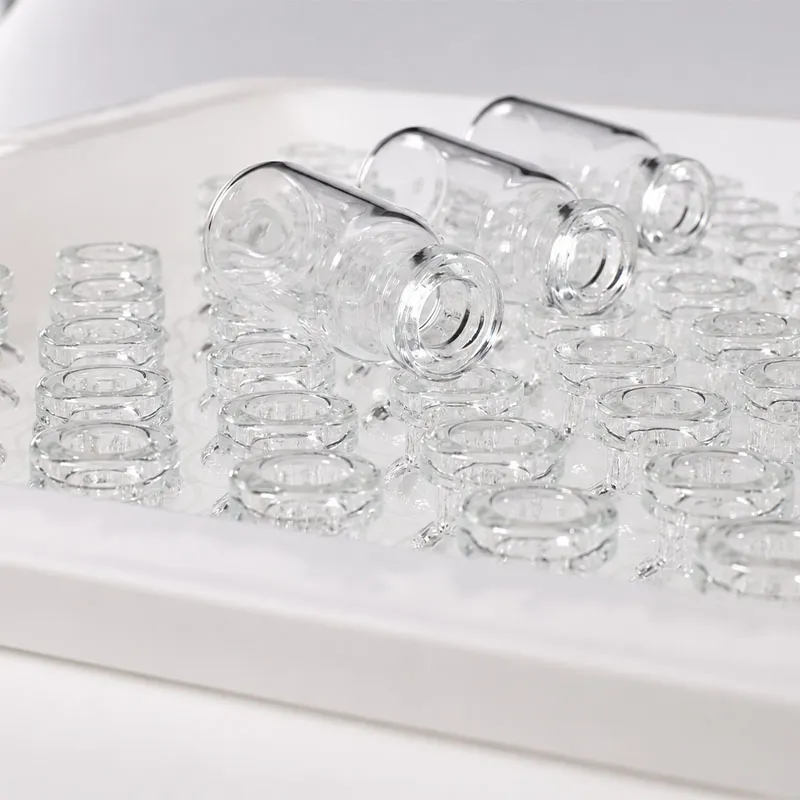
Many biotech fill-finish projects involve limited batch quantities, development materials or high-value injectable formulations. In these situations, the operational burden of establishing separate vial-preparation steps may be significant relative to the required batch size.
RTU sterile vials may be worth evaluating because they can reduce customer-side preparation and support filling-ready workflows. Nest or Tray packaging can also limit direct glass-to-glass contact during applicable transport and loading activities.
For high-value projects, teams may need to consider:
These considerations do not prove that RTU automatically reduces total project cost or product loss. The comparison must use the biotech company’s product information and the CDMO’s actual process data.
No. Filling-ready packaging removes selected preparation steps, but it does not remove project-specific evaluation.
Biotech and CDMO teams may still need to address:
The scope depends on the drug, development stage, target market and manufacturing process. Supplier information should support the project evaluation, but it cannot replace the CDMO’s site-specific work or the drug developer’s product responsibilities.
Documentation is often one of the most important coordination points in outsourced fill-finish work.
LINUO’s RTU product page identifies batch documentation, compliance support, AI inspection, Siemens MES lifecycle tracking and sterilization-related process control. The exact document package available for a selected product and batch should be confirmed directly with LINUO.
The project team should define which documents are required, such as:
Company-level certifications should not automatically be applied to every product, size or packaging configuration. The biotech company and CDMO should verify which documents correspond to the ordered RTU vial.
RTU is not automatically the correct choice for every CDMO project.
A CDMO with established, validated washing and depyrogenation infrastructure may also be able to process Bulk glass vials efficiently. A facility built around RTU systems may prefer Nest & Tub or Tray presentations.
The comparison should include the complete operating model:
| Facteur déterminant | Flacons en verre en vrac | Flacons en verre RTU |
| Container preparation | Performed according to the filling site’s process | Supplied washing-free, depyrogenation-free and pre-sterilized |
| Required infrastructure | May include washing and depyrogenation equipment | Can reduce selected customer-side preparation equipment |
| Présentation sur la ligne de remplissage | Bulk container handling | Nest & Tub or Tray |
| Sterile transfer | Defined by the site’s preparation process | Requires compatible sterile-barrier transfer |
| Small-batch suitability | Depends on available site infrastructure | May suit compatible flexible filling projects |
| Axé sur la qualification | Preparation, handling and filling | RTU packaging, sterile transfer and filling-line integration |
| Cost assessment | Container plus site preparation | RTU supply plus reduced site preparation burden |
The biotech company should request a project-specific comparison from the CDMO rather than comparing only the purchase price of empty vials.
An outsourced project may begin with a small development or clinical batch and later move toward larger production volumes. Early selection should therefore consider whether the chosen vial size and presentation can support the anticipated next stage.
Before scale-up, teams should review:
Maintaining the same RTU configuration may reduce the number of packaging variables introduced during a later transfer. However, it does not guarantee that no additional evaluation will be required. A new line, site, scale or process may still require further qualification.
A useful technical inquiry should provide enough information for both the vial supplier and CDMO to review the project.
Biotech teams can prepare:
RTU glass vials can provide a practical packaging direction for biotech companies outsourcing aseptic fill-finish operations. Washing-free, depyrogenation-free and pre-sterilized supply can reduce selected preparation requirements at a compatible CDMO site, while Nest & Tub and Tray formats offer different options for filling-line presentation.
The value of RTU depends on coordination. Biotech and CDMO teams should confirm the vial size, packaging format, filling-line interface, sterile transfer, closure process, documentation requirements and future scale-up strategy before placing an order.
LINUO fournit Flacons en verre RTU in 2R–50R sizes with Nest & Tub and Tray options. Project teams can provide their formulation category, batch size, filling-line configuration, required RTU presentation and documentation needs for technical review.
They may be suitable when the CDMO has a compatible aseptic filling line and can receive the selected Nest & Tub or Tray configuration. The final decision depends on the drug product, vial size, sterile-transfer procedure and filling process.
LINUO states that its RTU glass vials are supplied washing-free, depyrogenation-free and pre-sterilized. Its published process identifies terminal ETO sterilization.
No universal compatibility should be assumed. LINUO’s RTU formats are designed for mainstream automated filling machinery, but the exact vial, nest, tub or tray must be checked against the CDMO’s equipment.
The published range includes 2R, 4R, 6R, 8R, 10R, 15R, 20R, 25R, 30R and 50R.
No. It reduces selected container-preparation activities but does not eliminate compatibility, filling-line, closure, stability, sterile-transfer or project-documentation requirements.
Not necessarily. The comparison should include container cost, washing, WFI, depyrogenation, equipment, cleanroom space, labour, maintenance, line time, validation and batch size.
The responsible biotech and CDMO teams should align the selected vial, packaging presentation and documentation according to their project responsibilities. The vial supplier can provide relevant product information and technical support.
Nous vous répondrons dans les 24 heures. En cas d'urgence, veuillez ajouter WhatsApp/WeChat : +8618615646416, ou appeler directement le +8618615646416.
*Nous respectons votre confidentialité et toutes les informations sont protégées.
Nous utiliserons vos informations uniquement pour répondre à votre demande et n'enverrons jamais de courriels non sollicités ou de messages promotionnels.