








Über uns
Wenn Sie während der Produktnutzung Probleme haben, können Sie sich gerne an uns wenden.


Nach unten scrollen

 September 05, 2026
Biotech-Unternehmen arbeiten häufig mit externen Fill-Finish-Partnern zusammen, wenn ein Projekt für injizierbare Arzneimittel aseptische Verarbeitung, spezielle Ausrüstung oder flexible Produktionskapazitäten erfordert. In diesem Betriebsmodell muss das ausgewählte pharmazeutische Glasfläschchen sowohl die Verpackungsanforderungen des Arzneimittelentwicklers als auch die Bedingungen der Abfülllinie des CDMO erfüllen.
Gebrauchsfertig RTUglass vials can simplify part of this coordination by arriving washing-free, depyrogenation-free and pre-sterilized. This reduces the container-preparation work required at the filling site and allows the project team to focus on sterile transfer, filling-line integration and drug-product requirements.
Ein ausgelagertes Fill-Finish-Projekt umfasst mehr als das Versenden einer Arzneimittelformulierung an eine Abfüllanlage. Die Primärverpackung muss Beschaffung, Wareneingang, sterilen Transfer, Abfüllung, Stopfen, Versiegelung, Inspektion und die Freigabe des Fertigprodukts durchlaufen.
RTU glass vials may support fill-finish outsourcing when the CDMO operates a compatible aseptic filling process and can receive the selected Nest & Tub or Tray configuration. Final selection still requires confirmation of vial size, filling-line fit, sterile transfer, closure components and project documentation.
RTU macht ein Vial jedoch nicht automatisch für jedes ausgelagerte Abfüllprojekt geeignet. Biotech- und CDMO-Teams müssen weiterhin die Vialgröße, das RTU-Verpackungsformat, die Schnittstelle zur Abfülllinie, die Handhabung der Sterilbarriere, die Projektdokumentation und die künftige Produktionsstrategie aufeinander abstimmen.
The biotech company and CDMO may also approach the packaging decision from different perspectives.
Das Biotech-Team konzentriert sich auf:
RTU-Glasfläschchen können das Outsourcing der Abfüllung und Endverarbeitung unterstützen, wenn der CDMO einen kompatiblen aseptischen Abfüllprozess betreibt und die ausgewählte Nest-&-Tub- oder Tray-Konfiguration annehmen kann. Die endgültige Auswahl erfordert weiterhin die Bestätigung der Fläschchengröße, der Eignung für die Abfülllinie, des sterilen Transfers, der Verschlusskomponenten und der Projektdokumentation.
These requirements need to be aligned before the packaging order is finalized. Selecting a sterile vial only by nominal capacity or glass type may overlook how the container is presented to the CDMO’s filling line.
An RTU-Glasfläschchen is supplied in a filling-ready sterile packaging format. LINUO states that its RTU glass vials are delivered washing-free, depyrogenation-free and pre-sterilized for applicable aseptic filling workflows.
The published product range includes: 2R,4R,6R,8R,10R,15R,20R,25R,30R,50R
Available packaging presentations include standardized RTU Nest & Tub and RTU Tray formats.
Conventional Bulk glass vials may require the filling facility to perform container washing, depyrogenation, sterilization and associated handling according to its validated process.
Die RTU-Glasfläschchen von LINUO werden vor der Auslieferung vorbereitet. Bei einem kompatiblen Outsourcing-Projekt kann dies den Aufwand auf CDMO-Seite für folgende Tätigkeiten reduzieren:
Dies kann relevant sein, wenn ein Biotech-Unternehmen einen CDMO nutzt, der für abfüllfertige Behältnisse eingerichtet ist, oder wenn das Projekt die Einrichtung eines separaten Prozesses zur Fläschchenvorbereitung nicht rechtfertigt.
Outsourcing kann schwierig werden, wenn die Parteien nicht eindeutig festgelegt haben, wer für die einzelnen Verpackungsaktivitäten verantwortlich ist.
Transfer über die Sterilbarriere can establish a clearer starting point because vial washing, depyrogenation and terminal ETO sterilization have already been performed before delivery. The biotech company and CDMO can then focus their project discussion on the delivered RTU configuration and downstream filling operations.
Das folgende Beispiel zeigt, wie Zuständigkeiten besprochen werden können. Die tatsächlichen Zuständigkeiten sollten in der Projektvereinbarung festgelegt werden:
| Project activity | Biotechnologie-Team | CDMO-Team | Lieferant der Vials |
| Anforderungen an das Arzneimittel | Formulierung, Füllvolumen und Projektanforderungen festlegen | Herstellbarkeit prüfen | Relevante Informationen zu den Vials bereitstellen |
| Auswahl der Fläschchengröße | Produktanforderungen bestätigen | Confirm line and process suitability | Verfügbare Größen und Spezifikationen bereitstellen |
| Auswahl des RTU-Formats | Projektstrategie überprüfen | Confirm Nest & Tub or Tray handling | Die ausgewählte verfügbare Konfiguration bereitstellen |
| Wartung zusätzlicher Vorbereitungssysteme | Anforderungen an die Kontaminationskontrolle prüfen | Verfahren für Annahme und Transfer festlegen | Bereitstellung der zutreffenden Verpackungsinformationen |
| Versuch auf der Abfülllinie | Projektentscheidungen unterstützen | Durchführung der Anlagen- und Prozessbewertung | Vereinbarte Muster oder technische Informationen bereitstellen |
| Chargendokumentation | Erforderliches Dokumentenpaket definieren | Anforderungen an die standortspezifische Dokumentation bestätigen | Bereitstellung der zutreffenden Produkt- und Chargendokumente |
| Abschlussqualifizierung | Projektspezifische Anforderungen genehmigen | Standortspezifische Qualifizierung durchführen | Mit relevanter Lieferantendokumentation unterstützen |
Diese Tabelle dient als Koordinationsrahmen und stellt nicht fest, dass jedes Projekt dieselbe vertragliche Aufteilung verwendet. Die Verantwortlichkeiten sollten zwischen den beteiligten Organisationen dokumentiert werden.
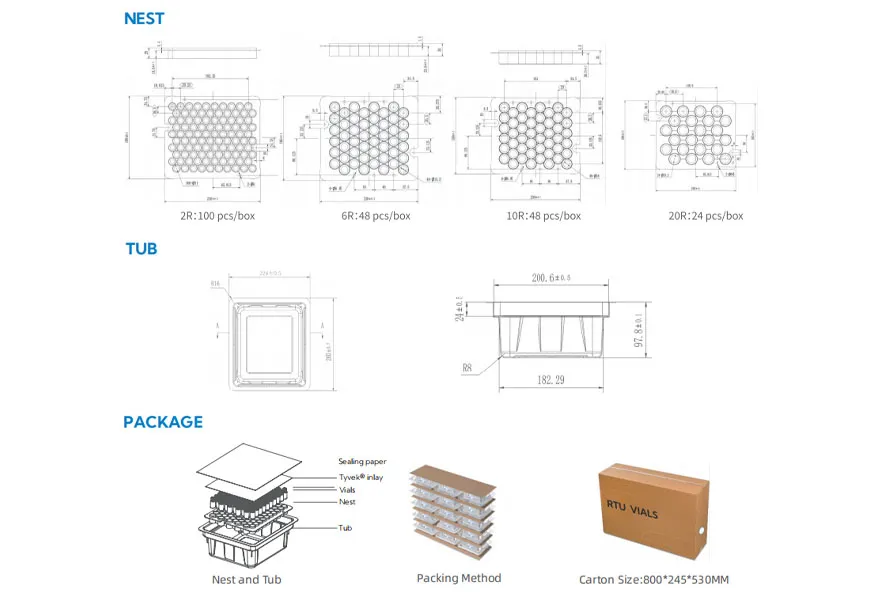
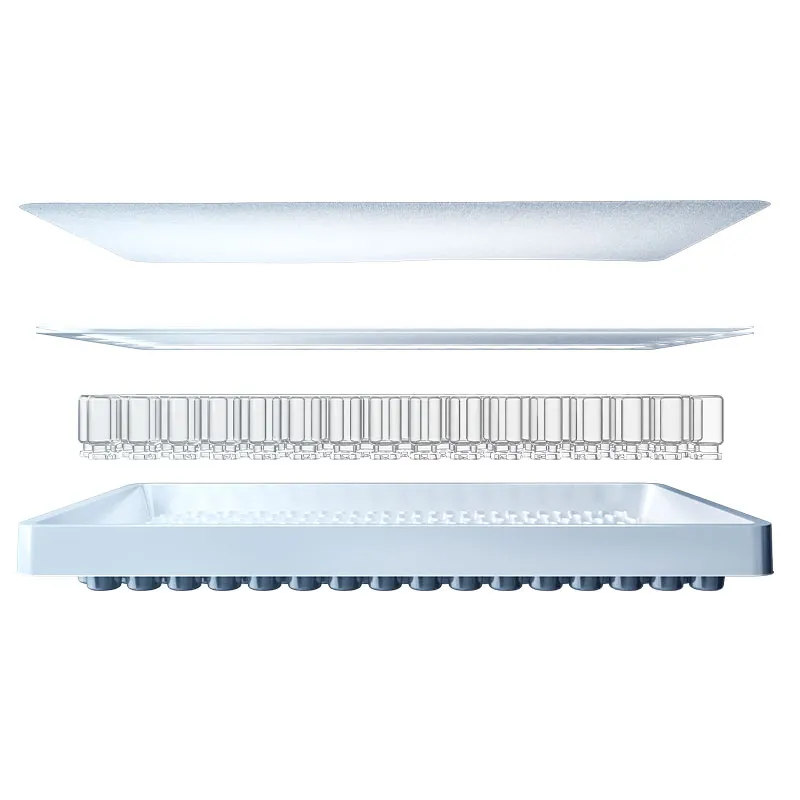
LINUO provides both RTU Nest & Tub and RTU Tray formats. The appropriate option depends on the CDMO’s filling-line configuration and handling process.
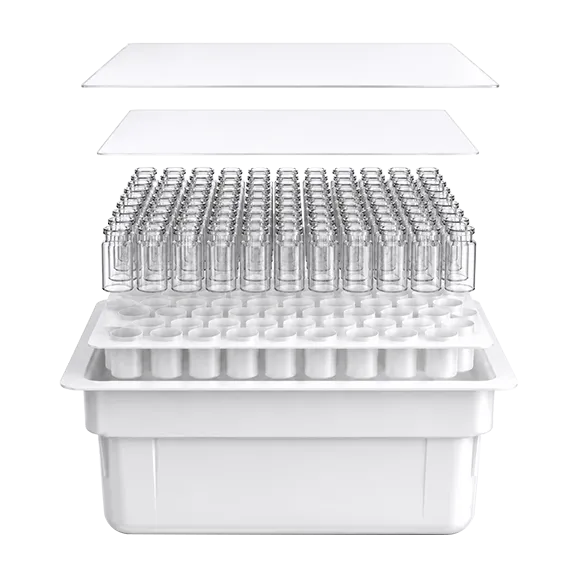
Nest & Tub packaging hält einzelne Vials in separaten Vertiefungen positioniert. LINUO gibt an dass sein unabhängiges Kavitäten-Aufhängungssystem während des Transports, der Entnestung und der Beladung der Abfülllinie einen direkten Kontakt von Glas zu Glas verhindert.
A CDMO evaluating Nest & Tub should confirm:
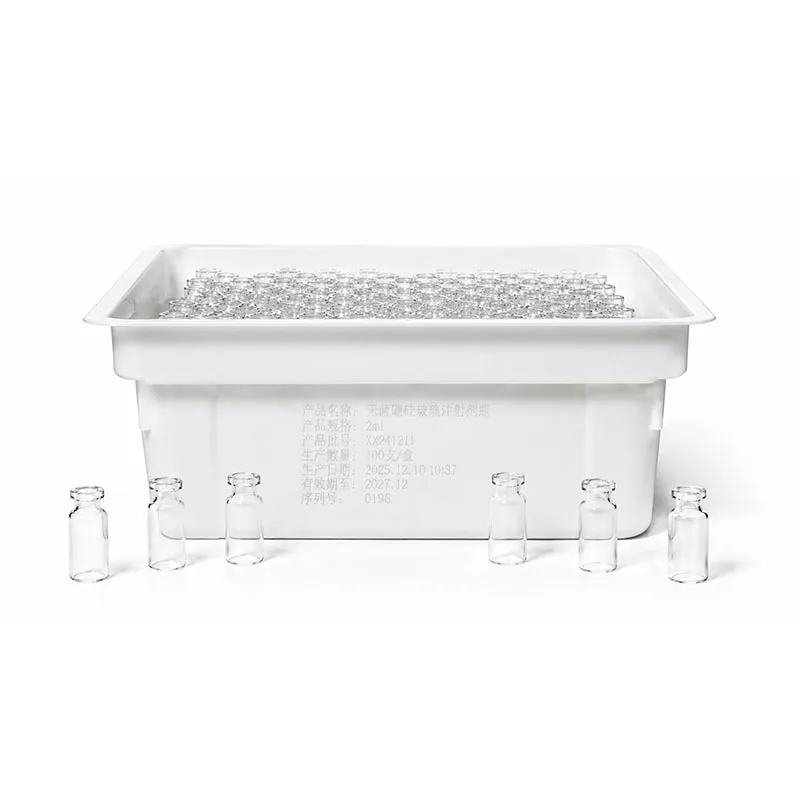
RTU-Tray-Verpackung bietet eine weitere abfüllbereite Präsentationsform für kompatible Abfüllprozesse. Sie kann relevant sein, wenn die Ausrüstung des CDMO und der Materialfluss für die Tray-Handhabung ausgelegt sind.
Das Projektteam sollte Folgendes bestätigen:
The CDMO should review the exact RTU configuration against its equipment and operating procedures.
The biotech company should obtain confirmation from the fill-finish partner before fixing the commercial order.
Zu den wichtigen Fragen gehören:
LINUO beschreibt seine standardisierten RTU-Formate als für die Integration in gängige automatisierte Abfüllanlagen konzipiert. Dies sollte nicht als universelle Kompatibilität mit jeder CDMO-Linie verstanden werden. Die tatsächlichen Anlagen- und Projektbedingungen müssen weiterhin bestätigt werden.
Das sterile vial must pass from supplier packaging into the CDMO’s filling environment without compromising the planned contamination-control process.
LINUO’s published RTU configuration uses vacuum-sealed double-bag sterile barrier system and clean-peel technology to support transfer into Grade A/B workflows. The product page also identifies terminal ethylene oxide sterilization as the sterilization method.
Before filling, the CDMO should establish procedures for:
The existence of a sterile barrier does not define the CDMO’s entire aseptic process. The filling site remains responsible for integrating the packaging presentation into its own qualified procedures.
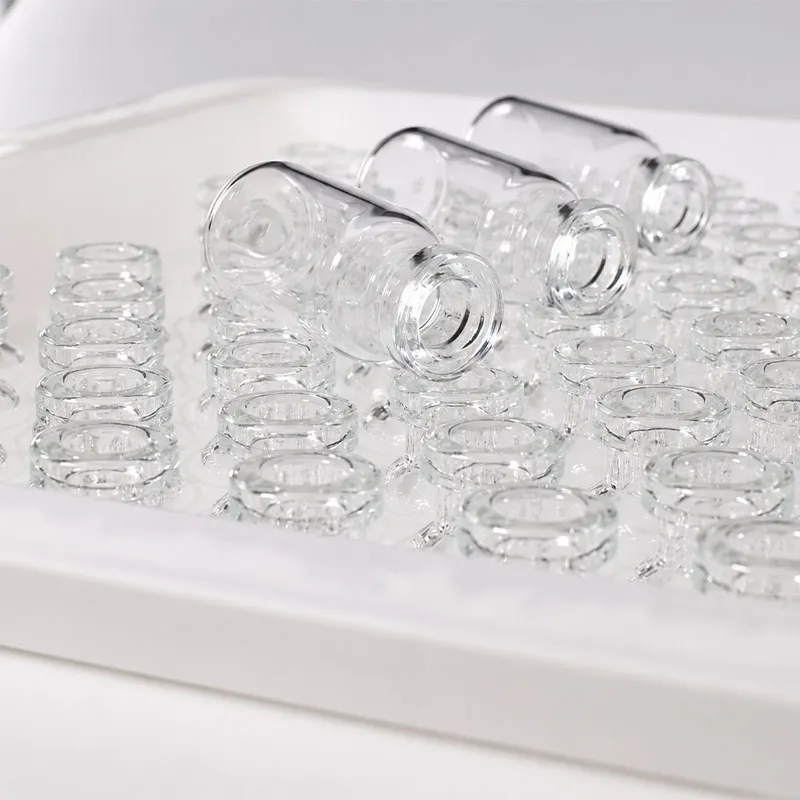
Viele Biotech-Abfüll- und Endbearbeitungsprojekte umfassen begrenzte Chargenmengen, Entwicklungs materialien oder hochwertige injizierbare Formulierungen. In diesen Situationen kann der operative Aufwand für die Einrichtung separater Schritte zur Fläschchenvorbereitung im Verhältnis zur erforderlichen Chargengröße erheblich sein.
RTU sterile vials könnten eine Prüfung wert sein, da sie die kundenseitige Vorbereitung reduzieren und befüllfertige Arbeitsabläufe unterstützen können. Eine Verpackung im Nest oder Tray kann außerdem den direkten Kontakt von Glas zu Glas während des jeweiligen Transports und der Beladevorgänge begrenzen.
Bei Projekten mit hohem Wert sollten Teams möglicherweise Folgendes berücksichtigen:
These considerations do not prove that RTU automatically reduces total project cost or product loss. The comparison must use the biotech company’s product information and the CDMO’s actual process data.
No. Filling-ready packaging removes selected preparation steps, but it does not remove project-specific evaluation.
Biotech and CDMO teams may still need to address:
The scope depends on the drug, development stage, target market and manufacturing process. Supplier information should support the project evaluation, but it cannot replace the CDMO’s site-specific work or the drug developer’s product responsibilities.
Documentation is often one of the most important coordination points in outsourced fill-finish work.
LINUO’s RTU product page identifies batch documentation, compliance support, AI inspection, Siemens MES lifecycle tracking and sterilization-related process control. The exact document package available for a selected product and batch should be confirmed directly with LINUO.
The project team should define which documents are required, such as:
Company-level certifications should not automatically be applied to every product, size or packaging configuration. The biotech company and CDMO should verify which documents correspond to the ordered RTU vial.
RTU is not automatically the correct choice for every CDMO project.
A CDMO with established, validated washing and depyrogenation infrastructure may also be able to process Bulk glass vials efficiently. A facility built around RTU systems may prefer Nest & Tub or Tray presentations.
The comparison should include the complete operating model:
| Entscheidungsfaktor | Glasfläschchen in Großmengen | RTU-Glasfläschchen |
| Container preparation | Performed according to the filling site’s process | Supplied washing-free, depyrogenation-free and pre-sterilized |
| Required infrastructure | May include washing and depyrogenation equipment | Can reduce selected customer-side preparation equipment |
| Filling-line presentation | Bulk container handling | Nest & Tub or Tray |
| Sterile transfer | Defined by the site’s preparation process | Requires compatible sterile-barrier transfer |
| Small-batch suitability | Depends on available site infrastructure | May suit compatible flexible filling projects |
| Schwerpunkt der Qualifikation | Preparation, handling and filling | RTU packaging, sterile transfer and filling-line integration |
| Cost assessment | Container plus site preparation | RTU supply plus reduced site preparation burden |
The biotech company should request a project-specific comparison from the CDMO rather than comparing only the purchase price of empty vials.
An outsourced project may begin with a small development or clinical batch and later move toward larger production volumes. Early selection should therefore consider whether the chosen vial size and presentation can support the anticipated next stage.
Before scale-up, teams should review:
Maintaining the same RTU configuration may reduce the number of packaging variables introduced during a later transfer. However, it does not guarantee that no additional evaluation will be required. A new line, site, scale or process may still require further qualification.
A useful technical inquiry should provide enough information for both the vial supplier and CDMO to review the project.
Biotech teams can prepare:
RTU glass vials can provide a practical packaging direction for biotech companies outsourcing aseptic fill-finish operations. Washing-free, depyrogenation-free and pre-sterilized supply can reduce selected preparation requirements at a compatible CDMO site, while Nest & Tub and Tray formats offer different options for filling-line presentation.
The value of RTU depends on coordination. Biotech and CDMO teams should confirm the vial size, packaging format, filling-line interface, sterile transfer, closure process, documentation requirements and future scale-up strategy before placing an order.
LINUO liefert RTU-Glasfläschchen in 2R–50R sizes with Nest & Tub and Tray options. Project teams can provide their formulation category, batch size, filling-line configuration, required RTU presentation and documentation needs for technical review.
They may be suitable when the CDMO has a compatible aseptic filling line and can receive the selected Nest & Tub or Tray configuration. The final decision depends on the drug product, vial size, sterile-transfer procedure and filling process.
LINUO states that its RTU glass vials are supplied washing-free, depyrogenation-free and pre-sterilized. Its published process identifies terminal ETO sterilization.
No universal compatibility should be assumed. LINUO’s RTU formats are designed for mainstream automated filling machinery, but the exact vial, nest, tub or tray must be checked against the CDMO’s equipment.
The published range includes 2R, 4R, 6R, 8R, 10R, 15R, 20R, 25R, 30R and 50R.
No. It reduces selected container-preparation activities but does not eliminate compatibility, filling-line, closure, stability, sterile-transfer or project-documentation requirements.
Not necessarily. The comparison should include container cost, washing, WFI, depyrogenation, equipment, cleanroom space, labour, maintenance, line time, validation and batch size.
The responsible biotech and CDMO teams should align the selected vial, packaging presentation and documentation according to their project responsibilities. The vial supplier can provide relevant product information and technical support.
Wir werden Ihnen innerhalb von 24 Stunden antworten. In dringenden Fällen fügen Sie bitte WhatsApp/WeChat hinzu: +8615953131507, oder rufen Sie direkt unter +8618615646416 an.
*Wir respektieren Ihre Vertraulichkeit und schützen alle Informationen.
Wir verwenden Ihre Informationen ausschließlich zur Beantwortung Ihrer Anfrage und werden niemals unaufgefordert E-Mails oder Werbebotschaften versenden.