








About Us
If you have any problems during product use,please feel free to contact us


Scroll Down

 05 september 2026
 Biotechbedrijven werken vaak samen met externe partners voor afvulling en afwerking wanneer een injecteerbaar project aseptische verwerking, gespecialiseerde apparatuur of flexibele productiecapaciteit vereist. Binnen dit operationele model moet de geselecteerde farmaceutische glazen injectieflacon voldoen aan zowel de verpakkingseisen van de geneesmiddelenontwikkelaar als aan de voorwaarden van de afvullijn van de CDMO.
Kant-en-klaar voor gebruik RTUglass-injectieflacons kunnen een deel van deze coördinatie vereenvoudigen doordat ze zonder wassen, depyrogenisatie en voorafgaande sterilisatie worden geleverd. Hierdoor neemt het voorbereidende werk aan de verpakkingen op de afvullocatie af en kan het projectteam zich richten op steriele overdracht, integratie met de afvullijn en vereisten voor het geneesmiddelproduct.
RTU maakt een injectieflacon echter niet automatisch geschikt voor elk uitbesteed vulproject. Biotech- en CDMO-teams moeten de injectieflacongrootte, het RTU-verpakkingsformaat, de interface met de vul lijn, de verwerking van de steriele barrière, de projectdocumentatie en de toekomstige productiestrategie nog steeds op elkaar afstemmen.
RTU-glazen injectieflacons kunnen uitbesteed fill-finish ondersteunen wanneer de CDMO een compatibel aseptisch vulproces uitvoert en de geselecteerde Nest & Tub- of Tray-configuratie kan ontvangen. De definitieve keuze vereist nog steeds bevestiging van de injectieflacongrootte, de compatibiliteit met de vul lijn, de steriele overdracht, de sluitingscomponenten en de projectdocumentatie.
Bij een uitbesteed fill-finishproject komt meer kijken dan alleen het versturen van een geneesmiddelformulering naar een afvullocatie. De primaire verpakking moet het volledige traject doorlopen van inkoop, ontvangst en verwerking, steriele overdracht, afvullen, sluiten met een stop, verzegelen, inspectie en vrijgave van het eindproduct.
Het biotechbedrijf en de CDMO kunnen de verpakkingskeuze ook vanuit verschillende perspectieven benaderen.
Het biotechteam richt zich op:
De CDMO richt zich mogelijk op:
Deze vereisten moeten op elkaar worden afgestemd voordat de verpakkingsbestelling wordt afgerond. Als een steriele injectieflacon uitsluitend op basis van de nominale capaciteit of het glastype wordt geselecteerd, kan over het hoofd worden gezien hoe de verpakking aan de afvullijn van de CDMO wordt aangeleverd.
An RTU-glazen flacon is supplied in a filling-ready sterile packaging format. LINUO states that its RTU glass vials are delivered washing-free, depyrogenation-free and pre-sterilized for applicable aseptic filling workflows.
Het gepubliceerde productassortiment omvat: 2R,4R,6R,8R,10R,15R,20R,25R,30R,50R
Beschikbare verpakkingsvormen omvatten gestandaardiseerde RTU Nest & Tub and RTU Tray formaten.
Conventional Bulk glass vials may require the filling facility to perform container washing, depyrogenation, sterilization and associated handling according to its validated process.
De RTU-glazen injectieflacons van LINUO worden vóór levering klaargemaakt. Voor een compatibel uitbesteed project kan dit de werklast aan CDMO-zijde verminderen die verband houdt met:
Dit kan relevant zijn wanneer een biotechbedrijf een CDMO gebruikt die is ingericht voor het afvullen van gebruiksklare containers, of wanneer het project het opzetten van een afzonderlijk proces voor de voorbereiding van flesjes niet rechtvaardigt.
Uitbesteding kan lastig worden wanneer de partijen niet duidelijk hebben vastgelegd wie verantwoordelijk is voor elke verpakkingsactiviteit.
Een RTU-formaat gebruiken kan een duidelijker uitgangspunt bieden omdat het wassen en depyrogeneren van de flacons en de terminale ETO-sterilisatie al vóór levering zijn uitgevoerd. Het biotechbedrijf en de CDMO kunnen hun projectbespreking vervolgens richten op de geleverde RTU-configuratie en de daaropvolgende vulprocessen.
Het volgende voorbeeld laat zien hoe de verantwoordelijkheden kunnen worden besproken. De daadwerkelijke verantwoordelijkheden moeten in de projectovereenkomst worden vastgelegd:
| Projectactiviteit | Biotechteam | Inspectieproces | Leverancier van injectieflacons |
| Drug-product requirements | Formulering, vulvolume en projectbehoeften definiëren | Beoordeel de haalbaarheid van de productie | Verstrek relevante informatie over de injectieflacons |
| Vial-size selection | Confirm product requirements | Bevestig de geschiktheid van de lijn en het proces | Geef de beschikbare formaten en specificaties op |
| RTU format selection | Review project strategy | Confirm Nest & Tub or Tray handling | Supply the selected available configuration |
| Overdracht via een steriele barrière | Review contamination-control expectations | Define receiving and transfer procedure | Provide applicable packaging information |
| Filling-line trial | Support project decisions | Perform equipment and process evaluation | Monsters of technische informatie verstrekken waar overeengekomen |
| Batch documentation | Define required document package | Confirm site documentation requirements | Provide applicable product and batch documents |
| Final qualification | Projectspecifieke vereisten goedkeuren | Locatiespecifieke kwalificatie uitvoeren | Support with relevant supplier documentation |
This table is a coordination framework, not a statement that every project uses the same contractual division. Responsibilities should be documented between the participating organizations.
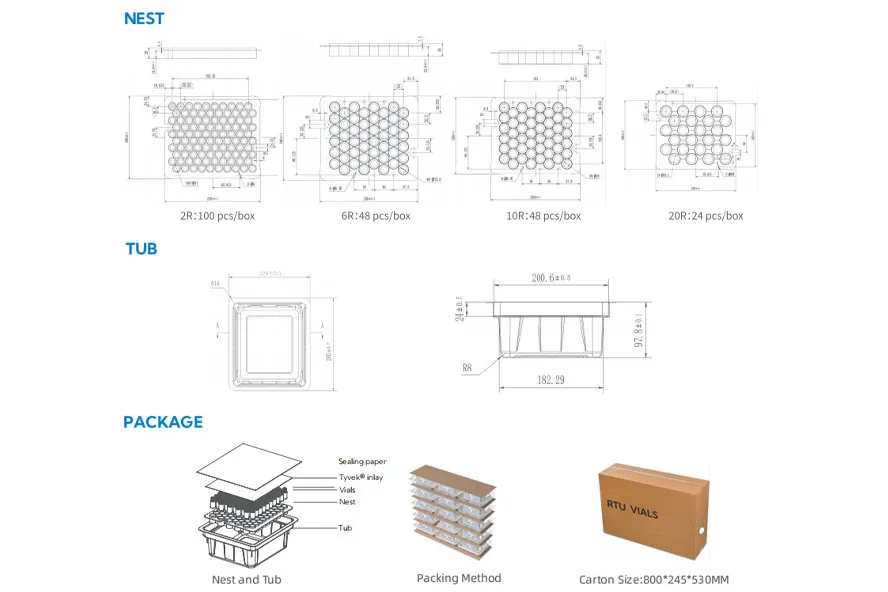
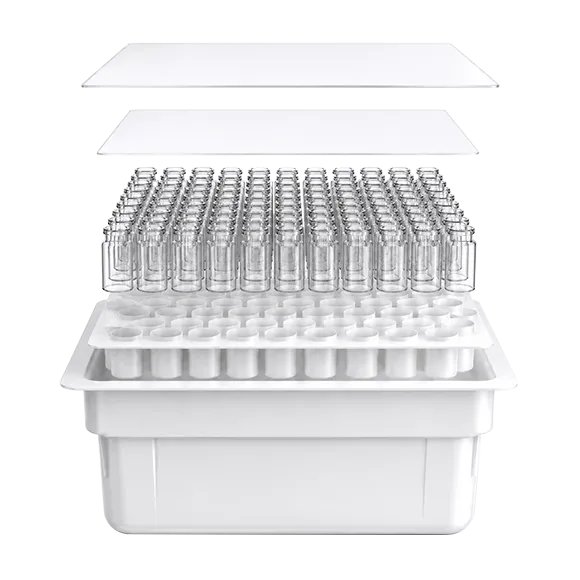
LINUO provides both RTU Nest & Tub and RTU Tray formats. The appropriate option depends on the CDMO’s filling-line configuration and handling process.
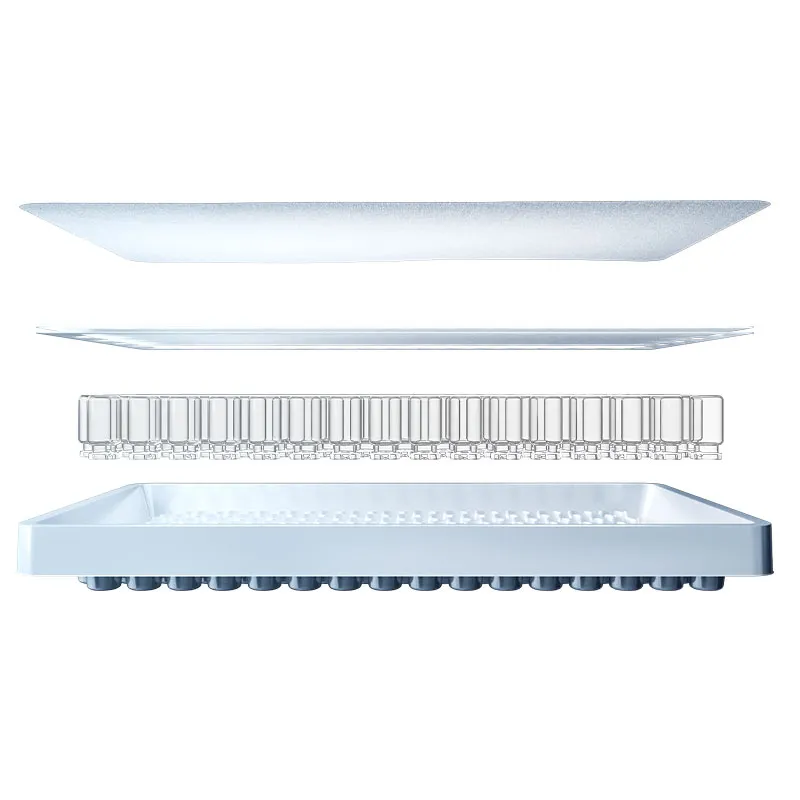
Nest & Tub packaging keeps individual vials positioned in separate cavities. LINUO states that its independent cavity suspension system prevents direct glass-to-glass contact during transport, decrating and filling-line loading.
A CDMO evaluating Nest & Tub should confirm:
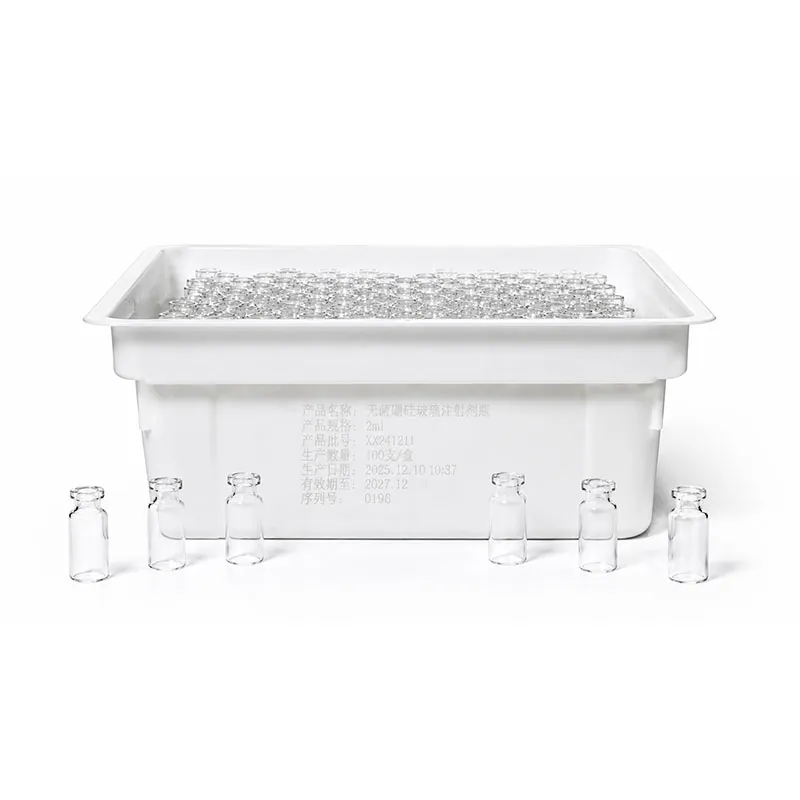
RTU Tray packaging provides another filling-ready presentation for compatible filling operations. It may be relevant when the CDMO’s equipment and material flow are designed for Tray handling.
The project team should confirm:
The CDMO should review the exact RTU configuration against its equipment and operating procedures.
The biotech company should obtain confirmation from the fill-finish partner before fixing the commercial order.
Important questions include:
LINUO describes its standardized RTU formats as designed for integration with mainstream automated filling machinery. This should not be interpreted as universal compatibility with every CDMO line. Actual equipment and project conditions still require confirmation.
The sterile vial must pass from supplier packaging into the CDMO’s filling environment without compromising the planned contamination-control process.
LINUO’s published RTU configuration uses vacuum-sealed double-bag sterile barrier system and clean-peel technology to support transfer into Grade A/B workflows. The product page also identifies terminal ethylene oxide sterilization as the sterilization method.
Before filling, the CDMO should establish procedures for:
The existence of a sterile barrier does not define the CDMO’s entire aseptic process. The filling site remains responsible for integrating the packaging presentation into its own qualified procedures.
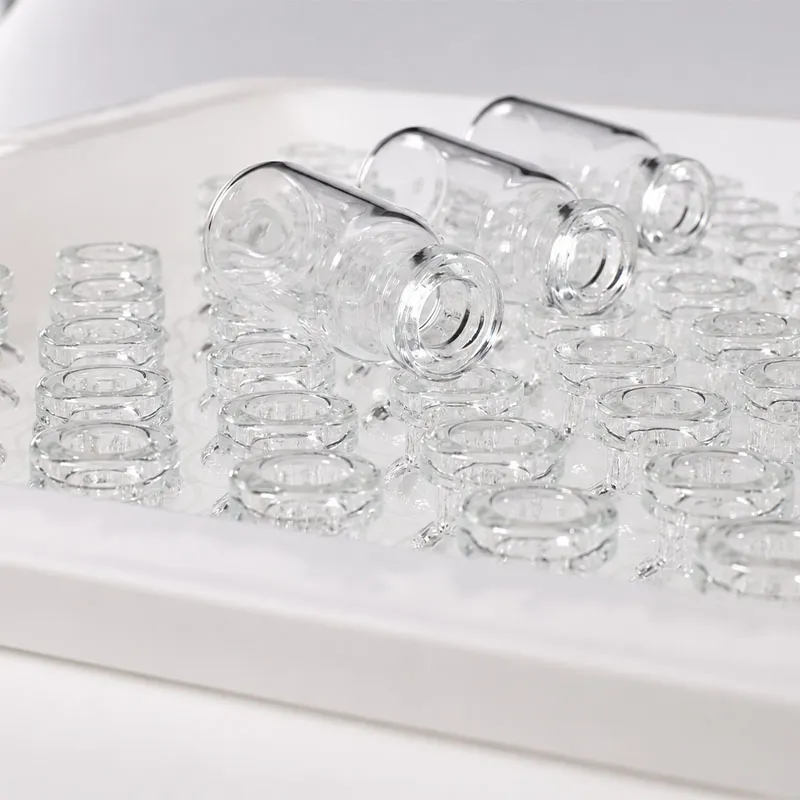
Many biotech fill-finish projects involve limited batch quantities, development materials or high-value injectable formulations. In these situations, the operational burden of establishing separate vial-preparation steps may be significant relative to the required batch size.
RTU sterile vials may be worth evaluating because they can reduce customer-side preparation and support filling-ready workflows. Nest or Tray packaging can also limit direct glass-to-glass contact during applicable transport and loading activities.
For high-value projects, teams may need to consider:
These considerations do not prove that RTU automatically reduces total project cost or product loss. The comparison must use the biotech company’s product information and the CDMO’s actual process data.
No. Filling-ready packaging removes selected preparation steps, but it does not remove project-specific evaluation.
Biotech and CDMO teams may still need to address:
The scope depends on the drug, development stage, target market and manufacturing process. Supplier information should support the project evaluation, but it cannot replace the CDMO’s site-specific work or the drug developer’s product responsibilities.
Documentation is often one of the most important coordination points in outsourced fill-finish work.
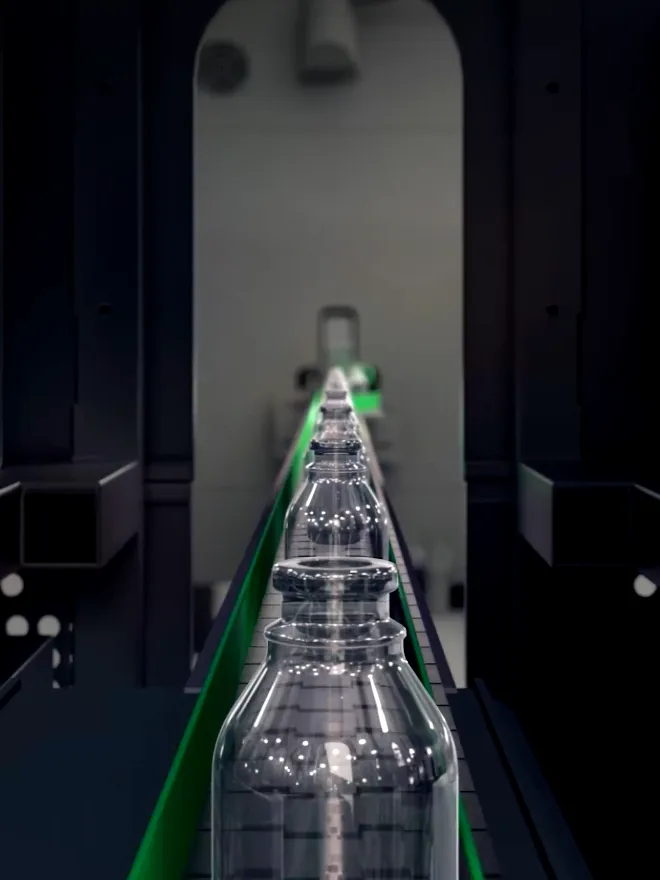
LINUO’s RTU product page identifies batch documentation, compliance support, AI inspection, Siemens MES lifecycle tracking and sterilization-related process control. The exact document package available for a selected product and batch should be confirmed directly with LINUO.
The project team should define which documents are required, such as:
Company-level certifications should not automatically be applied to every product, size or packaging configuration. The biotech company and CDMO should verify which documents correspond to the ordered RTU vial.
RTU is not automatically the correct choice for every CDMO project.
A CDMO with established, validated washing and depyrogenation infrastructure may also be able to process Bulk glass vials efficiently. A facility built around RTU systems may prefer Nest & Tub or Tray presentations.
The comparison should include the complete operating model:
| Decision factor | Bulk glass vials | RTU glass vials |
| Container preparation | Performed according to the filling site’s process | Supplied washing-free, depyrogenation-free and pre-sterilized |
| Required infrastructure | May include washing and depyrogenation equipment | Can reduce selected customer-side preparation equipment |
| Presentatie aan de vullijn | Bulk container handling | Nest & Tub or Tray |
| Sterile transfer | Defined by the site’s preparation process | Requires compatible sterile-barrier transfer |
| Small-batch suitability | Depends on available site infrastructure | May suit compatible flexible filling projects |
| Qualification focus | Preparation, handling and filling | RTU packaging, sterile transfer and filling-line integration |
| Cost assessment | Container plus site preparation | RTU supply plus reduced site preparation burden |
The biotech company should request a project-specific comparison from the CDMO rather than comparing only the purchase price of empty vials.
An outsourced project may begin with a small development or clinical batch and later move toward larger production volumes. Early selection should therefore consider whether the chosen vial size and presentation can support the anticipated next stage.
Before scale-up, teams should review:
Maintaining the same RTU configuration may reduce the number of packaging variables introduced during a later transfer. However, it does not guarantee that no additional evaluation will be required. A new line, site, scale or process may still require further qualification.
A useful technical inquiry should provide enough information for both the vial supplier and CDMO to review the project.
Biotech teams can prepare:
RTU glass vials can provide a practical packaging direction for biotech companies outsourcing aseptic fill-finish operations. Washing-free, depyrogenation-free and pre-sterilized supply can reduce selected preparation requirements at a compatible CDMO site, while Nest & Tub and Tray formats offer different options for filling-line presentation.
The value of RTU depends on coordination. Biotech and CDMO teams should confirm the vial size, packaging format, filling-line interface, sterile transfer, closure process, documentation requirements and future scale-up strategy before placing an order.
LINUO supplies RTU glass vials in 2R–50R sizes with Nest & Tub and Tray options. Project teams can provide their formulation category, batch size, filling-line configuration, required RTU presentation and documentation needs for technical review.
They may be suitable when the CDMO has a compatible aseptic filling line and can receive the selected Nest & Tub or Tray configuration. The final decision depends on the drug product, vial size, sterile-transfer procedure and filling process.
LINUO states that its RTU glass vials are supplied washing-free, depyrogenation-free and pre-sterilized. Its published process identifies terminal ETO sterilization.
No universal compatibility should be assumed. LINUO’s RTU formats are designed for mainstream automated filling machinery, but the exact vial, nest, tub or tray must be checked against the CDMO’s equipment.
The published range includes 2R, 4R, 6R, 8R, 10R, 15R, 20R, 25R, 30R and 50R.
No. It reduces selected container-preparation activities but does not eliminate compatibility, filling-line, closure, stability, sterile-transfer or project-documentation requirements.
Not necessarily. The comparison should include container cost, washing, WFI, depyrogenation, equipment, cleanroom space, labour, maintenance, line time, validation and batch size.
The responsible biotech and CDMO teams should align the selected vial, packaging presentation and documentation according to their project responsibilities. The vial supplier can provide relevant product information and technical support.
Wij antwoorden u binnen 24 uur. Is uw vraag dringend? Voeg ons dan toe via WhatsApp/WeChat: +8618615646416, of bel rechtstreeks naar +8618615646416.
*We respecteren uw vertrouwelijkheid en beschermen al uw gegevens.
We zullen uw gegevens uitsluitend gebruiken om op uw vraag te reageren en zullen nooit ongevraagde e-mails of promotionele berichten sturen.