









О нас
Если у вас возникнут какие-либо проблемы при использовании продукции, пожалуйста, свяжитесь с нами.


Прокрутите вниз

 21 августа 2026 года
 Selecting pharmaceutical glass packaging only by container size can create problems with formulation compatibility, aseptic filling, lyophilization, device assembly and downstream processing. Biologics, vaccines, lyophilized powders, small-molecule injectables and medical aesthetic products have different requirements, so their packaging must be evaluated separately.
Pharmaceutical glass packaging should be selected according to the drug formulation, dosage form, delivery device, filling process, sterilization requirements and target market. LINUO’s portfolio includes tubular and molded glass vials, RTU vials, standard and RTU cartridges, ampoules, PFS-related solutions, pharmaceutical glass tubing, rubber stoppers and caps.
Pharmaceutical primary packaging is not simply a container used to hold a drug. It forms part of the drug–container system and must work with the formulation, closure, filling line and intended method of administration.
For example, a liquid small-molecule injection filled and sealed in an ampoule has different packaging requirements from a lyophilized drug stored in a stoppered vial. A cartridge used in an injection pen must meet dimensional and functional requirements that are not relevant to a conventional vial. An RTU container must also match the customer’s aseptic filling workflow and handling format.
The main factors that influence packaging selection include:
No packaging format should be selected solely from a general application recommendation. The final choice must be evaluated against the specific formulation, closure system, manufacturing process and regulatory requirements.
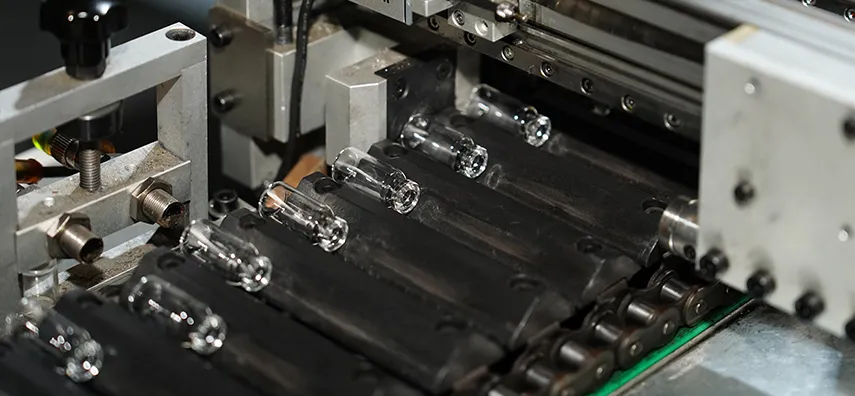
LINUO provides multiple pharmaceutical glass packaging formats for different drug and delivery applications.
| Packaging format | Main application direction | Important selection consideration |
| Tubular glass vial | Biologics, vaccines, injectable drugs and lyophilized formulations | Glass type, dimensions, stopper fit and filling or freeze-drying process |
| RTU glass vial | Aseptic filling projects requiring filling-ready containers | RTU format, filling-line integration, sterile barrier packaging and release documents |
| Molded glass bottle or vial | Injections, infusion, vaccines, biologics and lyophilized formulations | Volume, glass type, mechanical requirements, neck finish and closure |
| Glass ampoule | Liquid injections, vaccines, biologics and selected cosmetic formulations | Ampoule form, volume, glass color, breaking system and line compatibility |
| Glass cartridge | Insulin, GLP-1, peptides, biologics and dental anesthetics | Pen-system dimensions, piston movement, siliconization and closure compatibility |
| RTU glass cartridge | Aseptic filling for cartridge-based delivery systems | Nest & Tub format, siliconization, sterilization and device compatibility |
| PFS-related solution | Selected vaccines, biologics and aesthetic injectables | Dose presentation, syringe system, component compatibility and filling process |
| Rubber stopper and cap | Stoppered vial packaging systems | Vial neck, formulation, sealing performance and sterilization process |
This table provides an initial application direction. It does not replace formulation-specific compatibility studies or filling-line verification.
Biologics and peptide formulations may require careful consideration of hydrolytic resistance, chemical interaction, surface characteristics and the overall container-closure system.
LINUO recommends Type I borosilicate glass vials, cartridges and PFS-related solutions for recombinant proteins and peptides. For antibody drugs such as monoclonal antibodies and ADCs, its application information identifies RTU vials, cartridges and PFS solutions as possible packaging directions.
The appropriate format depends partly on the delivery method:
For biologics, the packaging decision should not be based on glass type alone. The customer must also evaluate the formulation, contact materials, surface treatment, stopper or plunger, storage conditions and delivery device.
LINUO can provide relevant material and product information to support customer assessments, but the final compatibility evaluation must be based on the customer’s specific formulation and packaging system.
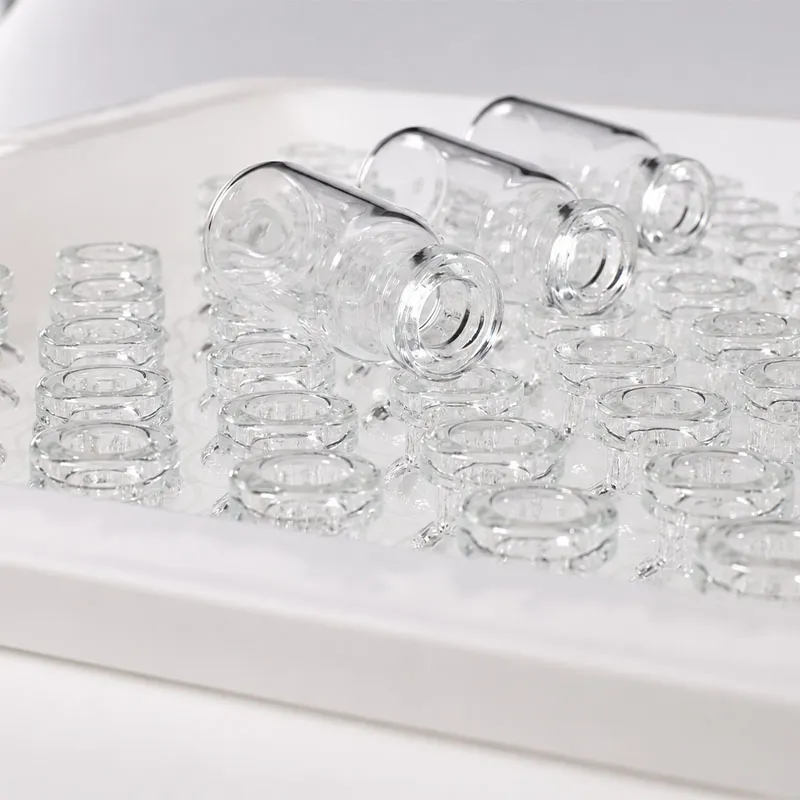
LINUO identifies tubular vials, ampoules and molded vials as packaging options for vaccine and blood-product projects.
The appropriate format depends on factors such as dose presentation, filling volume, production scale, closure design and whether the packaging is intended for conventional or aseptic RTU filling.
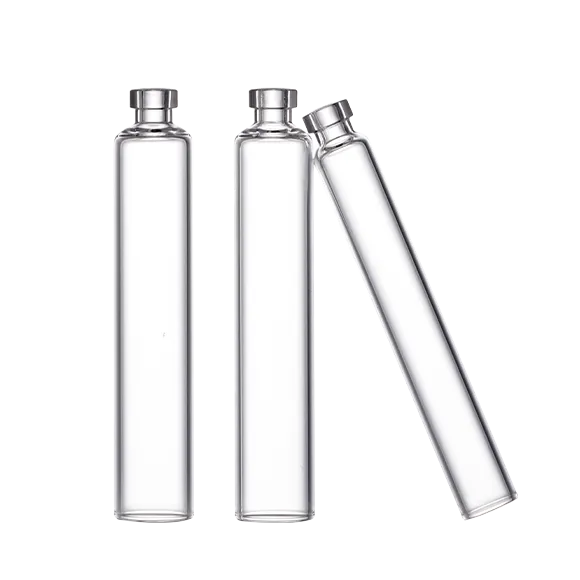
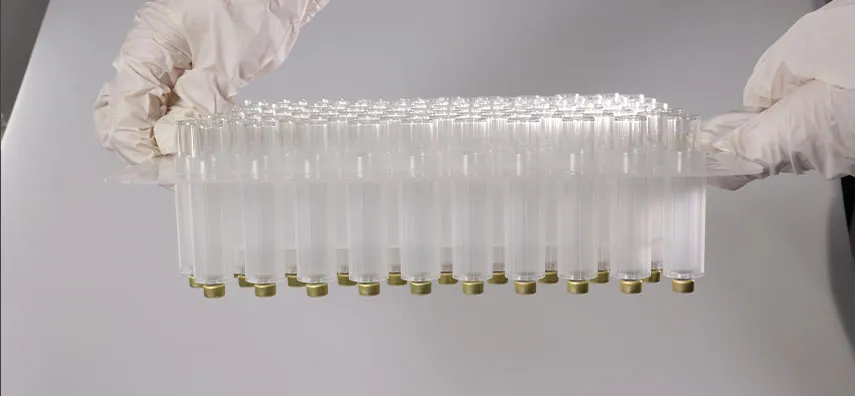
Tubular glass vials provide controlled dimensions for pharmaceutical filling and closure processes. When customers require filling-ready containers, LINUO’s RTU glass vials are supplied in Nest & Tub or Tray formats for integration into applicable aseptic filling workflows.
LINUO’s molded pharmaceutical glass portfolio covers injection vials and larger-volume bottle formats. The range includes clear and amber glass options and supports applications such as injections, infusion, vaccines and biologics.
LINUO’s Type I borosilicate ampoules are available in Form B, Form C and Form D, with OPC and CBR opening systems. They can be considered for applicable liquid vaccine or injectable projects when an ampoule format matches the formulation, dose and filling process.
The final vaccine packaging system must be selected according to the formulation, dose configuration, closure, filling process and required regulatory documentation. A general vaccine application statement does not establish compatibility with every vaccine formulation.
Lyophilized drug production exposes the vial and closure system to processing conditions that differ from those of conventional liquid filling.
LINUO recommends tubular glass vials with compatible rubber stoppers for lyophilized chemical powders. Its glass vial portfolio includes lyophilization-oriented designs with flat-bottom geometry and applicable blowback neck configurations.
When selecting packaging for a lyophilized formulation, pharmaceutical manufacturers should evaluate:
LINUO’s molded injection vial range also includes freeze-dry-ready product options. However, tubular and molded vials are not interchangeable solely because both may be used for lyophilization. The final selection depends on the required dimensions, processing equipment, glass specification, closure system and project-specific performance requirements.
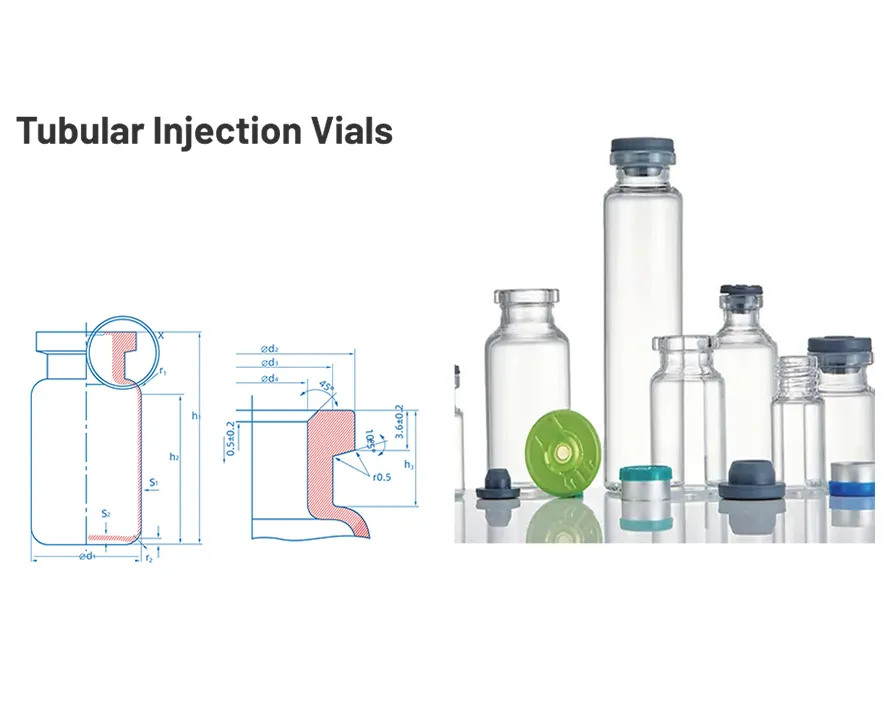
LINUO identifies ampoules and tubular glass vials as packaging directions for small-molecule chemical injectables.
Ампулы are commonly considered when a project requires a sealed glass presentation for a liquid injectable. LINUO manufactures Type I borosilicate glass ampoules in Form B, Form C and Form D, with clear and amber options.
Its ampoule range also provides:
Tubular vials provide another option when the drug is intended for a stoppered and capped packaging system. They may also be selected when the project requires a vial format for filling, closure or subsequent handling.
The decision between an ampoule and a vial should therefore consider the formulation, dose, opening or closure method, filling line and intended clinical use—not simply the drug’s classification as a small molecule.
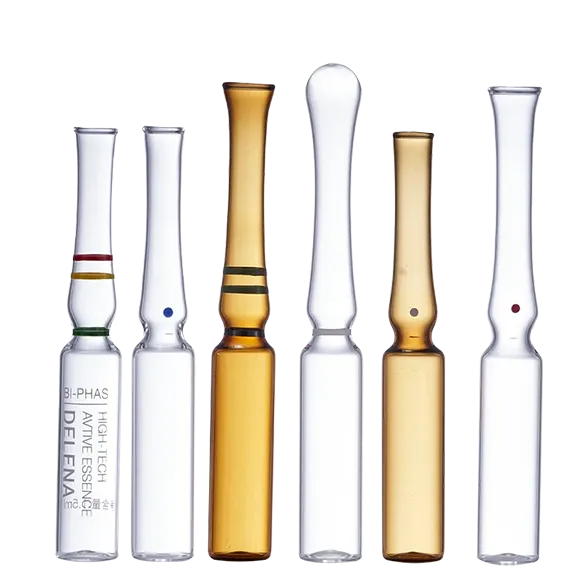
A glass cartridge must function as part of a complete drug-delivery system. Its dimensions, mouth geometry, inner surface, plunger movement and closure components can affect assembly and delivery performance.
LINUO’s Type I borosilicate стеклянные картриджи are designed for cartridge-based systems such as disposable and reusable injection pens. The company identifies insulin, GLP-1 therapies, peptides, biologics and dental local anesthetics among the main cartridge application areas.
Important selection factors include:
LINUO offers standard precision, dual-chamber and RTU cartridge series. RTU cartridges are available in Nest & Tub packaging for applicable aseptic filling projects.
A cartridge should not be described as compatible with every pen or injection device without verification. The customer’s device design, component combination and technical drawings must be reviewed before final selection.
Medical aesthetic products can use different packaging formats depending on the formulation and administration method.
LINUO’s application information identifies RTU vials and PFS-related solutions for aesthetic injectable projects. Its broader product information also associates high-precision cartridges and PFS solutions with applications such as hyaluronic acid fillers, botulinum toxin and recombinant collagen.
The packaging direction should follow the intended delivery format:
RTU vials may be considered for applicable products filled into a vial and withdrawn before administration.
PFS-related solutions may be considered for products intended as prefilled single-dose presentations.
Cartridges may be evaluated when the product is administered through a compatible cartridge-based device.
Ampoules may be considered for applicable liquid formulations or high-concentration cosmetic products when an ampoule presentation is suitable.
Medical aesthetic packaging may also require product identification, printing, laser coding or branding. These visual requirements must remain secondary to formulation compatibility, sealing performance, dose presentation and the intended administration system.
RTU packaging is relevant when the customer’s filling strategy requires clean, sterilized and filling-ready primary packaging.
LINUO supplies RTU glass vials and RTU glass cartridges. Its RTU vial portfolio is available in Nest & Tub and Tray formats, while RTU cartridges are available in Nest & Tub packaging for applicable cartridge-based filling processes.
According to LINUO’s published information, RTU formats can reduce the need for customer-side steps and infrastructure associated with:
RTU packaging does not eliminate the customer’s responsibility for aseptic process design, incoming qualification, filling-line validation or final product release. Pharmaceutical manufacturers must confirm the RTU format, sterilization method, sterile barrier configuration, equipment interface and documentation for the specific project.
Standard bulk packaging may remain suitable when the manufacturer already operates validated washing, depyrogenation and sterilization processes or when the selected filling line is configured for bulk containers.
LINUO focuses on pharmaceutical-grade glass, including Type I neutral borosilicate glass for products such as tubular vials, ampoules and cartridges. Its molded glass portfolio includes Type I, Type II and Type III options for different pharmaceutical packaging applications.
Glass selection should be based on the formulation, route of administration, applicable pharmacopoeial requirements and compatibility evaluation.
LINUO also provides clear and amber glass options on relevant product lines. Amber glass may be considered when light protection is part of the product’s packaging requirements, but the required level of protection must be confirmed for the formulation.
Selected product lines also offer surface-treatment or siliconization options. These may support particular container or drug-delivery requirements, but These treatments may change the product-contact interface or introduce an additional product-contact material, so they must be evaluated as part of the final packaging system.
A vial should not be evaluated only as an individual glass container. Its rubber stopper, cap and sealing process must also be considered as part of the complete container-closure system.A cartridge must work with its piston, plunger, cap and delivery device.
LINUO supplies pharmaceutical rubber stoppers and caps alongside its glass packaging portfolio. This allows customers to discuss the container and closure components within the same packaging project.
The evaluation should consider:
The availability of matching components does not itself prove compatibility. Component combinations must be confirmed according to customer specifications and the intended drug product.
Before recommending a packaging format, the supplier and pharmaceutical manufacturer should define the project requirements clearly.
LINUO’s technical support covers packaging material selection based on the formulation, filling process and required performance. Customers should prepare information such as:
This information helps narrow the initial product range. Final approval still depends on technical review, customer testing and project-specific qualification.
LINUO’s pharmaceutical glass packaging portfolio covers standard and RTU vials, standard and RTU cartridges, molded pharmaceutical bottles, ampoules, PFS-related solutions, pharmaceutical glass tubing, rubber stoppers and caps.
Its technical team can support packaging selection according to the formulation, filling process and performance requirements. LINUO also provides product specifications, material information, testing documents and other quality documentation according to the selected product and project.
The company’s CNAS-accredited laboratory supports pharmaceutical packaging testing and quality evaluation. The exact test scope, document package, registration status and standards applicable to a product must be confirmed during project review.
Selecting pharmaceutical packaging should therefore be treated as a structured technical process. Drug characteristics define the protection requirements, the dosage form determines the container and closure, the delivery method influences the packaging geometry, and the production process determines whether standard or RTU supply is more appropriate.
Pharmaceutical glass packaging should be selected by evaluating the formulation, dosage form, delivery method, container-closure system, filling process and target-market requirements together. General application recommendations can narrow the initial options, but they cannot replace compatibility studies, filling-line verification or project-specific qualification.
LINUO can support customers with product specifications, material information, packaging-format selection and applicable testing documents. Pharmaceutical manufacturers can submit their formulation category, fill volume, delivery format, filling-line information and quality requirements for technical review.
LINUO identifies Type I borosilicate vials, cartridges and PFS-related solutions for recombinant proteins and peptides. RTU vials, cartridges and PFS solutions may be considered for selected antibody-drug projects. Final selection requires formulation and system compatibility evaluation.
LINUO recommends lyophilization-ready tubular vials with compatible rubber stoppers and also provides freeze-dry-ready molded injection vial options. The vial, stopper, lyophilization cycle and capping process must be evaluated together.
Both ampoules and tubular vials are included in LINUO’s small-molecule injectable application direction. The choice depends on whether the project requires a sealed ampoule or a stoppered vial, as well as the dose, formulation and filling process.
A cartridge may be selected when the formulation is intended for a compatible pen, pump or other cartridge-based delivery system. LINUO lists insulin, GLP-1 therapies, peptides, biologics and dental anesthetics among its cartridge applications.
LINUO can provide product, material and testing information to support customer evaluations. Final compatibility must be assessed according to the customer’s formulation, closure system, manufacturing process and regulatory strategy.
Мы ответим вам в течение 24 часов. В экстренных случаях добавьте нас в WhatsApp или WeChat: +8618615646416 или позвоните напрямую по номеру +8618615646416.
*Мы уважаем вашу конфиденциальность, и вся информация защищена.
Мы будем использовать вашу информацию исключительно для ответа на ваш запрос и никогда не станем отправлять нежелательные электронные письма или рекламные сообщения.