









Onderscheidingen
Als u problemen ondervindt tijdens het gebruik van het product, kunt u gerust contact met ons opnemen


Scroll Down

 August 26, 2026
 Een te vroege keuze voor een verpakkingsformaat voor injecteerbare geneesmiddelen kan problemen veroorzaken tijdens de opschaling. Een formaat dat geschikt is voor een kleine klinische batch, biedt mogelijk niet de vereiste verwerkingscapaciteit of kostenstructuur voor commerciële levering, terwijl een bulkproces dat voor grote volumes is ontworpen mogelijk meer voorbereidingsapparatuur vereist dan voor een project in een vroeg stadium te rechtvaardigen is.
Bulk, RTU and PFS formats address different project needs. RTU packaging can reduce customer-side container preparation, Bulk may suit established high-volume operations with validated processing infrastructure, and PFS or cartridges can support projects where predetermined dosing and drug-delivery integration are important.
Before comparing the formats, it is important to separate two different decisions. Bulk and RTU describe how a container is supplied and prepared for filling, while vial, cartridge and PFS describe the primary container or drug-delivery format. A vial or cartridge may be supplied in either Bulk or RTU form, while a PFS system may also be provided in an RTU Nest & Tub configuration.
Bulk, RTU and PFS are not simply three versions of the same container. They represent different packaging and filling workflows.
In this article, Bulk refers to conventional pharmaceutical glass containers supplied for customer-side preparation and filling. Depending on the product and process, the pharmaceutical manufacturer may need to perform washing, depyrogenation, sterilization, drying and handling before filling.
LINUO’s standard glass vial and glass cartridge portfolios include Bulk packaging options. The exact preparation process depends on the container, customer equipment and operating procedures.
Ready-to-use packaging is supplied in a clean, sterilized and filling-ready format. LINUO provides RTU glass vials and RTU glass cartridges for applicable aseptic filling projects.
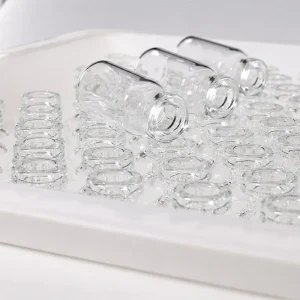
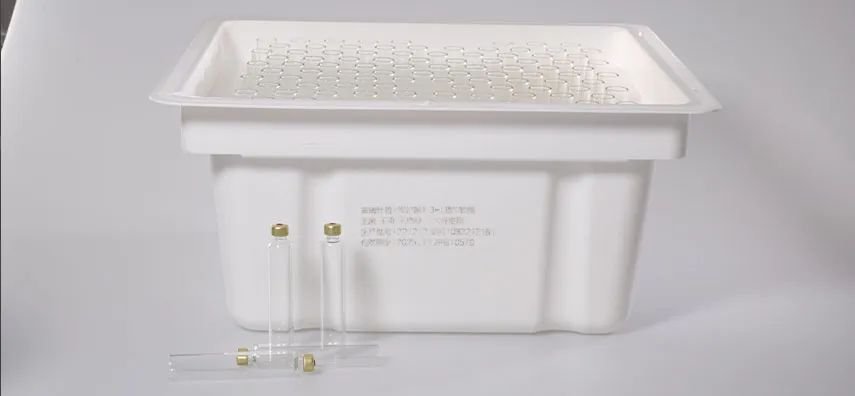
LINUO’s RTU vials are available in Nest & Tub and Tray formats. Its RTU cartridges are available in Nest & Tub formats for cartridge-based drug-delivery systems.
According to LINUO’s published information, its applicable RTU products are supplied washing-free, depyrogenation-free and pre-sterilized. This can reduce customer-side preparation steps and the need for associated WFI washing systems and depyrogenation equipment.
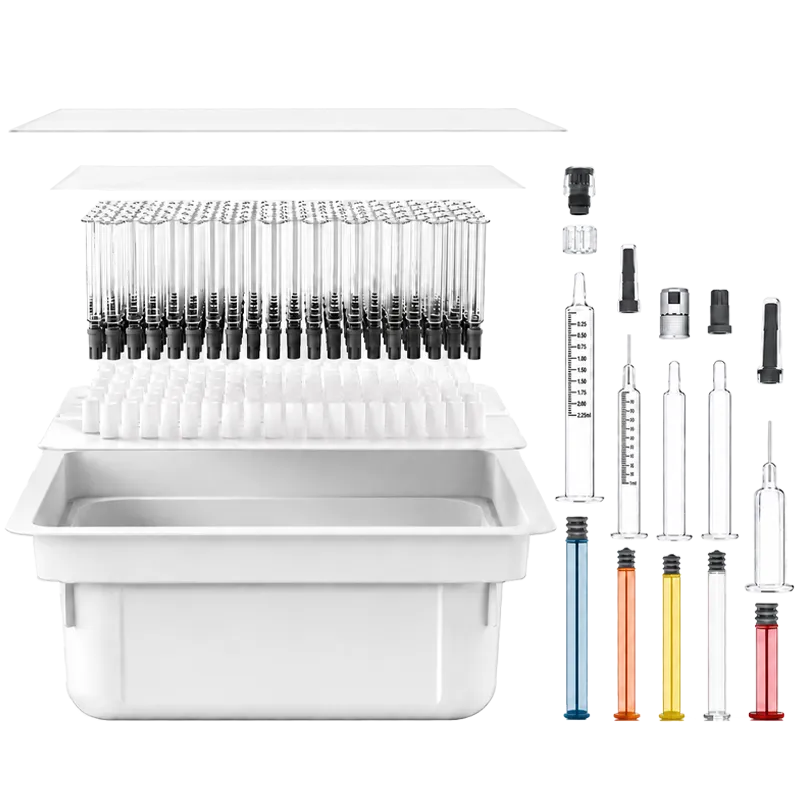
A prefillable syringe is designed to receive a drug before the point of administration. It combines pharmaceutical packaging with a drug-delivery function.
LINUO provides PFS solutions in Type I borosilicate glass and COP polymer options. Published formats include staked-needle, Luer-slip and Luer-lock configurations, with applicable RTU Nest & Tub packaging.
PFS suitability must be evaluated according to the formulation, filling process, component system, dosage requirement and intended injection device.
The packaging decision made during early development can affect filling, stability studies, device development, regulatory documentation and commercial scale-up.
Early clinical projects may prioritize speed, small-batch flexibility and limited infrastructure. Late-stage projects require greater attention to batch consistency, stability data, validated processes and future scale. Commercial supply adds capacity, cost, logistics, documentation and supplier-continuity requirements.
The format should therefore be evaluated against both current and future requirements.
| Project Stage | Primary Priorities | Formats to Evaluate |
| R&D and Early Clinical | Small batches, samples, fast evaluation and limited preparation equipment | RTU vials, RTU cartridges or other project-compatible formats |
| Late Clinical | Stability, batch consistency, filling-line compatibility and documentation | Qualified Bulk or RTU formats; PFS or cartridges where the delivery format is established |
| Commercial Scale-Up | Capacity, total cost, validated processes and supply continuity | Bulk or RTU according to installed infrastructure and production strategy |
| Patient-Use Development | Predetermined dose, administration method and device integration | PFS, cartridges or pen-injector-related systems |
| Mature Commercial Supply | Repeatable processes, throughput and unit economics | Bulk may be considered where validated preparation equipment already exists |
This is a decision framework, not a universal recommendation. The final format must be confirmed for the drug product and manufacturing process.
Early projects often need to prepare limited quantities for formulation evaluation, stability studies or clinical use. At this stage, installing or dedicating washing, depyrogenation and sterilization equipment may add complexity.
LINUO’s RTU-flacons and cartridges are supplied for filling-ready workflows. Applicable RTU formats can reduce customer-side requirements associated with:
These characteristics may make RTU pharmaceutical packaging worth evaluating for early projects, CDMOs and fill-finish facilities that require small-batch flexibility or do not operate dedicated container-preparation infrastructure.
However, RTU does not eliminate the need for:
RTU should be selected because it fits the project’s operating model—not simply because the project is in an early stage.
Small batch size does not remove pharmaceutical packaging quality risks. Early clinical packaging still needs to support the intended formulation, filling process and storage programme.
Important considerations include:
Changing packaging after early stability work may affect the amount of additional evaluation required. Project teams should therefore avoid selecting a temporary format without considering whether it can support later development.
LINUO’s technical team can support product selection based on the drug, filling process and required performance. Samples can be supplied with applicable CoA and test data for evaluation, subject to the selected product and project.
Late-stage clinical development places greater emphasis on repeatability and the relationship between packaging, formulation and production.
By this stage, the project may need to confirm:
If a project expects to use Bulk containers for commercial production, the transition from RTU or another small-batch format should be assessed before commercial launch. Even when the container geometry appears similar, differences in preparation, handling, sterile barrier systems and filling-line presentation may require additional evaluation.
If the project intends to retain the RTU format, the team should confirm that the applicable Nest & Tub or Tray configuration can support the planned filling line and production volume.
A packaging format must physically and operationally fit the filling process.
For glass vials, important factors can include container dimensions, nest or tray format, stopper fit, capping process and filling-line handling. For cartridges and PFS, the project must also consider inside and outside dimensions, piston or plunger movement, siliconization, closure components and device assembly.
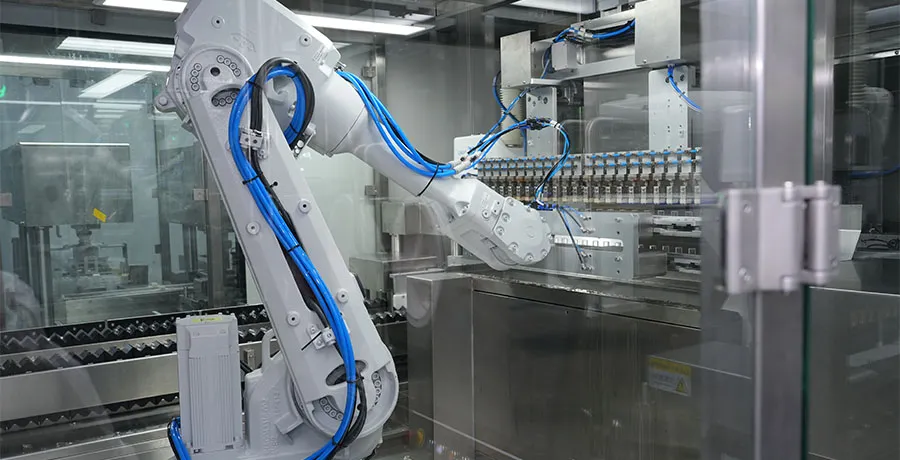
LINUO’s RTU vials and cartridges are designed to support automated filling, stoppering, sealing and inspection processes. However, this does not mean every format can be loaded onto every filling line without verification.
Before scale-up, pharmaceutical manufacturers should confirm:
A general statement of automated-line compatibility should not replace testing on the customer’s actual equipment.
Bulk packaging may be considered when a pharmaceutical manufacturer already operates validated container-preparation and high-volume filling processes.
An established commercial facility may already have:
In this situation, Bulk packaging may offer commercial advantages because the customer has already invested in the required infrastructure. However, the container purchase price alone does not determine the more economical format.
A proper Bulk versus RTU packaging comparison should include:
RTU is not limited to small clinical batches. It may remain relevant during commercial production when the format matches the filling line, product risk profile and total manufacturing strategy.
LINUO’s RTU vial portfolio includes multiple vial sizes in Nest & Tub and Tray configurations. Its RTU cartridge portfolio supports applicable pen- and pump-based filling projects.
Commercial RTU evaluation should consider:
RTU can reduce customer-side preparation steps, but this does not automatically mean it has the lowest total cost at every production volume. Commercial suitability must be assessed against Bulk processing using actual project data.
For high-value injectable products, the cost of product loss or rejected units may be more significant than the difference in empty-container price.
LINUO identifies RTU vials, cartridges and PFS solutions as possible packaging directions for biologics and other high-value injectable applications. Nest & Tub and Tray systems can reduce direct glass-to-glass contact and manual handling during applicable production and transfer processes.
PFS packaging becomes more relevant when the intended product is supplied as a prefilled dose rather than being withdrawn from a vial before administration.
LINUO’s published PFS information identifies applications including biologics, vaccines, injectable drugs and aesthetic medicine. Available options include Type I borosilicate glass and COP polymer, along with staked-needle, Luer-slip and Luer-lock formats.
Potential workflow and delivery considerations include:
The PFS system must be evaluated as a combination of barrel, plunger stopper, plunger rod, needle or Luer interface, tip cap, siliconization and sterile packaging.
PFS selection must not be based only on patient convenience. The formulation, viscosity, dose volume, contact materials, filling process, sterilization method, container-closure integrity and intended device all require project-specific confirmation.
Commercial injectable packaging requires more than a technically suitable container. The supplier must also support stable capacity, materials, quality documentation and delivery planning.
LINUO operates an integrated pharmaceutical glass supply chain covering in-house glass tubing and finished packaging. Its published manufacturing information includes a 900,000+ m² manufacturing campus, 500+ core machines, annual capacity exceeding 9.6 billion units and annual glass tubing output above 13,000 tons.
These figures show manufacturing scale, but customers should still confirm product-specific capacity and delivery requirements.
A commercial supply review should include:
Commercial supply suitability should be evaluated for the selected product—not inferred only from total company capacity.
Documentation requirements generally become more extensive as an injectable project moves toward commercial production. Depending on the selected product and project, LINUO can support product specifications, Certificates of Analysis, compliance statements, material information, batch records, inspection reports and applicable testing documents.
RTU projects may also require sterilization-related information, sterile barrier specifications, inspection records and batch-release documents. The exact document package, registration support and applicable standards should be confirmed for each product and target market.
Company-level certificates and registrations should not automatically be applied to every product configuration. Buyers should confirm the specific documentation available for the selected vial, cartridge or PFS system.
A packaging format may be reconsidered as batch size, production equipment, administration method or commercial strategy changes.
Possible transitions include:
Any format change should trigger a review of:
A later transition may require additional qualification or validation. For this reason, the anticipated commercial format should be discussed as early as practical.
No single format is the best choice for every injectable drug or project stage.
| Decision factor | Bulk | RTU | PFS |
| Customer-side container preparation | Generally required according to customer process | Reduced for applicable filling-ready formats | Reduced when supplied in applicable RTU format |
| Infrastructure requirement | Higher where washing and depyrogenation are performed in-house | Can reduce need for customer-side preparation equipment | Requires compatible PFS filling and component-handling process |
| Small-batch flexibility | Depends on existing equipment | May suit applicable clinical and flexible filling projects | Depends on filling and device-development readiness |
| Commercial volume | May suit established high-volume lines | Can support commercial supply where line and volume are compatible | Depends on dose presentation, filling capacity and market strategy |
| Drug-delivery function | Container only | Container only unless used as part of another device | Integrated packaging and delivery presentation |
| Patient self-administration | Not inherent | Not inherent | More relevant for applicable prefilled and device-based applications |
| Main qualification focus | Container preparation and filling process | Sterile barrier, filling-line integration and documentation | Formulation, components, filling, dosing and device integration |
| Cost evaluation | Container plus in-house processing | RTU unit cost plus reduced preparation burden | Complete syringe, component, filling and delivery-system cost |
This comparison is intended as a selection framework. Actual cost, performance and validation requirements must be calculated for the specific project.
The packaging decision should be made in two steps: first select the appropriate container or drug-delivery format, and then determine whether Bulk or RTU supply better matches the filling strategy.
RTU may be evaluated when filling-ready containers and reduced customer-side preparation are important. Bulk may remain suitable where validated washing, depyrogenation, sterilization and high-volume filling infrastructure already exist. PFS and cartridges become more relevant when the packaging must also support predetermined dosing or integration with a compatible drug-delivery device.
LINUO can support project discussions with product specifications, samples, applicable CoA and test data, packaging-format selection and relevant quality documentation. Customers can provide their formulation category, project stage, batch size, filling-line configuration, delivery method and target-market requirements for technical review.
No. RTU packaging may reduce customer-side preparation and infrastructure requirements, making it worth evaluating for certain clinical projects. Final selection still depends on formulation, batch size, filling process, equipment and future scale-up plans.
Not necessarily. Bulk may have a lower container price in some projects, but the total comparison should include washing, WFI, depyrogenation, sterilization, cleanroom space, labour, maintenance, validation and handling.
Yes, RTU formats can be evaluated for commercial production when capacity, filling-line compatibility, sterile barrier handling, documentation, supply continuity and total cost meet project requirements.
PFS may be considered when the intended product requires a prefilled dose presentation or integration with an applicable injection device. Formulation, dose volume, components, filling process and administration method must be evaluated.
LINUO identifies GLP-1 and insulin among the main glass-cartridge application areas. Cartridges can support compatible injection pens and pump systems where dimensional consistency, piston movement, siliconization and dosing performance are important.
A transition may be possible, but it requires review of the container, preparation process, filling line, stability programme, compatibility, documentation and validation requirements. It should not be treated as a simple packaging change.
Wij antwoorden u binnen 24 uur. Is uw vraag dringend? Voeg ons dan toe via WhatsApp/WeChat: +8618615646416, of bel rechtstreeks naar +8618615646416.
*We respecteren uw vertrouwelijkheid en beschermen al uw gegevens.
We zullen uw gegevens uitsluitend gebruiken om op uw vraag te reageren en zullen nooit ongevraagde e-mails of promotionele berichten sturen.