








Chi siamo
Se riscontri problemi durante l'utilizzo del prodotto, non esitare a contattarci


Scorri verso il basso

 August 12, 2026
 Modern pharmaceutical glass manufacturing depends on more than production capacity. Pharmaceutical companies also need controlled processes, consistent container quality, traceable manufacturing data and reliable testing documentation.
LINUO Pharmaceutical Packaging has developed an intelligent manufacturing system that connects pharmaceutical glass production, automated inspection, digital process control, MES traceability and in-house laboratory testing.
Its manufacturing capabilities cover pharmaceutical borosilicate glass tubing, ampoules, tubular vials, glass cartridges, molded glass bottles and ready-to-use packaging. Each product category is supported by dedicated production equipment and inspection processes.
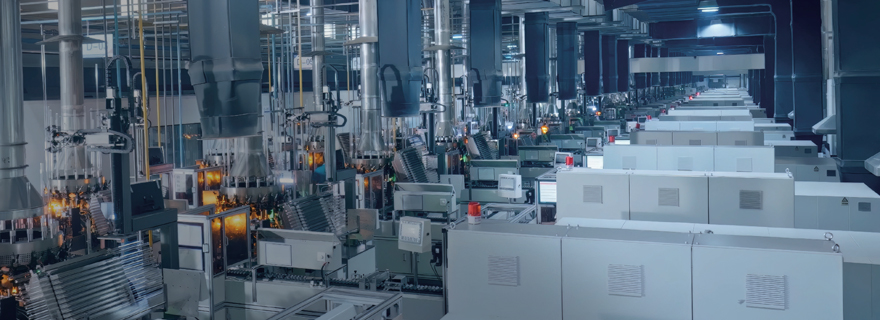
With more than 30 years of experience, LINUO operates a 900,000+ m² smart manufacturing campus with more than 500 core production machines. Its published annual capacity exceeds 9.6 billion units, supported by annual in-house pharmaceutical glass tubing output of more than 13,000 tons.
LINUO’s manufacturing chain begins with pharmaceutical borosilicate glass tubing and extends to finished pharmaceutical containers and RTU packaging.
The factory’s principal production categories include:
This manufacturing structure brings glass material production, container forming, surface processing, inspection, sterile preparation and supporting laboratory testing into one integrated system.
The in-house glass tubing capability supplies material for downstream products such as ampoules, tubular vials and cartridges. This creates a traceable connection between the glass material and the finished pharmaceutical packaging.
LINUO’s Phase III High-End Pharmaceutical Packaging Project is a major intelligent-manufacturing program centered on medium-borosilicate molded pharmaceutical glass bottles, advanced sterile packaging and digital factory operations.
The project represents a planned investment of RMB 2 billion and covers approximately 425 acres. It includes an innovation center with R&D facilities, an academician workstation, a specialty-glass materials research institute and supporting talent facilities.
The program combines lean manufacturing with 5G connectivity, artificial intelligence, big-data analytics and industrial automation. Its objective is to build a transparent, green and highly traceable pharmaceutical-packaging factory, with digital systems supporting production planning, process control, quality assurance, warehousing, energy management and customer response.
LINUO has been recognized as the first company in its industry to achieve Level 4 certification under the Intelligent Manufacturing Capability Maturity Model (CMMM). The company has also received recognition as a Shandong Intelligent Manufacturing Benchmark Enterprise, a provincial Advanced Smart Factory and a China Light Industry Digital Transformation Leading Practice.
LINUO’s smart factory combines digital monitoring, automated production, artificial intelligence and centralized data management.
The intelligent manufacturing system covers several connected areas:
The Phase III program integrates APS, MES, OMS, EMS, WMS, APC and related digital applications into one manufacturing-management framework.
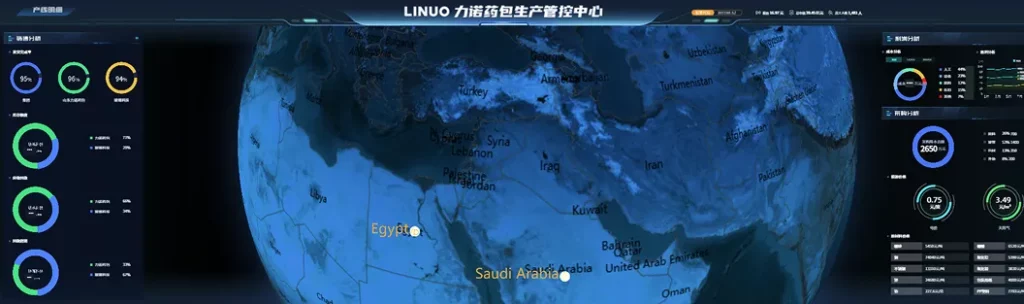
A global production command center is designed to monitor operating data across domestic and international manufacturing locations, with video connectivity covering key production positions.
LINUO uses a digital production management platform to monitor production, equipment and process information.
The supporting material identifies Siemens as part of the monitoring platform, while Horn and ANSYS technologies are used in digital twin applications. These systems help connect production information with process planning and equipment management.
The factory has also established a global production control center. This center monitors production operations, customer demand and key operating indicators across the company’s manufacturing network.
Online inspection is incorporated into the production lines for different pharmaceutical glass products.
Depending on the product category, LINUO uses CCD inspection, multi-camera inspection and AI machine-vision systems to identify dimensional or visual abnormalities during production.
The published factory information includes:
Within the verified application scope, the AI-supported quality system achieved defect-prediction accuracy above 90% and contributed to a 10% improvement in product yield.
This approach extends quality monitoring into the manufacturing process instead of relying only on finished-product inspection.
LINUO uses a Manufacturing Execution System to connect material, production, inspection and packaging information.
Traceable records can include:
The MES system supports forward and reverse tracing of quality information from raw-material entry through production and delivery.
The smart factory also uses robotic handling and digital energy-management systems.
LINUO applies digital energy and carbon-management practices as part of its intelligent-manufacturing strategy. The objective is to reduce energy consumption and emissions while improving the efficiency of furnaces, equipment and material movement.
KUKA robotic systems are used for material transportation, palletizing and packaging. Digital energy-management systems monitor and manage energy use across the manufacturing facilities.
Verified project data indicates that the applicable furnace system reduced energy consumption by 19%, equivalent to approximately 1.4 million kWh per furnace annually during the stated measurement period.
This approach supports the development of a green, low-carbon and circular manufacturing system, aligned with the company’s transparent-factory, green-factory and lighthouse-factory objectives.
Digital twin technology is an important part of LINUO’s intelligent manufacturing system.
LINUO uses virtual production-line models to support the simulation and analysis of:
This digital environment allows production information and equipment data to be reviewed within a virtual manufacturing model.
According to internally verified project data, the digital twin implementation improved production efficiency by 20%. More than 200,000 furnace operating data points were used for process modeling. These figures relate to the specified implementation scope and measurement period.
Digital twin technology is also applied to glass melting and forming processes. The molded glass bottle line uses an all-electric furnace with APC and digital twin support, while digital production platforms support monitoring and process analysis across other areas of the factory.
Within the specified glass-melting implementation scope, data-driven process control reduced the melt-related defect rate to 5% during the stated measurement period.
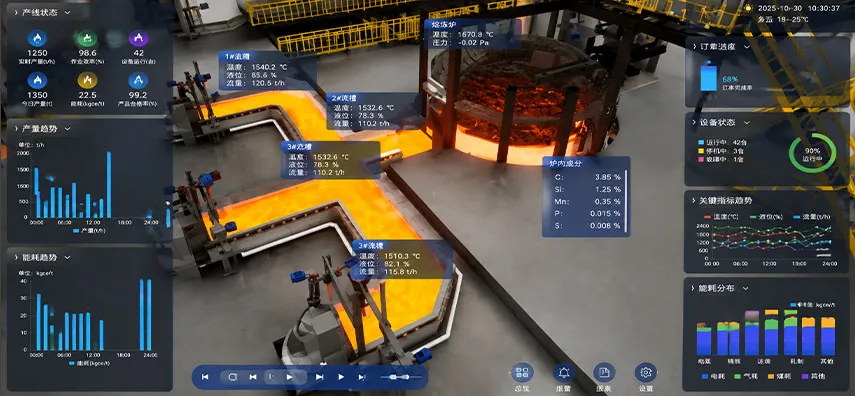
LINUO applies automated control to several stages of pharmaceutical glass production.
The factory’s published intelligent manufacturing processes include:
Automatic raw-material proportioning
Automated RGV material transportation
Automatic adjustment of kiln liquid levels
Voltage and current control
Closed-loop annealing-furnace temperature control
Online quality inspection
Automatic packaging
Intelligent warehousing
Within the verified automatic batching system, raw-material batching error was controlled below 0.1%.The integration of automation and production data allows key manufacturing parameters to be monitored throughout the production process.
The intelligent-manufacturing program extends automation from raw-material preparation through finished-product warehousing.
Automatic batching systems support raw-material moisture and formula control, followed by automated feeding and transportation. Furnace operations are supported by automatic feeding, advanced process control and real-time monitoring of melting conditions.
The manufacturing network includes automated packaging, palletizing, AGV and RGV material transportation, and intelligent warehousing. These systems are intended to reduce manual handling, support consistent material flow and connect production operations with warehouse management.
The verified intelligent-logistics system includes an AGV and RGV network covering the applicable factory area and more than 50,000 automated-storage locations. Within the specified system, AGV replenishment response time is below three seconds, while the night-shift unattended-operation rate reaches 80%.
AI-enabled inspection is integrated with automated production lines to extend quality control into the manufacturing process. Automated inspection, MES records and laboratory verification together support a closed-loop quality-management structure from incoming materials through finished-product release.
LINUO operates specialized production lines for its main pharmaceutical packaging categories. Each line combines product-specific equipment with corresponding manufacturing and inspection capabilities.
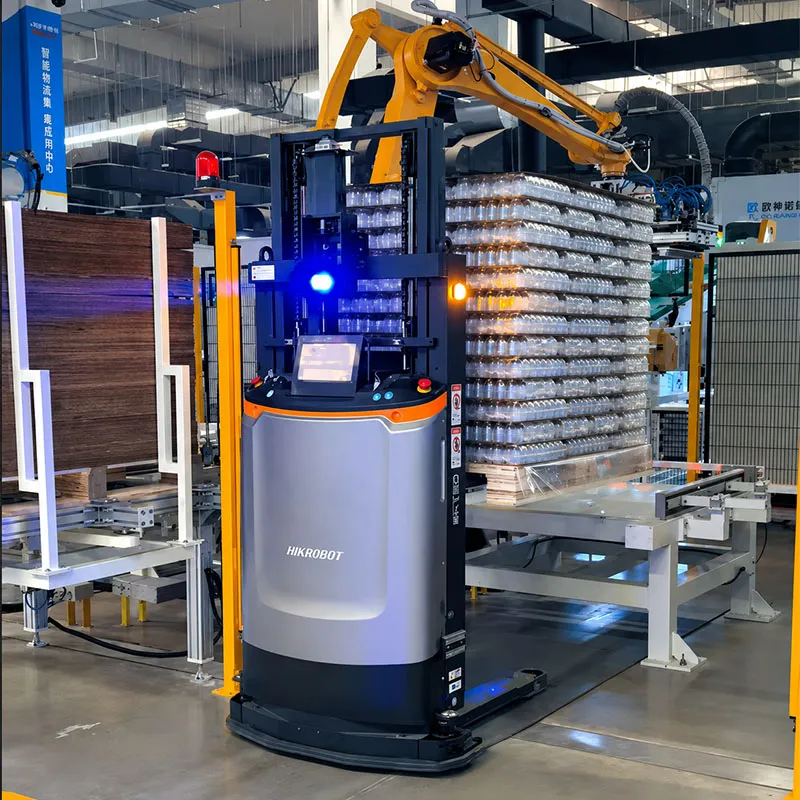
The ampoule production line integrates forming, annealing, online inspection and packaging.
Core equipment listed for this production category includes:
The published capabilities of the line include:
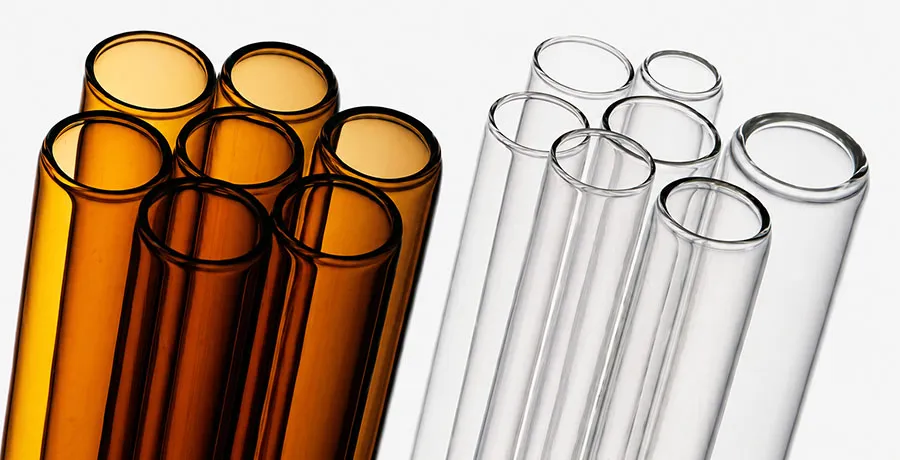
LINUO manufactures clear and amber Type I borosilicate glass ampoules. Its product range includes ISO Forms B, C and D, together with OPC and CBR opening systems.
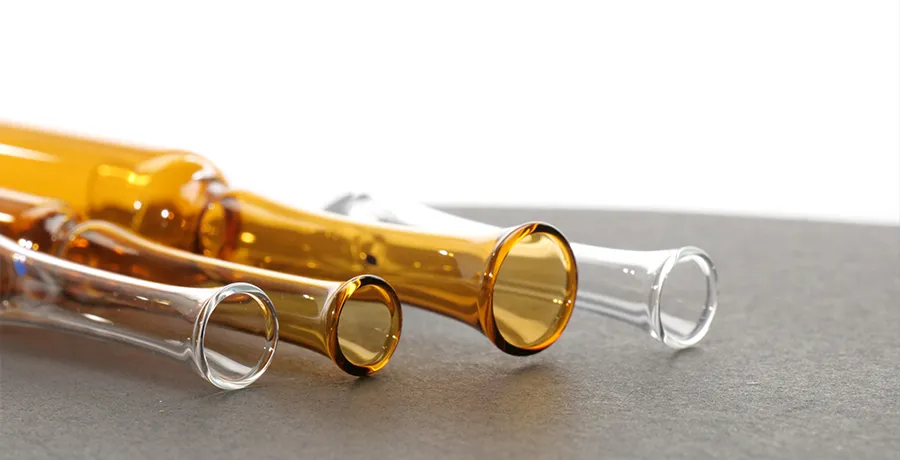
The tubular glass vial line focuses on high-precision forming, online quality inspection and protected packaging.
LINUO identifies the OCMI MF30 high-speed tubular container-forming machine as core equipment for this production line.
The line’s published capabilities include:
LINUO manufactures standard tubular glass vials in capacities from 1ml to 50ml. Micro-series 0.1ml and 0.3ml options are available upon request.The company also manufactures RTU glass vials in sizes from 2R to 50R.
LINUO’s glass cartridge production line uses SPMI equipment.
The line supports several manufacturing and finishing processes, including:
LINUO’s standard neutral borosilicate glass cartridges are available in 1.5ml, 1.8ml and 3ml formats.
Its RTU cartridge portfolio includes 1ml, 1.5ml, 1.8ml and 3ml standard cartridges, as well as 3ml, 4ml and 5ml dual-chamber cartridges.
The molded glass bottle production line combines automated forming, AI inspection and MES/WMS traceability.
The supporting factory material lists the following core equipment:
The published production capabilities include:
The 12-camera system provides 360-degree monitoring of molded pharmaceutical glass containers during production.
LINUO’s molded glass product portfolio includes standard, Tube-Look and lightweight series, with clear and amber glass options.
LINUO’s pharmaceutical glass tubing production line uses the Danner process.
Core equipment listed for the line includes:
The principal manufacturing capabilities include:
The pharmaceutical glass tubing produced on this line is used as the base material for downstream ampoule, vial and cartridge manufacturing.
LINUO reports annual pharmaceutical glass tubing output of more than 13,000 tons.
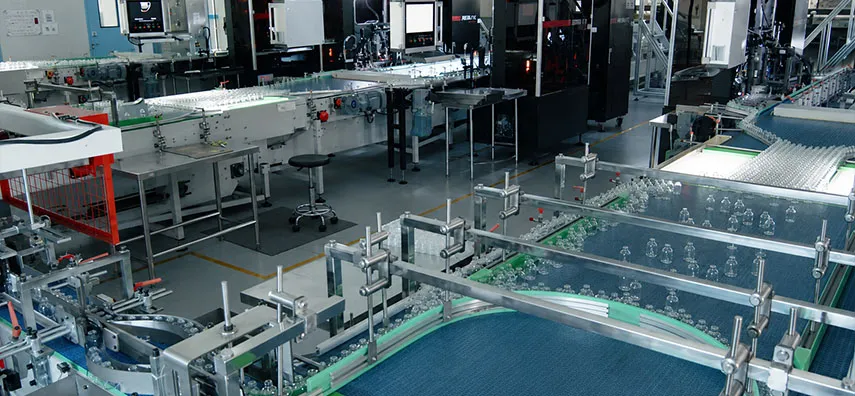
LINUO’s RTU production line supports ready-to-use glass vials and cartridges.
The supporting material identifies the following equipment and automation suppliers:
The RTU line operates in a Grade A, ISO 5 cleanroom environment.
Its published production capabilities include:
LINUO manufactures RTU glass vials in Nest and Tub and Tray formats. It also manufactures RTU sterile cartridges in Nest and Tub systems.
Depending on the selected product, the RTU packaging structure can include PP nests or trays, tubs, Tyvek sterile-barrier materials and double sterile bags.
LINUO’s Phase III development also includes a PFS and RTU smart factory for advanced sterile pharmaceutical packaging.
The planned facility is designed around a no-glass-to-glass-contact concept and combines internationally sourced production equipment, AI-supported quality assurance, flexible production scheduling, full-process data traceability, compliance support and closed-loop intelligent control.
Upon reaching planned capacity, the facility is expected to support annual production of approximately:
These capabilities are intended to expand LINUO’s offering of ready-to-use sterile packaging for injectable drug products, including RTU vials, RTU cartridges and prefillable syringe systems.
LINUO does not apply one identical inspection system to every pharmaceutical glass product. Its inspection configuration varies according to the container and manufacturing method.
The ampoule production line uses online inspection within the integrated forming, annealing and packaging process.
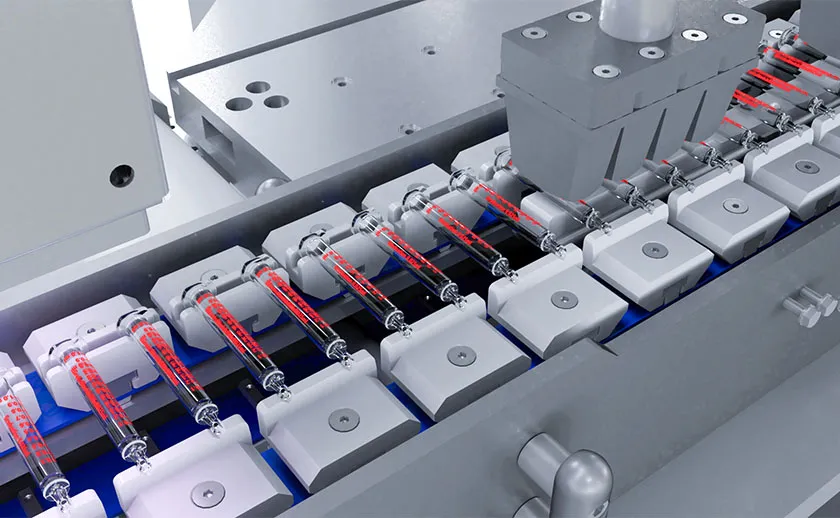
The tubular vial production line uses online quality inspection after precision forming. Non-contact packaging helps reduce surface contact after inspection.
The cartridge line includes dimensional and visual inspection before automatic packaging.
The molded glass bottle line uses a 12-camera AI system for 360-degree inspection.
The Danner glass tubing line uses multiple cameras to inspect the tubing during production.
The RTU line uses CCD and AI inspection in a Grade A, ISO 5 cleanroom environment.
This product-specific approach connects the inspection method with the manufacturing characteristics of each packaging category.
MES and WMS systems connect production and warehouse information across the factory.
The MES system records quality and manufacturing data, while WMS supports material and finished-product management.
Together, these systems provide traceability across:
On the molded bottle line, MES and WMS provide traceability from glass material through forming, inspection and finished-product storage.
On other lines, MES supports production and quality records from raw-material entry through finished-product delivery.
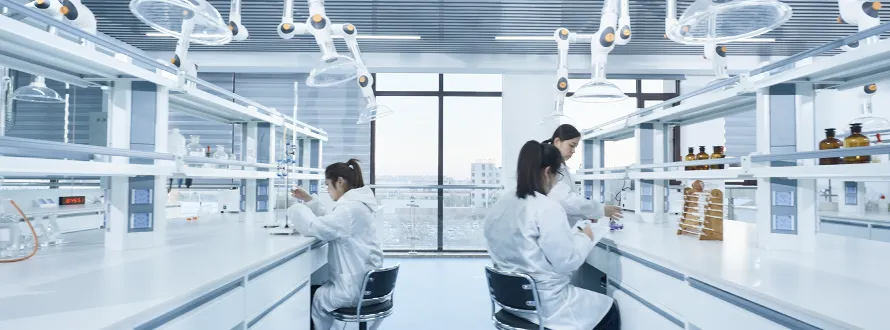
LINUO’s manufacturing system is supported by an in-house pharmaceutical packaging testing center.
The laboratory received CNAS accreditation in 2012 under accreditation number L5691. According to LINUO, the laboratory conducts testing to ChP, USP, EP and JP requirements.
Its published testing capabilities cover five principal areas.
The laboratory’s material and chemical analysis equipment includes:
These instruments support microscopy, elemental analysis and spectroscopy.
Published physical and mechanical testing capabilities include:
These tests support the evaluation of pharmaceutical glass material and container performance.
Dimensional and appearance measurement equipment includes:
These systems support dimensional control and visual quality evaluation.
Environmental and special testing capabilities include:
The laboratory uses autoclaves from MEMMERT, Tuttnauer, Systec and Huatai for sterilization-related validation.
Packaging and Logistics Validation
The supporting testing material also lists:
These automated systems support packaging and logistics-related evaluation.
Quality Control from Incoming Material to Product Release
LINUO’s quality-control system covers incoming materials, production processes and finished-product release.
The company reports 57 QA/QC inspection personnel working across its production lines.
Their responsibilities include:
Automated inspection monitors products during production. Laboratory testing supports material, chemical, physical, mechanical and dimensional evaluation. MES traceability connects the resulting quality data with the corresponding production batches.
This creates a connected quality-control structure covering:
LINUO reports more than 130 registered patents and participation in more than 20 national and industry standards.
The company also reports annual R&D investment exceeding US$4.2 million.
Its R&D and customization capabilities cover:
The published development process consists of four stages:
Consult → Prototype → Validate → Mass Produce
This connects customer requirements with product development, testing and commercial manufacturing.
LINUO’s website lists the following certifications and regulatory resources:
Its laboratory supports testing according to ChP, USP, EP and JP requirements.
The exact certifications and documents available for a specific product should be confirmed during project evaluation.
The value of LINUO’s smart pharmaceutical glass factory comes from connecting material production, container manufacturing, inspection, testing and documentation.
Its manufacturing structure provides:
Individual product specifications, surface treatments, packaging formats, certifications and testing requirements must still be confirmed for each project.
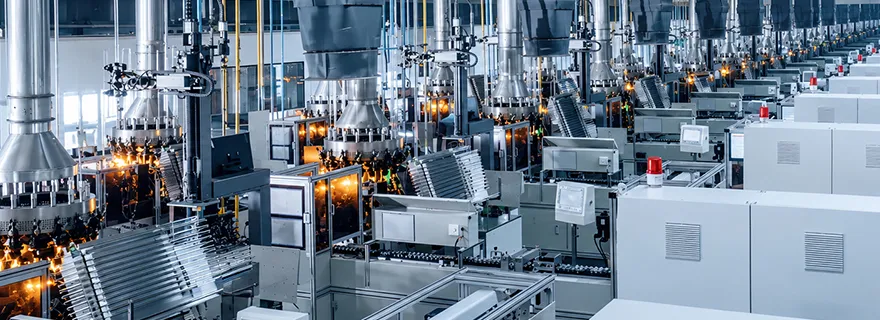
Di LINUO smart pharmaceutical glass factory combines manufacturing scale with digital production control, specialized equipment, automated inspection and traceable quality data.
Its integrated production system covers pharmaceutical borosilicate glass tubing, ampoules, tubular vials, glass cartridges, molded pharmaceutical bottles and RTU packaging.
Siemens monitoring, Horn and ANSYS digital twin applications, MES and WMS traceability, KUKA robotic systems and product-specific AI inspection support the factory’s intelligent manufacturing structure.
The production system is further supported by a CNAS-accredited pharmaceutical packaging testing center with material, chemical, physical, mechanical and dimensional testing capabilities.
For pharmaceutical companies, CDMOs and packaging distributors, this integrated system provides one manufacturing platform for conventional pharmaceutical glass containers and ready-to-use packaging solutions.
What products are manufactured in LINUO’s pharmaceutical glass factory?
LINUO manufactures pharmaceutical borosilicate glass tubing, ampoules, tubular glass vials, neutral borosilicate glass cartridges, molded pharmaceutical glass bottles, RTU glass vials and RTU sterile glass cartridges. Its factory materials also present PFS production capabilities.
What digital systems are used in the smart factory?
The supporting materials identify Siemens monitoring, Horn and ANSYS digital twin applications, MES traceability, WMS warehouse management and digital energy-management systems.
How does LINUO inspect pharmaceutical glass products?
LINUO uses inspection systems configured for different products, including online ampoule and vial inspection, multi-camera glass tubing inspection, 12-camera molded bottle inspection and CCD/AI inspection on RTU lines.
Does LINUO produce its own pharmaceutical glass tubing?
Yes. LINUO reports annual pharmaceutical glass tubing output exceeding 13,000 tons. The tubing supports the production of ampoules, tubular vials and cartridges.
How does LINUO trace production quality?
LINUO uses MES to connect raw-material, production, inspection and packaging data. WMS also supports material and finished-product management.
Does LINUO have an in-house testing center?
Yes. LINUO operates a CNAS-accredited pharmaceutical packaging testing center under accreditation number L5691.
What pharmacopoeia requirements does the laboratory support?
LINUO states that its laboratory conducts testing according to ChP, USP, EP and JP requirements.
Can LINUO produce RTU pharmaceutical packaging?
Yes. LINUO manufactures RTU glass vials in Nest and Tub and Tray formats, together with RTU sterile glass cartridges in Nest and Tub systems.
We will reply to you within 24 hours. If for urgent case, please add WhatsApp/WeChat: +8618615646416, Or call +8618615646416 directly.
*We respect your confidentiality and all information are protected.
We will only use your information to respond to your inquiry and will never send unsolicited emails or promotional messages.