









Über uns
Wenn Sie während der Produktnutzung Probleme haben, können Sie sich gerne an uns wenden.


Nach unten scrollen

 September 14, 2026
 RTU glass vials are often evaluated from the final packaging stage: whether they are washing-free, depyrogenation-free, pre-sterilized, and supplied in Nest & Tub or Tray formats for aseptic filling. However, before a vial becomes an RTU packaging component, its quality foundation starts much earlier — from pharmaceutical borosilicate glass tubing.
LINUO’s pharmaceutical glass tubing is positioned as the base material for ampoules, tubular injection vials, cartridges and prefillable syringe systems. Its published glass tubing page highlights controlled outer diameter tolerance, wall thickness precision, straightness and geometry stability as key factors supporting high-speed forming lines and stable pharmaceutical container production.
Bei RTU-Glasfläschchen projects, upstream tubing quality does not replace downstream washing, depyrogenation, sterilization, sterile-barrier packaging or customer-side validation. But it can directly influence vial forming stability, dimensional consistency, filling-line compatibility and the reliability of the finished RTU vial format.
Pharmazeutische Borosilikatglas-Röhren is not only a raw material. For tubular glass vials, cartridges and ampoules, it is the starting point of downstream container consistency.
If the tubing is unstable in dimension or geometry, downstream forming lines may face more adjustment pressure. If the tubing has better dimensional control, forming can be more stable, and the finished vial is more likely to maintain consistent shape, mouth quality and container dimensions.
LINUO’s website states that its pharmaceutical glass tubing is designed for stable processing performance, high dimensional consistency and compatibility with automated forming lines. This makes tubing quality especially important for products that later need to enter highly controlled RTU processing and aseptic filling workflows.
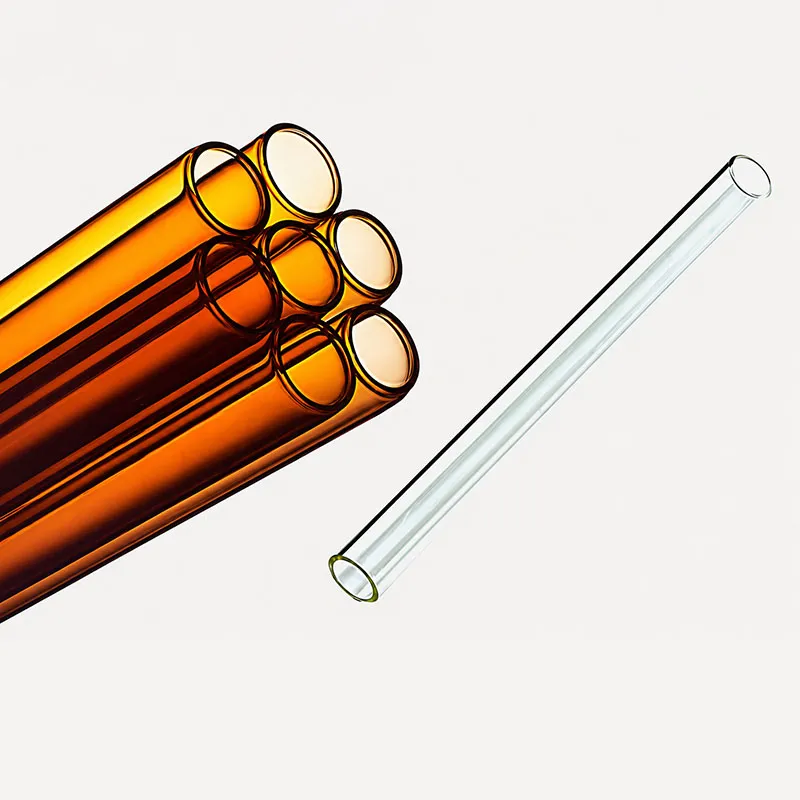
Outer diameter tolerance is one of the first upstream factors buyers should pay attention to. In automated forming, tubing must feed smoothly and consistently into high-speed equipment.
For vial production, controlled OD tolerance can help reduce line adjustment and improve forming continuity. LINUO’s glass tubing page identifies tight OD tolerance as a key feature and links it with smoother feeding performance on high-speed ampoule and vial forming lines.
For RTU glass vials, this matters because the finished vial must later support precise handling, packaging and filling-line integration. A stable upstream tubing dimension helps build a stronger foundation for downstream vial consistency.
Wall thickness precision is another important factor in pharmaceutical glass manufacturing. For tubular glass containers, wall thickness can affect forming behavior, container strength and dimensional consistency.
LINUO’s glass tubing information states that stable wall thickness helps maintain container strength, dosage volume accuracy and consistent forming performance during ampoule, vial and cartridge production.
For RTU glass vial projects, wall thickness consistency should be reviewed as part of the full quality chain. The final RTU vial must go through further processing, inspection, sterile-barrier packaging and filling-line handling. Stable upstream tubing helps reduce unnecessary variation before these downstream steps begin.
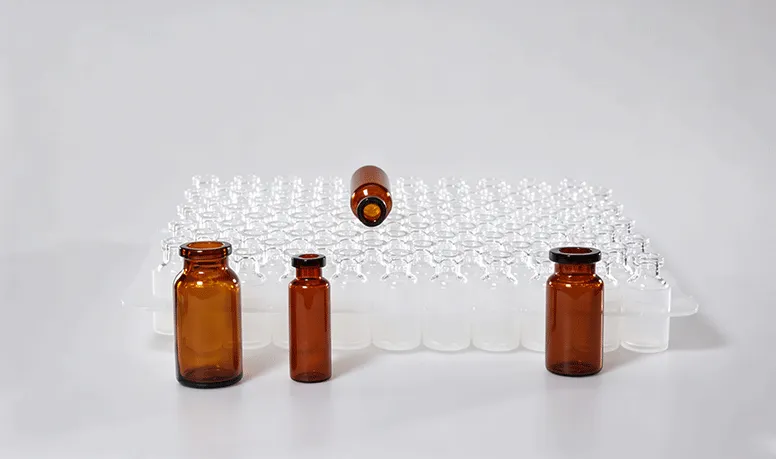
Straightness is especially important when glass tubing is used in automated production. If tubing straightness is unstable, feeding and forming may become less predictable.
LINUO’s website describes straightness control as supporting stable automated production, improving machine runability and helping ensure consistent downstream forming quality.
For buyers evaluating RTU glass vials, straightness may not be the most visible specification on the finished vial. However, it remains an important upstream factor because it influences the reliability of the conversion process from tubing to finished pharmaceutical glass vials.
Geometry and ovality control are also important for downstream container manufacturing. Tubing that maintains more consistent geometry can support better forming integrity and mouth precision.
LINUO’s glass tubing page specifically lists geometry and ovality control as part of its tubing quality focus, noting that controlled wall thickness variation and ovality help improve sealing, forming integrity, mouth precision and overall container consistency.
For RTU glass vials, this is important because the final vial must work with downstream packaging, sterile transfer and automated filling workflows. Dimensional consistency is not only a product appearance issue; it can affect how the vial is positioned, handled and processed in later step
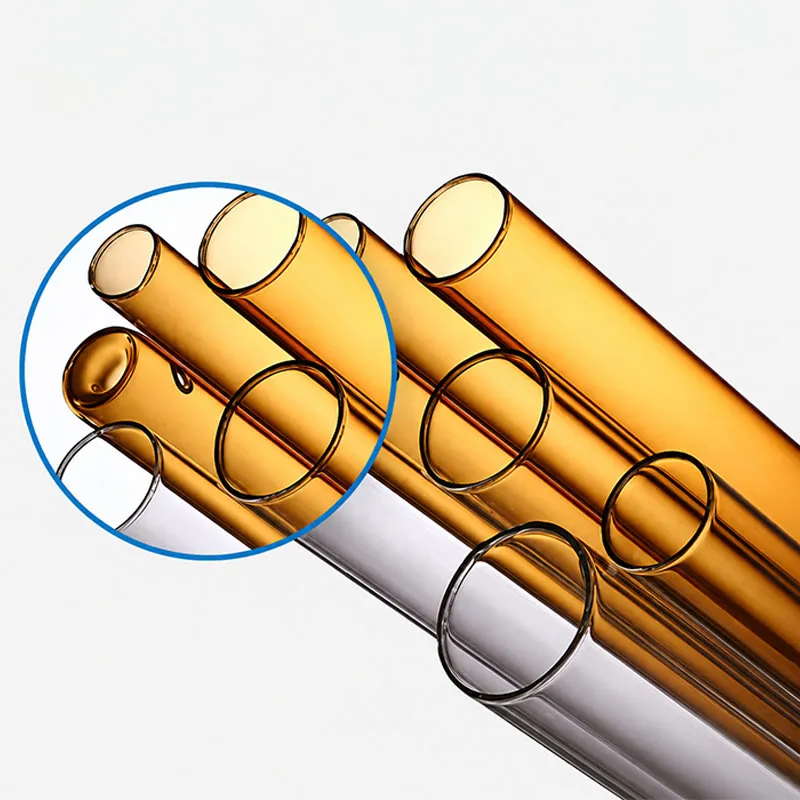
The relationship between pharmaceutical borosilicate glass tubing and RTU glass vials can be understood as a quality chain.
Glass tubing provides the upstream dimensional and material foundation. Tubular vial forming converts the tubing into pharmaceutical glass vials. RTU processing then prepares the vial for aseptic filling through washing-free, depyrogenation-free and pre-sterilized supply formats.
LINUO’s RTU Glass Vials page states that its RTU sterile vials are available in 2R, 4R, 6R, 8R, 10R, 15R, 20R, 25R, 30R and 50R sizes, with Nest & Tub and Tray formats designed for aseptic filling-line integration.
This means RTU vial quality should not be viewed only at the final sterile packaging stage. It should also be connected back to upstream glass tubing control, vial forming stability and finished-container inspection.
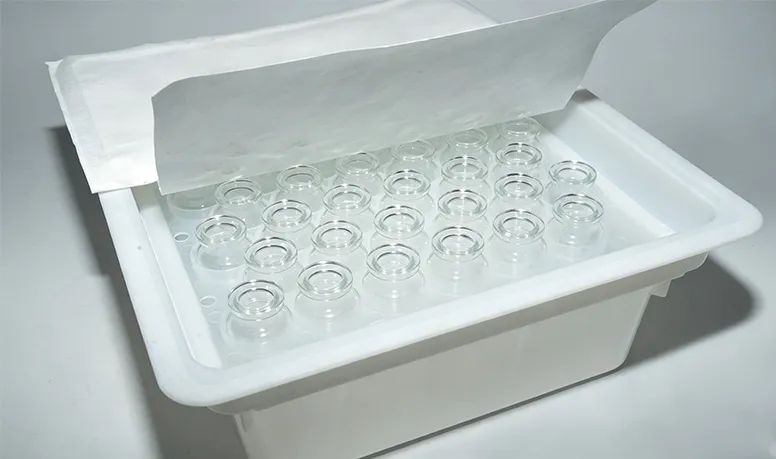
RTU glass vials are designed to enter sterile production workflows more efficiently, but the RTU format still depends on a stable vial body before sterile packaging begins.
Upstream glass tubing quality can support RTU vial projects in several ways:
It supports stable forming performance.
It helps maintain vial dimensional consistency.
It contributes to mouth precision and container geometry.
It supports automated downstream handling.
It helps reduce avoidable variation before RTU processing.
It provides a stronger foundation for later inspection and packaging.
However, upstream quality should not be overstated. Glass tubing quality does not by itself prove RTU sterility, filling-line compatibility or finished drug suitability. Those still depend on downstream RTU processing, sterile packaging configuration, project-specific qualification and customer-side validation.
One important advantage of an integrated pharmaceutical glass packaging manufacturer is that upstream and downstream processes can be managed within a more connected production system.
LINUO’s website states that the company has 13K+ tons annual glass tubing output and a full industrial chain spanning glass tubing to tubular and moulded vials. Its RTU glass vial portfolio is supplied in Nest & Tub and Tray formats for aseptic filling-line integration.The glass tubing page also states that LINUO supports pharmaceutical glass tubing production through furnace melting, tubing coating and automated inspection, helping ensure stable quality from glass melting to finished tubing.
For RTU glass vial buyers, this integrated chain can support more consistent communication across tubing quality, vial forming, RTU format selection and quality documentation.
For pharmaceutical glass packaging, quality review should not only happen at the final product stage. It should also consider upstream tubing, forming control, finished vial inspection and RTU packaging conditions.
LINUO’s glass tubing page refers to CNAS-certified testing and global compliance support for pharmaceutical glass tubing. The website also states that its CNAS-accredited laboratory supports testing according to ChP, USP, EP and JP standards, including ICP-MS and SEM-EDS capabilities.
For RTU glass vial projects, buyers should confirm which product specifications, inspection records and quality documents apply to the selected vial size and packaging format.
| Review Area | What Buyers Should Confirm | Why It Matters for RTU Glass Vials |
| Glass Tubing Type | Applicable borosilicate glass type and project requirement | Provides the material foundation for downstream vial forming |
| Außendurchmesser | OD tolerance and dimensional consistency | Supports stable feeding and forming performance |
| Wandstärke | Wall thickness precision and consistency | Helps maintain container strength and stable forming behavior |
| Geradheit | Tubing straightness control | Supports automated downstream production and reduces line instability |
| Ovality and Geometry | Ovality, wall variation and geometry stability | Supports finished vial consistency, mouth precision and forming integrity |
| Formgebung der Fläschchen | Compatibility with tubular vial forming requirements | Connects upstream tubing quality with finished pharmaceutical glass vials |
| RTU Format | Nest & Tub or Tray format, selected vial size and filling-line requirement | Ensures the finished vial format matches the customer’s aseptic filling workflow |
| Inspection Documents | Product specification, dimensional records and applicable quality documents | Supports incoming review and project qualification |
LINUO’s product portfolio includes pharmaceutical borosilicate glass tubing, glass vials, RTU glass vials, glass cartridges, RTU glass cartridges, ampoules, PFS-related solutions, molded glass bottles, rubber stoppers and caps.
For projects involving RTU glass vials, LINUO can support discussions around upstream tubing quality, vial size, RTU packaging format, sterile-barrier packaging, inspection requirements and project-specific documentation. The final selection should still be confirmed based on the customer’s formulation, filling equipment, closure system, aseptic process and validation plan.
The quality of RTU glass vials does not begin only at the sterile packaging stage. It begins upstream with pharmaceutical borosilicate glass tubing.
Outer diameter tolerance, wall thickness precision, straightness, ovality and geometry stability all help support downstream forming consistency. These upstream factors can influence how tubular pharmaceutical glass vials are formed, inspected, packaged and prepared for RTU applications.
For buyers, the key point is simple: RTU glass vials should be evaluated as part of a full manufacturing chain, not only as a final sterile packaging format. When upstream glass tubing quality, vial forming stability, RTU packaging format and project-specific validation are considered together, pharmaceutical manufacturers can make more informed decisions for aseptic filling projects.
Pharmaceutical borosilicate glass tubing is the upstream base material for tubular glass containers. Its OD tolerance, wall thickness, straightness and geometry consistency can influence downstream vial forming stability and finished vial consistency.
No. Glass tubing quality supports the upstream foundation of the vial, but RTU sterility depends on downstream preparation, sterile-barrier packaging, sterilization process, inspection and project-specific qualification.
Buyers should review outer diameter tolerance, wall thickness precision, straightness, ovality, geometry stability, applicable glass type, forming compatibility and available inspection documents.
RTU glass vials are supplied in prepared sterile formats such as Nest & Tub or Tray. LINUO’s RTU glass vial information states that the products are washing-free, depyrogenation-free and pre-sterilized for aseptic filling-line integration.
LINUO’s RTU Glass Vials page lists 2R, 4R, 6R, 8R, 10R, 15R, 20R, 25R, 30R and 50R sizes.
We will reply to you within 24 hours. If for urgent case, please add WhatsApp/WeChat: +8615953131507, Or call +8618615646416 directly.
*Wir respektieren Ihre Vertraulichkeit und schützen alle Informationen.
Wir verwenden Ihre Informationen ausschließlich zur Beantwortung Ihrer Anfrage und werden niemals unaufgefordert E-Mails oder Werbebotschaften versenden.