








Über uns
Wenn Sie während der Produktnutzung Probleme haben, können Sie sich gerne an uns wenden.


Nach unten scrollen

 October 17, 2026
In RTU-Glasfläschchen production, handling quality depends on what happens between individual processing steps. Loading, movement through cleaning equipment and transfer to the next operation all deserve attention when evaluating personnel intervention and vial-to-vial contact.
LINUO’s automated production configuration combines plastic-tray loading, eight-station independent cleaning and rail-based transfer, with no vial-to-vial contact throughout these defined operations. Automatic replenishment of missing material positions further supports production continuity.
For pharmaceutical manufacturers, biotech companies and CDMOs, understanding this handling sequence provides a more useful view of RTU vial automation than an equipment list alone. Each stage has a distinct role in reducing handling-related risks before sterile packaging.
A supplier-side process review should connect each handling operation with the risk it is intended to address.
The following map summarizes LINUO’s confirmed configuration and the corresponding areas buyers should evaluate.
| Production stage | Handling risk to consider | LINUO configuration | Buyer’s review focus |
|---|---|---|---|
| Loading | Personnel intervention and vial-to-vial contact during material introduction | Automated plastic-tray loading | How vials enter the line and where intervention may be necessary |
| Cleaning | Contact or additional handling as vials move through processing positions | Eight-station independent cleaning with vial-to-vial separation | How separation is maintained within the cleaning operation |
| Transfer | Scratches and impact damage associated with vial-to-vial contact | Rail-based transfer without vial-to-vial contact in the defined sequence | Transfer arrangements and interfaces between operations |
| Material replenishment | Gaps in material supply affecting production continuity | Automatic replenishment of missing material positions | Replenishment scope and the handling of supply interruptions |
| Subsequent packaging | Changes in handling conditions at downstream interfaces | RTU packaging and subsequent processing according to the selected configuration | Where the defined non-contact sequence ends and how the next operation begins |
This approach keeps the discussion specific. “Automated” describes how an operation is performed; “non-contact” needs a clear explanation of which surfaces remain separated and during which operations.
Loading is the first handling stage in this review. It establishes how vials enter the production sequence and how much direct personnel involvement is needed during routine operation.
LINUO verwendet plastic-tray loading as part of its automated line. Together with the defined vial separation, this arrangement helps reduce the need for manual handling and limits opportunities for vials to rub against or strike one another during loading.
For buyers reviewing ready-to-use vial handling, the important detail is how the loading arrangement connects with the next processing step. An automated loading unit should be assessed within the complete material route.
A focused supplier discussion can establish:
These are qualification questions rather than assumptions about additional equipment functions. The objective is to understand the actual handling arrangement for the selected vial configuration.
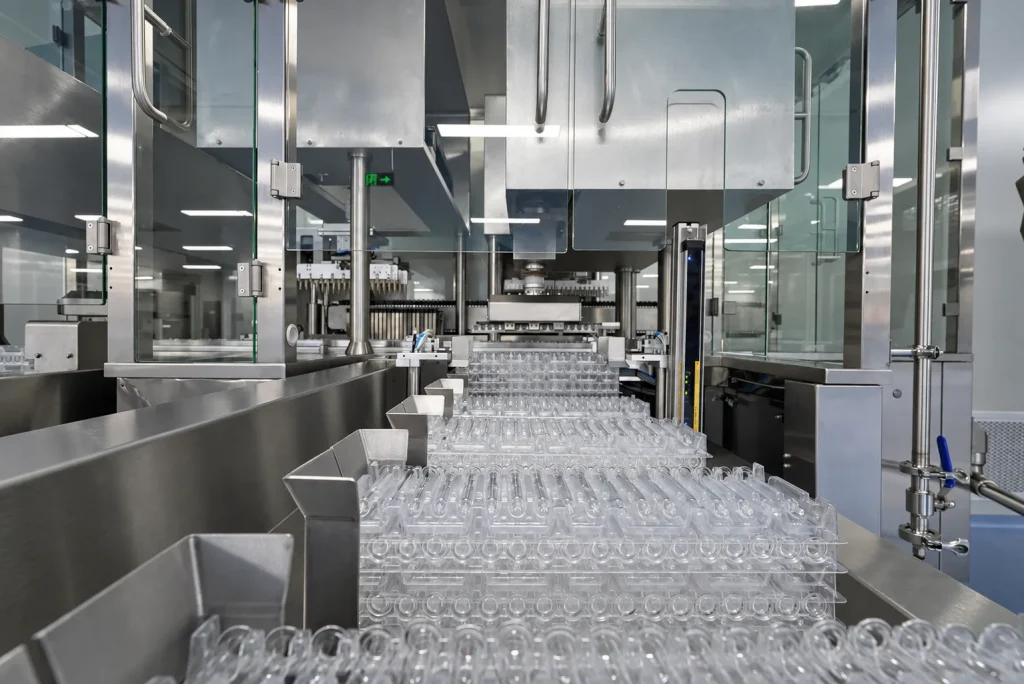
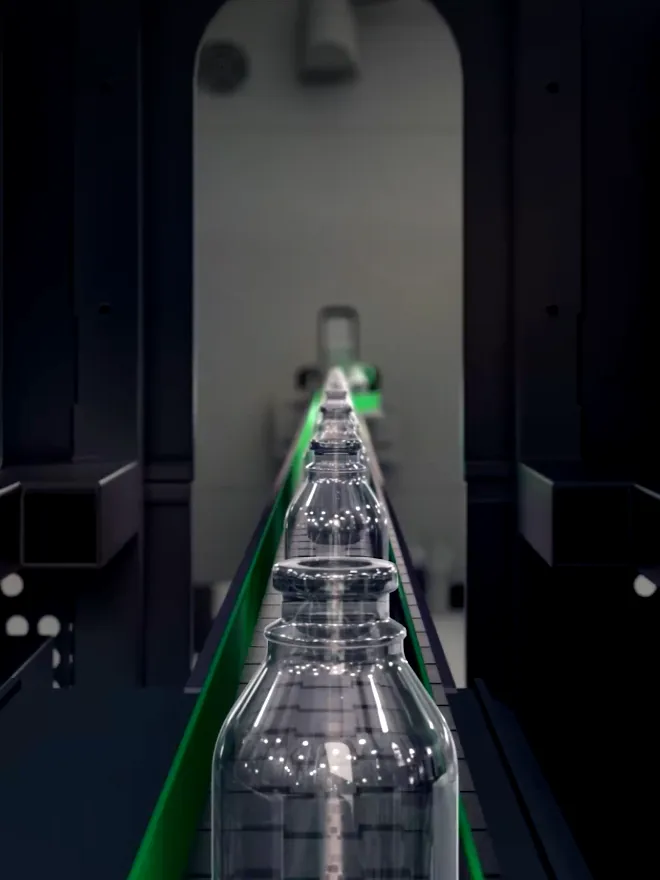
LINUO’s configuration includes eight-station independent cleaning. Within the defined loading, cleaning and rail-transfer sequence, vials remain separated from one another.
For this article, the relevant issue is how containers move through cleaning while maintaining that separation. Water-system design, rinse specifications and endotoxin evidence require their own technical review; the number of cleaning stations alone does not establish cleaning performance.
From a handling perspective, buyers should examine whether moving between processing positions introduces additional contact or manual intervention. Maintaining vial-to-vial separation through the cleaning operation helps address scratches and impact damage associated with containers touching each other.
The distinction also matters when discussing non-contact RTU glass vials. Here, non-contact refers to the absence of vial-to-vial contact within the specified operations. Vials still require support and positioning by appropriate equipment or packaging components.
Clear terminology allows buyers to assess the process without interpreting “non-contact” as an absence of all physical contact.
Transfer interfaces are a central part of the handling assessment. Buyers need to understand how vials leave one operation and enter the next, particularly where the supporting or positioning arrangement changes.
LINUO verwendet rail-based transfer within its automated production sequence, maintaining vial-to-vial separation across the defined route. This supports controlled movement while reducing scratching and impact risks associated with containers contacting one another.
The practical value of automated vial transfer lies in the continuity of the handling arrangement. A separated loading configuration is most useful when the following transfers preserve that separation.
During a supplier review, examine the interfaces as well as the individual machines. Relevant questions include where the vial support changes, whether temporary accumulation occurs and what personnel intervention may be needed following an interruption.
These questions help define the operating conditions under which the non-contact arrangement applies. They also avoid extending a supplier-side handling claim to every later activity.
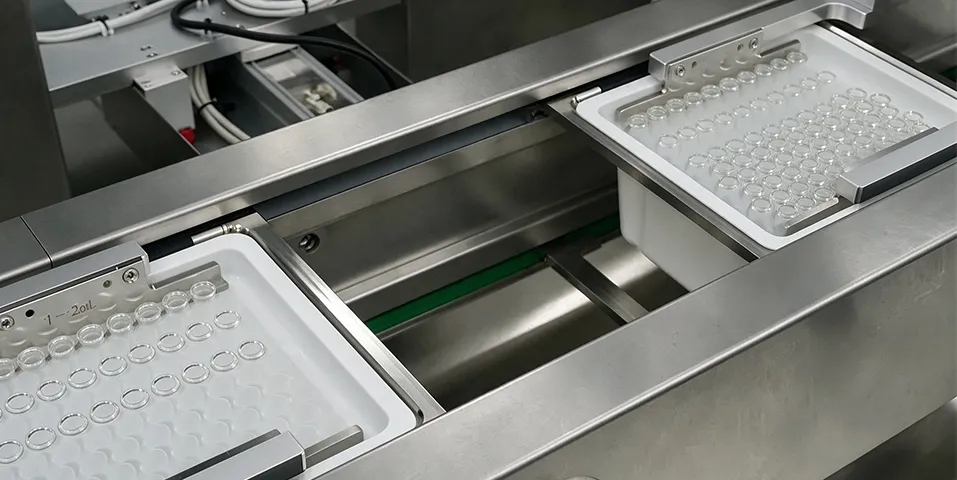
An RTU vial production line also needs to manage material availability. LINUO’s line control includes automatic replenishment of missing material positions, supporting more continuous production.
This function addresses material-flow continuity. It complements the physical handling arrangement by helping manage gaps in the production sequence.
For procurement and technical teams, the useful discussion concerns the replenishment function’s scope: which operation it serves, how a missing position is addressed and what happens when replenishment cannot proceed normally.
Automatic replenishment should not be interpreted as a guarantee of uninterrupted operation. It also does not, by itself, establish the accuracy of drug filling on a customer’s downstream equipment. LINUO’s RTU vials are packaging components supplied for subsequent pharmaceutical filling.
Keeping these functions distinct makes the benefit clear: replenishment supports the supplier’s material flow, while the customer’s filling performance requires separate assessment.
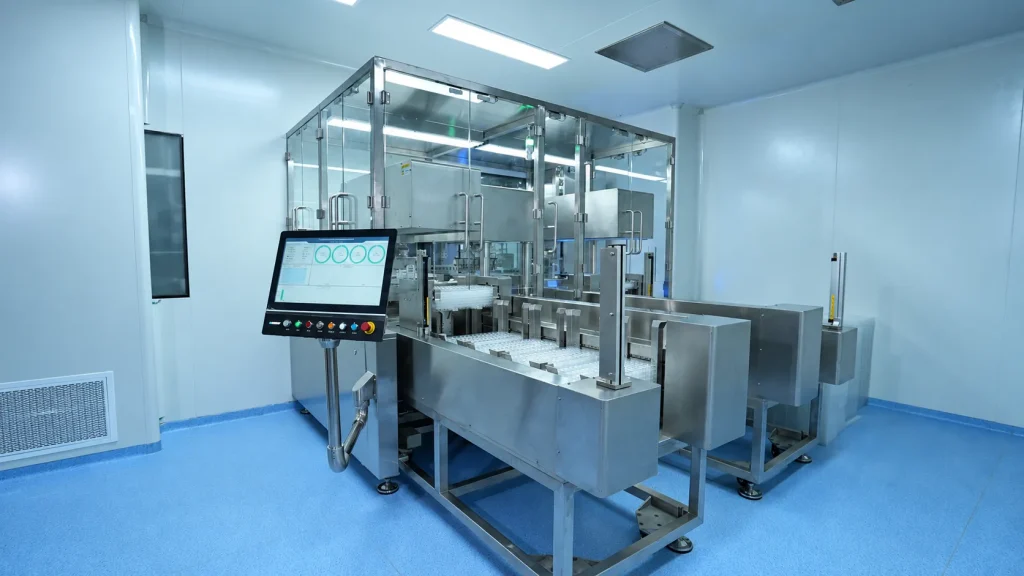
LINUOs automated RTU vial line is designed to reduce personnel involvement and the associated contamination risk during routine production. Its published production information identifies a Grade A (ISO 5) cleanroom environment for applicable RTU operations. Buyers should evaluate this environmental control together with the procedures used when normal production is interrupted.
A supplier review should therefore cover two operating conditions:
Routine production: How do plastic-tray loading, eight-station independent cleaning, rail-based transfer and automatic material replenishment proceed through the automated sequence?
Exceptional intervention: What happens when material requires attention, equipment stops or transfer cannot continue as intended?
Buyers can ask how affected material is identified and segregated, how personnel intervention is controlled, and what inspection or quality review is required before production resumes. These questions are particularly relevant when assessing contamination-control practices against the buyer’s own EU GMP Annex 1 strategy.
Automation establishes the physical production sequence. Defined operating procedures, environmental controls and quality review help maintain its consistent use.
For LINUO, the confirmed vial-to-vial separation described here applies to plastic-tray loading, eight-station independent cleaning and rail-based transfer. This automated sequence is intended to reduce direct vial contact, scratches, impacts and unnecessary personnel intervention before sterile packaging.
The wider RTU production process also includes nesting, AI inspection, double bagging, terminal ethylene oxide sterilization and sterility testing. For Nest & Tub or other selected packaging configurations, buyers should confirm the applicable vial dimensions, packaging components, sterile-barrier arrangement and filling-line interfaces. Dimensional requirements may also be reviewed against the relevant provisions of ISO 8362-1 for injection vials.
The supplier-side non-contact sequence should be distinguished from tub opening, denesting, filling and transfer on the customer’s aseptic filling line. These activities depend on the purchased packaging format, filling equipment and contamination-control strategy.
During qualification, buyers should therefore assess two separate areas:
This distinction establishes a clear boundary between supplier production controls and customer-side aseptic processing requirements.
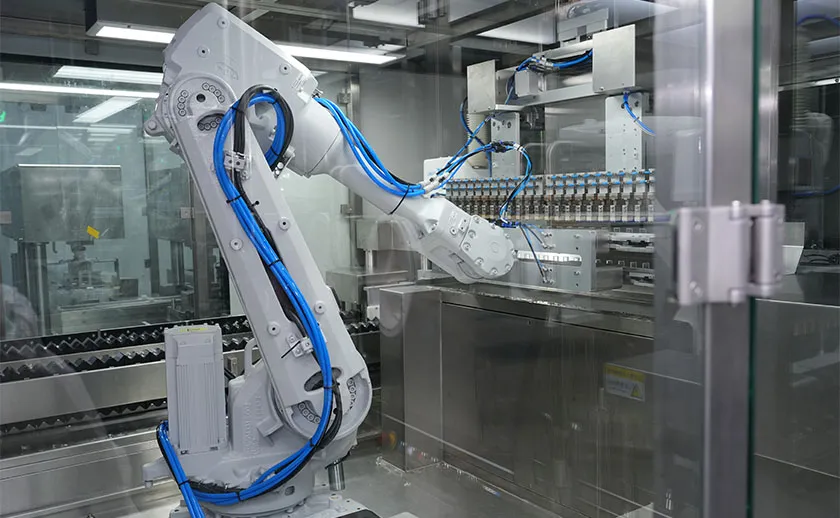
LINUO supports its manufacturing operations through full lifecycle product management, a quality management system, validation planning, ongoing production-environment monitoring and standardized finished-product release testing.
Its core quality, production, equipment and process teams have pharmaceutical-factory experience. This background supports the application of pharmaceutical production management practices to sterile packaging operations.
For buyers, these management capabilities provide context for reviewing the automated handling sequence. The selected vial, production route and packaging configuration remain the basis for determining which process information and quality documents are relevant.
The qualification discussion should connect three elements: the handling design, its operating controls and the evidence applicable to the supplied product.
When selecting RTU glass vials, look beyond a general statement about automation. Review how material enters the line, how vials remain separated during cleaning and transfer, and how material gaps are managed.
LINUO’s plastic-tray loading, eight-station independent cleaning, rail-based transfer and automatic replenishment provide concrete starting points for that discussion.
Share your required vial size, RTU packaging format and supplier-qualification priorities with LINUO. For downstream handling review, also identify your intended unloading and transfer arrangements so that supplier-side production controls and customer-side requirements can be discussed clearly.
It refers to the absence of vial-to-vial contact throughout the defined plastic-tray loading, eight-station independent cleaning and rail-based transfer operations. It does not mean the vials have no contact with supporting equipment.
Automated transfer reduces reliance on manual movement. Maintaining vial-to-vial separation within the defined route helps reduce scratching and impact risks associated with containers contacting one another.
LINUO’s automatic replenishment function addresses missing material positions and supports production continuity. Its scope should be confirmed for the relevant operation; it does not guarantee zero downtime or downstream drug-filling accuracy.
Wir werden Ihnen innerhalb von 24 Stunden antworten. In dringenden Fällen fügen Sie bitte WhatsApp/WeChat hinzu: +8615953131507, oder rufen Sie direkt unter +8618615646416 an.
*Wir respektieren Ihre Vertraulichkeit und schützen alle Informationen.
Wir verwenden Ihre Informationen ausschließlich zur Beantwortung Ihrer Anfrage und werden niemals unaufgefordert E-Mails oder Werbebotschaften versenden.