









Chi siamo
Se riscontri problemi durante l'utilizzo del prodotto, non esitare a contattarci


Scorri verso il basso

 October 19, 2026
A delayed shipment of pharmaceutical glass vials can affect far more than packaging inventory. It can disrupt filling schedules, delay clinical supply and force production teams to reconsider how available materials are allocated.
Dual-sourcing in primary packaging means qualifying and maintaining a second supplier for a defined packaging requirement. Its purpose is to create an additional, usable supply option through technical evaluation, quality review and appropriate change control.
For pharmaceutical manufacturers, biotech companies and CDMOs, finding another supplier is only the beginning. The alternative container must meet the project’s requirements for product quality, drug compatibility, equipment interfaces, documentation and commercial supply.
This guide explains how to evaluate a second-source pharmaceutical glass packaging supplier and how LINUO’s manufacturing capabilities can support that assessment.
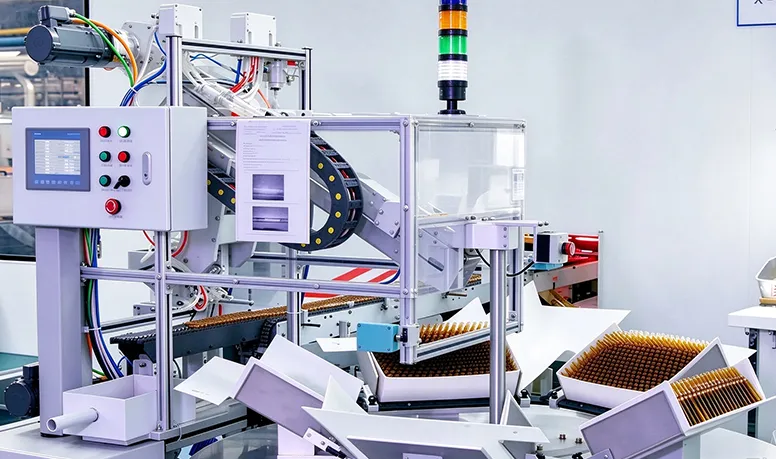
Dependence on one supplier can leave a pharmaceutical project exposed to production interruptions, capacity constraints, material shortages or changes in delivery schedules.
The impact depends on the packaging component involved. A standard-looking vial may still have project-specific dimensions, surface characteristics, closure requirements or processing conditions. Replacing it at short notice may require more work than the purchasing team expects.
A second qualified supplier provides an additional sourcing route before an urgent shortage occurs. It can also support discussions about future capacity, production expansion and supply allocation.
However, two suppliers do not automatically create two independent supply chains. They may depend on common raw-material sources, logistics routes or subcontractors. A useful pharmaceutical supply chain risk mitigation plan therefore examines upstream dependencies as well as the finished packaging supplier.
A backup supplier may have submitted a quotation or provided samples. A qualified second source has completed the assessments required for its agreed use.
| Sourcing stage | Typical position | Remaining question |
| Potential supplier identified | Product range appears relevant | Can the supplier meet the exact requirement? |
| Samples received | Initial evaluation can begin | Do samples and supporting records meet agreed criteria? |
| Technical assessment completed | Product and process suitability have been evaluated | What quality and change-control steps remain? |
| Second source approved | Supplier is authorized for the defined scope | How will supply readiness be maintained? |
The objective is to establish a usable supply option, with clear responsibilities and a defined approval scope.
A successful second-source evaluation starts with a shared requirement across procurement, quality, regulatory, packaging development and manufacturing teams.
Procurement may prioritize availability and commercial terms. Engineering needs suitable dimensions and equipment interfaces. Quality needs controlled processes and reliable batch documentation. Development teams need evidence relevant to the formulation and container system.
These requirements should be brought together before comparing quotations.
For pharmaceutical glass packaging, the assessment normally needs to define:
This prevents suppliers from quoting different configurations under the same general product description.
“10R vial” or “3 ml cartridge” is a useful starting description, but it is not a complete purchasing specification.
A second-source project should identify the approved drawing revision, critical dimensions, glass requirements, surface treatment where applicable, and relevant packaging configuration.
For RTU products, the requirement also includes the sterile barrier and the handling interface with the customer’s equipment.
| Requirement | What to define | Why it matters |
| Container | Vial, cartridge, ampoule or prefillable syringe component | Establishes the correct product family |
| Material | Required glass type and applicable quality specification | Provides a consistent assessment basis |
| Geometry | Dimensions, tolerances and drawing revision | Supports equipment and closure evaluation |
| Supply state | Bulk or selected RTU configuration | Defines preparation and handling requirements |
| Confezionamento | Nest, tub, tray, bags and transport configuration | Supports transfer and logistics review |
| Documentazione | Inspection, release and other project-specific records | Aligns supplier evidence with acceptance needs |
| Supply plan | Quantities, demand profile and delivery destination | Enables a realistic commercial discussion |
Where the existing specification contains proprietary or supplier-specific references, identify which requirements are essential to product performance and which require further clarification.
Matching nominal capacity or a general dimensional standard does not establish interchangeability.
When evaluating an alternative RTU vial supplier, compare the actual container, packaging and processing interfaces. For Nest & Tub products, this may include nest layout, vial support, tub geometry, handling features and the customer’s unloading method.
A line trial should use the selected configuration and agreed acceptance criteria. Relevant observations may include handling interventions, stoppages, breakage, transfer performance and changeover requirements.
Teams searching for alternatives to established international packaging systems should follow the same approach. Brand references can help explain the configuration under review, but they do not prove equivalent performance, authorization or direct interchangeability.

For a second-source RTU project, the glass vial is only one part of the supplied system.
A technically suitable vial may still require adjustments to packaging handling or format parts. Conversely, a matching tub interface does not establish formulation compatibility or closure performance.
Review both levels:
Container suitability: dimensions, material characteristics, surface condition and the intended closure system.
Packaging-system suitability: nest or tray arrangement, sterile barrier, transfer route and equipment interfaces.
LINUO’s RTU Glass Vials provide a starting point for discussing the selected supply configuration and its project-specific assessment.
A supplier audit should connect manufacturing capabilities to the risks relevant to the purchased component.
Per Fiale in vetro RTU, useful areas include personnel intervention, container handling, cleaning controls, identification, sterile packaging and finished-product release.
LINUO’s confirmed manufacturing configuration provides several areas for technical review:
| LINUO capability | Relevance to second-source evaluation |
| RMB 400 million investment in the sterile product workshop | Provides context for the sterile packaging manufacturing infrastructure |
| Water treatment system with single-unit investment exceeding RMB 10 million | Supports discussion of the water-system facilities behind production |
| Plastic-tray loading, eight-station independent cleaning and rail transfer | Supports review of personnel intervention and vial-to-vial contact |
| Four-water and five-gas cleaning design | Provides a basis for reviewing the applicable cleaning sequence |
| Automatic online inspection during and after cleaning | Supports discussion of inspection scope and process controls |
| Codifica laser | Supports ink-free identification and batch-identification review |
| Automatic material replenishment | Supports assessment of material-flow continuity |
| Automated double-layer breathing-bag packaging | Supports review of packaging operations and personnel involvement |
Equipment investment establishes manufacturing context. Product suitability still needs to be assessed through the applicable specifications, process information and quality evidence.
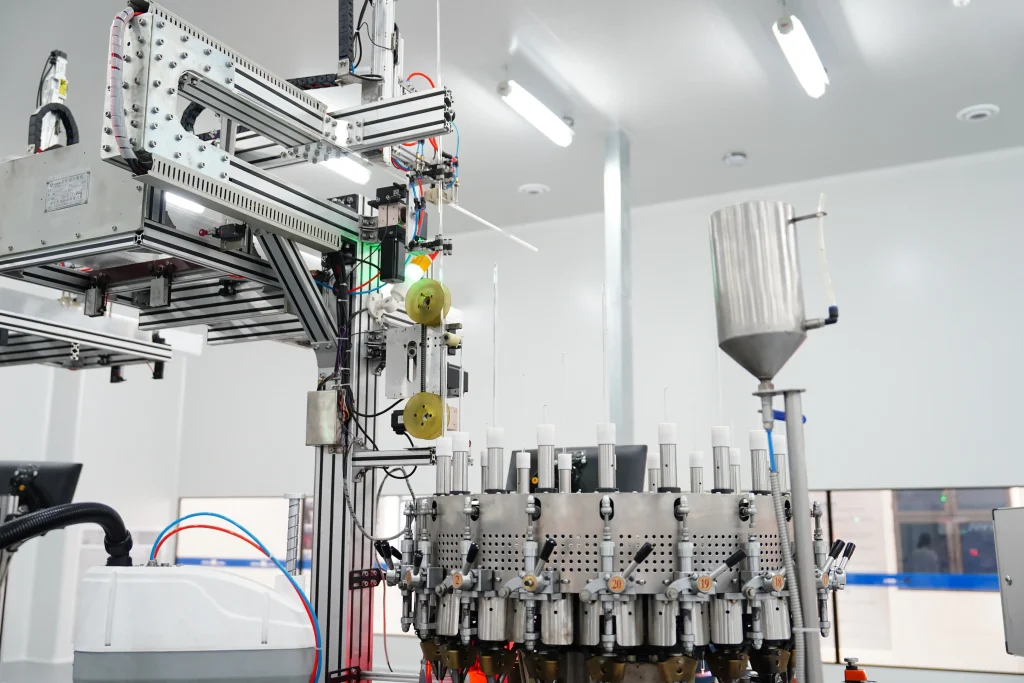
The technical assessment should follow the risks associated with introducing the proposed packaging component.
For a vial project, evaluation may involve the container, formulation, stopper, seal, filling process and storage conditions. For cartridges or prefillable syringe components, the assessment may also involve plungers, needles, interfaces and delivery devices.
| Evaluation area | Practical objective |
| Dimensional review | Establish conformity with the agreed drawing |
| Incoming-material assessment | Confirm the proposed acceptance approach |
| Equipment trial | Evaluate handling and operation on the intended line |
| Formulation and container assessment | Address product-specific compatibility questions |
| Closure or device evaluation | Assess the relevant assembled system |
| Quality and regulatory review | Determine approval, documentation and change requirements |
LINUO’s pharmaceutical glass packaging portfolio allows customers to discuss vial, cartridge and other primary packaging requirements within a broader manufacturing context.
For RTU projects, its automated handling, cleaning, inspection, identification and packaging capabilities provide concrete subjects for supplier assessment. The next step is to connect those capabilities with the exact configuration being considered.
To begin a second-source pharmaceutical glass vial evaluation, provide:
Contact LINUO to discuss specification review, project documentation and sample requirements for your second-source assessment.
It is the qualification and maintenance of two suppliers for a defined packaging requirement. Each source needs an agreed technical, quality and commercial scope before it can serve the intended project.
No. Nominal size is only one attribute. Dimensions, material characteristics, closure interfaces, packaging configuration and manufacturing performance may require separate evaluation.
Start with the selected product specification, drawings, packaging configuration and applicable quality-document scope. Then agree on samples, testing and any required equipment trial.
It can provide an additional supply option, but it cannot eliminate every disruption. Readiness depends on qualified products, available capacity, material dependencies, logistics and ongoing supply planning.
Replacement suitability must be evaluated for the specific configuration. Drawing review, relevant product testing, equipment assessment and customer approval establish whether a proposed LINUO product is suitable for the project.
Ti risponderemo entro 24 ore. In caso di urgenza, aggiungi il nostro numero su WhatsApp/WeChat: +8615953131507, oppure chiama direttamente il numero +8618615646416.
*Rispettiamo la tua privacy e tutte le informazioni sono protette.
Utilizzeremo i tuoi dati esclusivamente per rispondere alla tua richiesta e non ti invieremo mai e-mail non richieste né messaggi promozionali.