







Sobre nosotros
Si tiene algún problema durante el uso del producto, no dude en ponerse en contacto con nosotros



Desplácese hacia abajo

 September 01, 2026
 Clinical trial supply often involves smaller batches, changing project requirements and strict control of injectable drug packaging. A development team may need sterile vials for formulation studies, stability programmes, engineering batches or clinical manufacturing without operating the same container-preparation infrastructure used by a mature commercial facility.
RTU glass vials may be evaluated for these projects because they are supplied after controlled preparation, sterile-barrier packaging and applicable terminal sterilization. LINUO provides RTU glass vials in Nest and Tub and Tray formats for integration into compatible aseptic filling processes.
Clinical supply should not be treated simply as a smaller version of established commercial production. A clinical-stage project may have a limited batch quantity, an evolving formulation and a filling process that has not yet reached its final commercial configuration.
Packaging decisions made during this period may affect:
The selected glass vial must therefore meet the immediate clinical requirement while allowing the development team to understand what may need to change later.
RTU packaging may be worth evaluating when the project requires prepared sterile vials but does not have practical access to dedicated vial washing, depyrogenation and preparation equipment. It should not, however, be selected solely because the production batch is small.
Conventional bulk glass vials may require several customer-side preparation processes before filling. Depending on the container and manufacturing process, these may include washing, pyrogen-control processing, sterilization, sorting and controlled transfer into the filling area.
For a small clinical batch, the preparation burden does not necessarily decrease in proportion to the number of vials. The facility still needs appropriate equipment, operating procedures, documentation and process controls.
Clinical teams may therefore need to evaluate:
| Decision factor | Question to confirm |
| Batch quantity | How many filled units are required for the planned clinical activity? |
| Filling facility | Does the facility have qualified vial-preparation equipment? |
| Filling line | Can it accept the selected Nest and Tub or Tray system? |
| Formulation | Is the glass, surface and closure system suitable for the drug? |
| Stability programme | Will the same packaging configuration be used for stability studies? |
| Documentation | What specifications, CoA, inspection and sterilization documents are required? |
| Future scale-up | Can the selected vial configuration support later development stages? |
RTU vials can reduce selected preparation requirements, but the operating model of the clinical manufacturer or fill-finish partner must still be assessed.
LINUO publishes Viales de vidrio RTU in two principal packaging formats:
Viales RTU con nido y bandeja
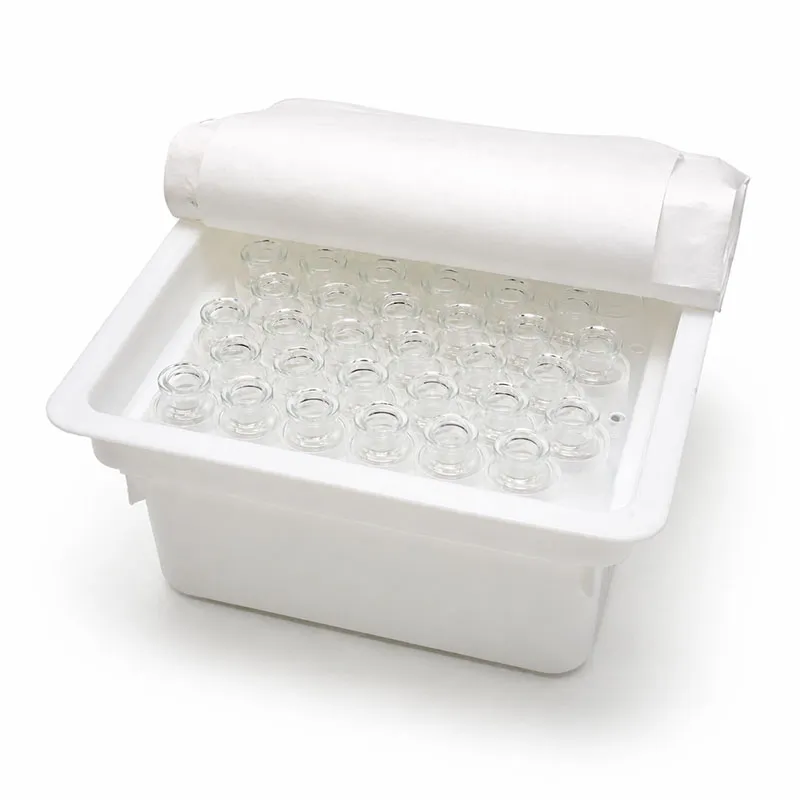
The Sistema Nest and Tub incluye:
The Nest positions the vials separately, while the Tub provides external structural support. This arrangement can reduce direct vial-to-vial contact during transportation, controlled handling and filling preparation.
The system is designed for organized loading into compatible aseptic filling equipment.
Viales RTU con embalaje en bandeja
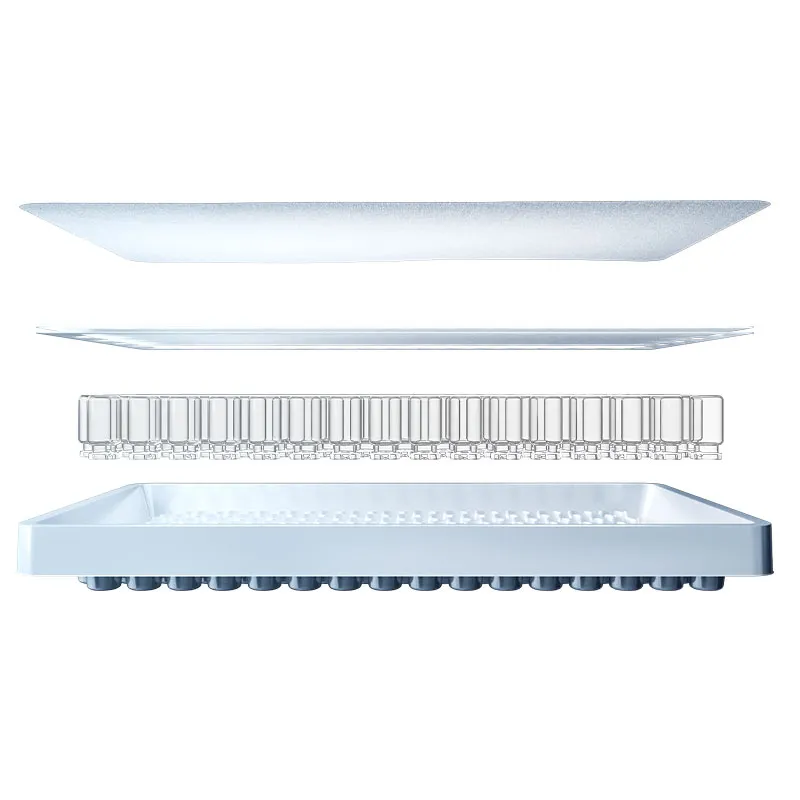
LINUO’s Tray format places the vials in individual Tray positions. Its published product information identifies:
Nest y Tub y Tray packaging should not be treated as interchangeable. Selection depends on the filling equipment, loading method, vial size and production workflow.
LINUO publishes the following nominal sizes for both RTU Nest and Tub and Tray vial systems:
2R、4R、6R、8R、10R、15R、‘20R、25R、30R、50R
The availability of multiple vial sizes allows a clinical project to evaluate the container according to its formulation, intended fill volume, headspace requirement, closure components and filling equipment.
A nominal vial size should not be selected from the fill volume alone. Pharmaceutical teams should also confirm:
The final specifications and tolerances should be confirmed using the applicable product drawing and project documentation.
For high-value injectable products, the cost and development impact of rejected or lost drug product may be more important than the empty-vial purchase price alone.
LINUO presents Viales RTU as a packaging direction for applications including biologics, antibody drugs, cell and gene therapy products, nucleic acid drugs, vaccines and other high-value injectable formulations.
When evaluating packaging for these applications, project teams may consider:
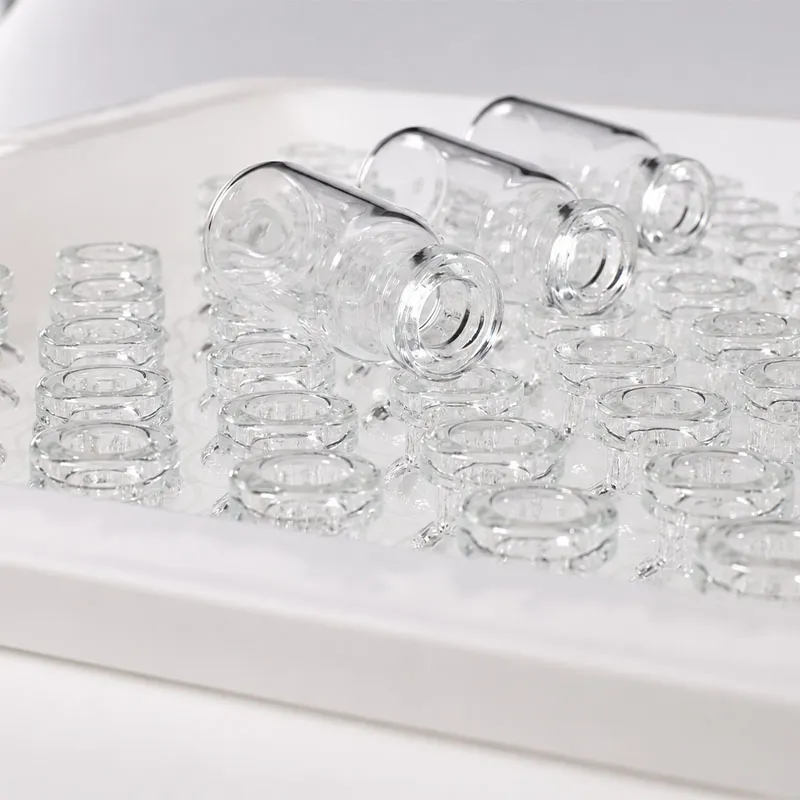
Nest and Tray systems hold individual containers in defined positions. This can help reduce direct vial-to-vial contact and the associated risk of collision or scratching during applicable transport and handling processes.
These characteristics do not prove that RTU vials are automatically the correct packaging for every high-value formulation. Compatibility, stability, fill volume, closure system and filling process must still be evaluated for the specific drug product.
RTU packaging can provide flexibility when a filling facility needs prepared containers without operating a complete customer-side washing and depyrogenation process for each clinical project.
Possible operational benefits include:
However, “flexible” does not mean universally compatible. A clinical supply team should verify whether the intended filling facility can receive, open, load, fill, stopper and seal the selected RTU format.
Samples and line trials may be required before the clinical batch is scheduled.
Filling-line compatibility is one of the most important qualification points. A statement that an RTU vial is designed for automated filling does not establish compatibility with every machine.
Before use, the pharmaceutical manufacturer or fill-finish partner should review:
For outsourced filling, these points should be confirmed jointly by the pharmaceutical company, CDMO and packaging supplier.
The documentation package should be confirmed for the selected vial configuration, clinical stage and target market. Depending on the product and project, LINUO can provide applicable product specifications, Certificates of Analysis, test data, inspection information and regulatory support documents.
An RTU vial project may also require sterilization-related information, sterile-barrier specifications, batch-release documents, storage conditions and applicable packaging-integrity information.
Company-level certifications should not automatically be applied to every RTU vial configuration. Buyers should confirm which documents are available for the exact product being evaluated.
Bulk and RTU describe different container preparation and supply workflows.
| Evaluation area | Bulk glass vials | Viales de vidrio RTU |
| Customer-side preparation | May require washing, depyrogenation, sterilization and sorting | Selected preparation stages are completed before delivery |
| Packaging presentation | Commonly handled as bulk containers | Nest and Tub or Tray |
| Preparation equipment | Depends on the customer’s established process | Can reduce the need for selected customer-side preparation equipment |
| Small-batch use | May be practical where qualified infrastructure already exists | May be evaluated where filling-ready presentation is important |
| Filling-line interface | Bulk container handling system | Compatible Nest, Tub or Tray handling system |
| Qualification focus | Container preparation and filling process | Sterile barrier, sterilization documents and line compatibility |
| Cost evaluation | Container plus customer-side processing | RTU product plus reduced customer-side preparation burden |
RTU is not automatically less expensive. A proper comparison should consider the complete process, including equipment, WFI, cleanroom space, labour, maintenance, validation, changeover, inspection and batch quantity.
No universal cost comparison is published on the LINUO website. Cost claims should therefore be based on the customer’s actual project data.
A clinical-stage packaging decision should consider whether the vial and component configuration may continue into later development.
Before final selection, teams should discuss:
A project may remain with RTU packaging through later development, or it may evaluate a transition to another processing format. Either route requires technical, quality and regulatory review.
The anticipated commercial strategy should therefore be discussed before clinical packaging is finalized, even when the immediate batch is small.
Small clinical batches require the same disciplined packaging evaluation as larger pharmaceutical batches, even when the number of filled units is limited.
LINUO’s RTU glass vials are available in Nest and Tub and Tray formats across a published 2R–50R size range. Their prepared, sterile-barrier presentation can reduce selected customer-side washing, depyrogenation, sterilization preparation and loose-container handling before filling.
These characteristics may make RTU glass vials worth evaluating for applicable clinical supply and high-value injectable projects. They do not replace compatibility studies, filling-line qualification, container-closure evaluation, aseptic process validation or final drug-product release.
Buyers can provide their formulation category, fill volume, clinical batch quantity, filling-line configuration, closure requirements and required documentation for technical review.
No. RTU glass vials may be evaluated for applicable clinical supply projects, particularly where prepared sterile containers and reduced customer-side processing are important. Selection still depends on the formulation, batch size, filling process, closure system and development strategy.
LINUO publishes RTU vial sizes from 2R to 50R, including 2R, 4R, 6R, 8R, 10R, 15R, 20R, 25R, 30R and 50R. Exact specifications should be confirmed using the applicable product drawing.
LINUO describes its published RTU Nest and Tub and Tray vial configurations as pre-sterilized and packaged using Tyvek sterile-barrier components and double sterile bags. ETO terminal sterilization is identified on the applicable product pages.
No. The vial size, Nest or Tray configuration, packaging dimensions, loading method, stoppering process and equipment interfaces must be evaluated for the intended filling line.
LINUO’s applicable RTU vials are described as washing-free and depyrogenation-free at the customer site. This can reduce customer-side preparation, but the facility must still follow its qualified procedures for receiving, transferring and filling the containers.
Le responderemos en un plazo de 24 horas. Si se trata de un caso urgente, añada WhatsApp/WeChat: +8618615646416 o llame directamente al +8618615646416.
*Respetamos su confidencialidad y toda la información está protegida.
Solo utilizaremos su información para responder a su consulta y nunca enviaremos correos electrónicos no solicitados ni mensajes promocionales.