









Onderscheidingen
Als u problemen ondervindt tijdens het gebruik van het product, kunt u gerust contact met ons opnemen


Scroll omlaag

 September 11, 2026
 Sensitive injectable drug projects require careful control before filling begins. For vaccines, mRNA vaccines, biologics, blood products, monoclonal antibodies, oncology drugs, lyophilized drugs and high-value injectable formulations, the preparation stage can directly influence cleanliness, sterile transfer, particle control, line readiness and documentation review.
RTU-glazen injectieflacons are designed to help reduce customer-side preparation steps before aseptic filling. LINUO’s RTU glass vials are supplied washing-free, depyrogenation-free and pre-sterilized, with Nest & Tub and Tray formats available for aseptic filling-line integration. Available sizes include 2R, 4R, 6R, 8R, 10R, 15R, 20R, 25R, 30R and 50R.
However, RTU packaging should not be treated as a universal shortcut. It can help reduce preparation-related variables, but each project still needs to confirm the selected RTU format, sterile barrier configuration, incoming inspection, filling-line interface, closure planning and customer-side validation requirements.
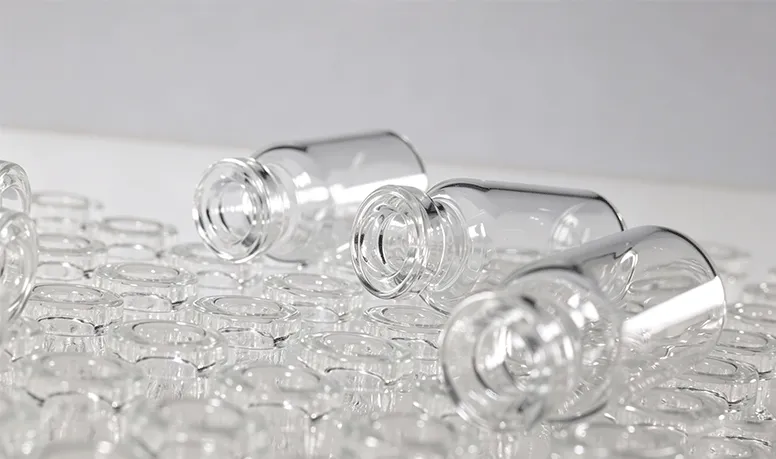
Before an injectable drug is filled, the container may go through transfer, unpacking, loading, handling and equipment setup. For sensitive injectable projects, these steps should be carefully controlled because unnecessary handling or unclear procedures may increase project risk before production even starts.
Common pre-filling concerns include packaging condition, sterile barrier opening, vial presentation, glass-to-glass contact, particle-control concerns, filling-line loading compatibility, stopper and cap planning, batch document review and customer-side validation responsibility.
The goal is not only to receive sterile vials, but to make sure the vial format can enter the customer’s filling process in a controlled, practical and documented way.
RTU glass vials are not handled like loose bulk vials. Nest & Tub and Tray formats affect how vials are transferred, loaded and presented before filling.
For sensitive injectable projects, buyers should confirm the required vial size, selected RTU format, filling-line loading method, handling route, vial positioning, expected batch size, cleanroom transfer process, and post-filling stoppering and capping workflow.
This helps avoid a common project problem: selecting an RTU vial based only on size, then finding that the packaging format does not fully match the filling-line setup.
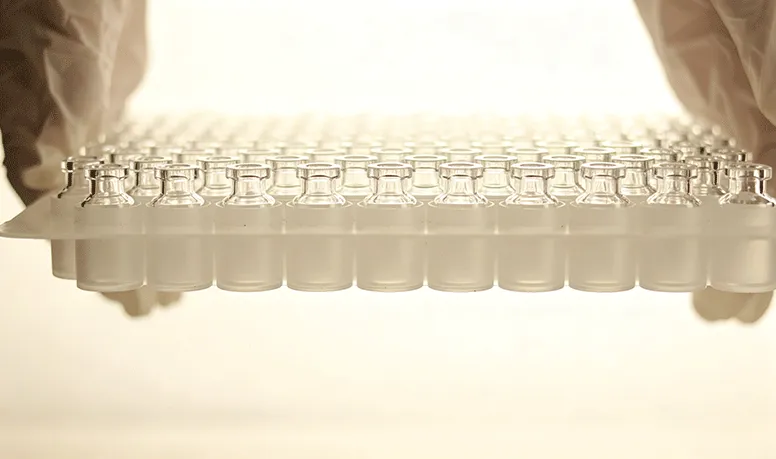
Sterile barrier packaging is important for RTU glass vials, but it must be reviewed together with the customer’s cleanroom transfer route and aseptic operating procedures.
For sensitive injectable projects, the buyer should confirm how the outer packaging will be removed, how the sterile barrier will be opened, how the vials will be transferred into the filling area, whether the unpacking method matches internal procedures, and which documents are required for QA review before use.
The sterile format can support controlled transfer, but the customer still needs to confirm how it will be used inside the actual facility.
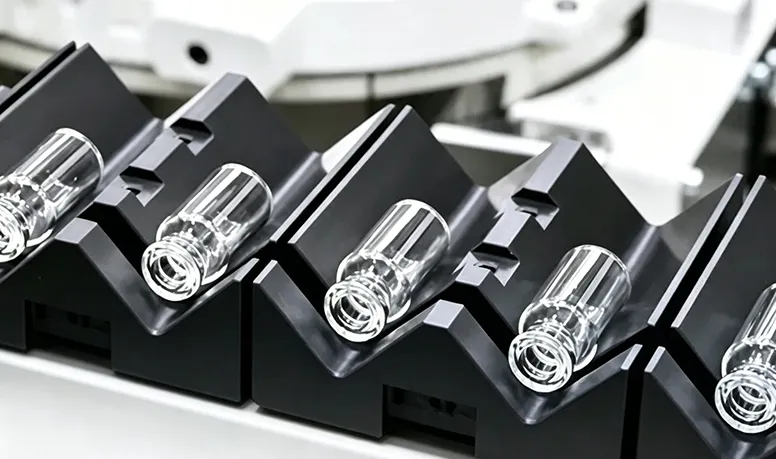
For sensitive injectable drugs, incoming inspection should not only check whether the product has arrived. It should confirm whether the RTU vial system is ready to enter the customer’s process.
Buyers should review outer packaging condition, sterile barrier condition, vial appearance, vial size and format, batch information, product specification, sterilization-related information where applicable, possible handling or transport damage, and required inspection records.
This helps identify potential issues before the vials enter the filling line, instead of discovering them during production.
RTU glass vials are selected partly because they can support aseptic filling-line integration. But final line compatibility still depends on the customer’s equipment, loading method and production workflow.
Before production, the project team should confirm whether the RTU format matches the filling equipment, how vials will be loaded onto the line, whether vial presentation is stable before filling, whether the line can handle the selected vial size, whether stoppering and capping steps are aligned with the process, and whether a line trial or technical confirmation is needed.
This is especially important for sensitive injectable projects, where unexpected line adjustments may increase downtime, handling and qualification workload.
Even though this article focuses on preparation before filling, closure planning should not wait until after filling has started.
The vial will eventually work with a rubber stopper, aluminum cap or plastic-aluminum flip-off cap. Stopper size, stopper material, cap type, crimping requirement and final sealing expectations should be reviewed early in the project.
For sensitive injectable projects, buyers should confirm the vial neck finish, stopper size, stopper material, cap type and size, crimping requirement, formulation contact considerations, post-filling sealing expectations and required component documents.
This avoids selecting an RTU vial first and then discovering later that the stopper, cap or crimping process needs additional adjustment.
| Risk Point | Why It Matters | What Buyers Should Confirm |
| RTU Format | Affects loading, transfer and filling-line setup | Nest & Tub or Tray, vial size, packaging configuration |
| Sterile Barrier | Supports controlled transfer before filling | Tyvek components, double bags, opening method, cleanroom transfer route |
| Incoming Packaging | Helps identify transport or handling issues before use | Outer carton, sterile barrier, vial appearance, batch information |
| Vial Presentation | Affects line loading and handling stability | Vial positioning, tray or tub interface, automated handling suitability |
| Particle-Control Concern | Sensitive injectables require controlled preparation | Handling route, glass-to-glass contact risk, incoming inspection method |
| Filling-Line Interface | Prevents production delays and extra handling | Equipment compatibility, loading method, vial size confirmation |
| Closure Planning | Avoids late-stage stopper or cap mismatch | Stopper size, cap type, crimping requirement, closure documents |
| Documentation | Supports QA review and supplier qualification | Specification, batch records, sterilization information where applicable |
| Customer Validation | Confirms project-specific suitability | Process validation, compatibility study, final product release responsibility |
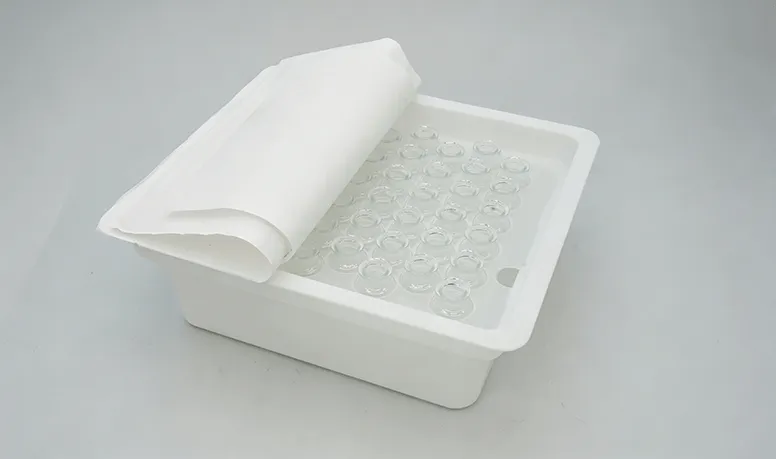
RTU glass vials can help reduce preparation-related variables before filling, but they do not replace customer-side evaluation.
For sensitive injectable projects, the buyer should still confirm the drug formulation category, required vial size, RTU format, sterile transfer process, filling-line compatibility, stopper and cap matching, storage conditions, required documentation, incoming qualification requirements and customer-side validation plan.
The RTU format can simplify the preparation stage, but final suitability must be confirmed under the customer’s own process and regulatory requirements.
LINUO’s RTU glass vial portfolio includes Nest & Tub and Tray formats for aseptic filling-line integration. The products are designed to support washing-free, depyrogenation-free and pre-sterilized vial supply, with multiple vial sizes from 2R to 50R.
For sensitive injectable projects, LINUO can support project discussions around RTU vial size, Nest & Tub or Tray format, sterile barrier packaging, filling-line presentation, stopper and cap matching, product specifications, batch and quality documents, and project-specific communication.
Final confirmation should still be based on the customer’s formulation, equipment, closure system, quality requirements and validation plan.
Sensitive injectable drugs require careful control before filling. The preparation stage may affect cleanliness, sterile transfer, particle control, handling stability, line readiness and documentation review.
RTU glass vials can help reduce customer-side preparation work by supplying vials in a washing-free, depyrogenation-free and pre-sterilized format. For sensitive injectable projects, this can help reduce preparation-related variables before aseptic filling.
However, buyers should not select RTU glass vials only because they are ready to use. A practical RTU vial decision should confirm the RTU format, sterile barrier configuration, incoming inspection requirements, filling-line interface, closure planning and customer-side validation responsibilities.
When these points are reviewed before filling, RTU glass vials can better support controlled, efficient and reliable aseptic filling for sensitive injectable drug projects.
Sensitive injectable drugs refer to injectable projects where sterility, formulation stability, particulate control, sterile transfer, closure compatibility or documentation requirements need closer evaluation before filling. Examples may include vaccines, mRNA vaccines, biologics, blood products, monoclonal antibodies, oncology drugs, lyophilized drugs and high-value injectable formulations.
RTU glass vials are supplied in a prepared sterile format, helping reduce customer-side washing, depyrogenation and sterilization steps before aseptic filling. The selected format still needs to match the customer’s filling process.
No. RTU glass vials can support the preparation stage, but they do not replace aseptic process validation, filling-line confirmation, compatibility studies or final drug-product release.
The choice depends on vial size, filling-line configuration, transfer process, handling method and customer equipment. Both formats should be evaluated according to the actual filling workflow.
Because the vial becomes part of a complete container closure system after filling. Stopper size, stopper material, cap type, crimping process and closure requirements should be reviewed early to avoid later project adjustments.
We will reply to you within 24 hours. If for urgent case, please add WhatsApp/WeChat: +8615953131507, Or call +8618615646416 directly.
*We respecteren uw vertrouwelijkheid en beschermen al uw gegevens.
We zullen uw gegevens uitsluitend gebruiken om op uw vraag te reageren en zullen nooit ongevraagde e-mails of promotionele berichten sturen.