









About Us
If you have any problems during product use,please feel free to contact us


Scroll Down

 October 15, 2026
LINUO uses laser coding on RTU sterile packaging components—including the nest, tub, Tyvek lid and outer bag—rather than directly on the glass vial body. This provides ink-free batch identification while keeping the laser marking operation away from the glass container itself.
The coding process incorporates a Class 100 negative-pressure fume extraction and dust collection system, online OCR/OCV visual verification, automatic rejection and Siemens MES recording. This article explains how these controls support marking-related particle management, code accuracy and packaging-level batch traceability.
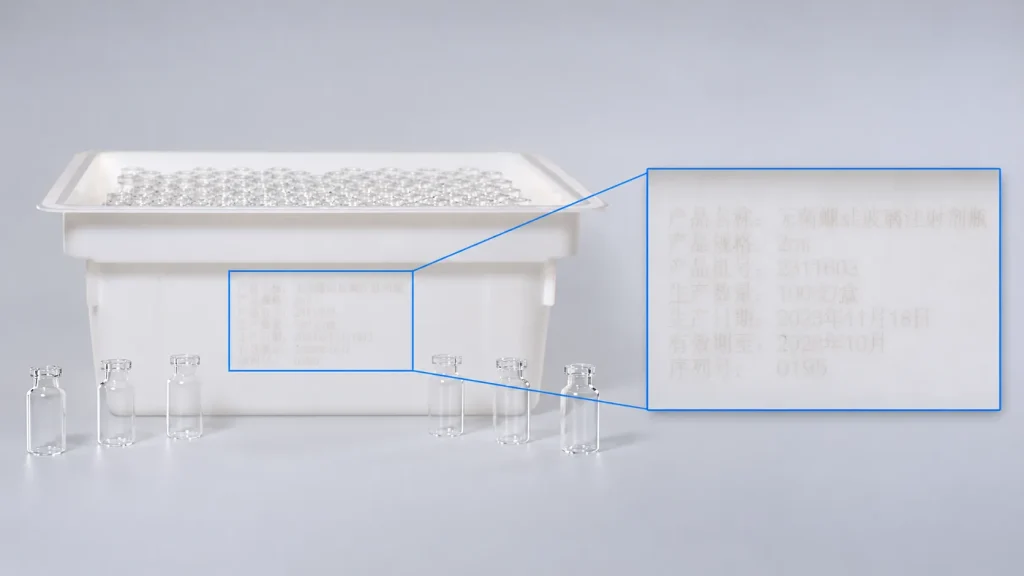
RTU glass vials are empty pharmaceutical containers supplied for subsequent drug filling. Their identification must therefore be considered separately from the labelling and identification of the finished medicinal product.
During supplier qualification and incoming-material review, buyers need to connect the delivered vial configuration with the relevant batch information. An identifier can support that connection, provided its meaning and record relationship are clearly defined.
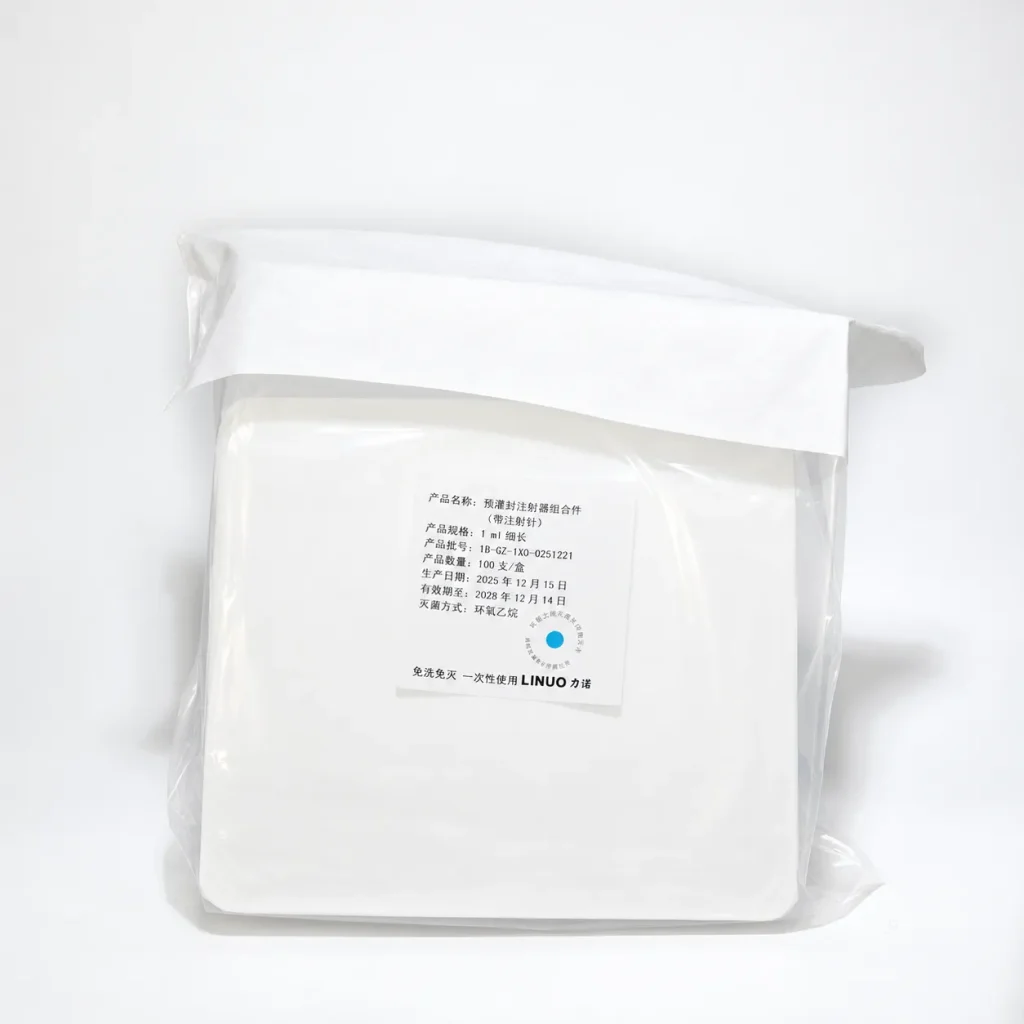
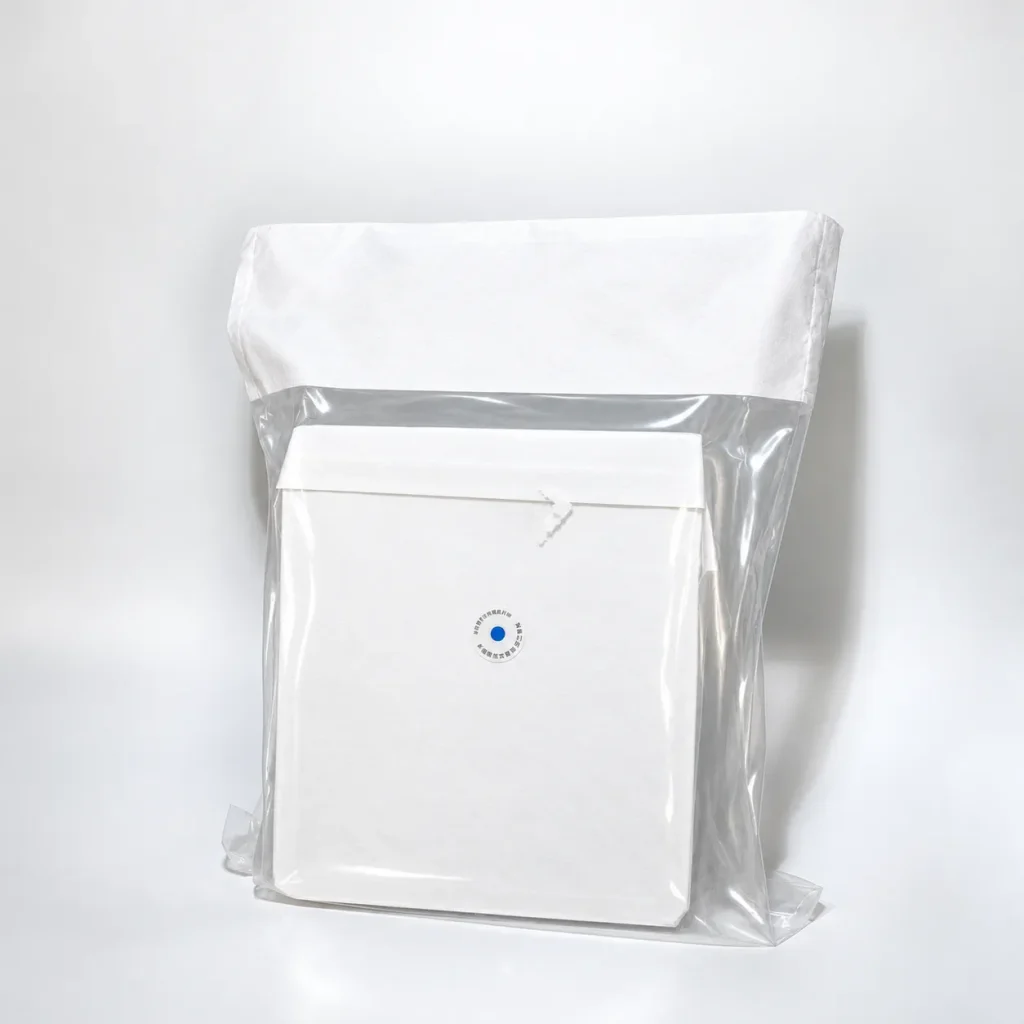
For LINUO, the identification scope is batch coding on the sterile packaging system. The identifier is carried by the nest, tub, Tyvek lid or outer bag within the selected packaging configuration, rather than being laser-marked onto the glass vial body.
This packaging-level identifier supports the connection between the supplied material and the corresponding batch records. It does not represent unique serialization of every individual vial.
For an overview of available supply configurations, explore LINUO’s RTU Glass Vials.
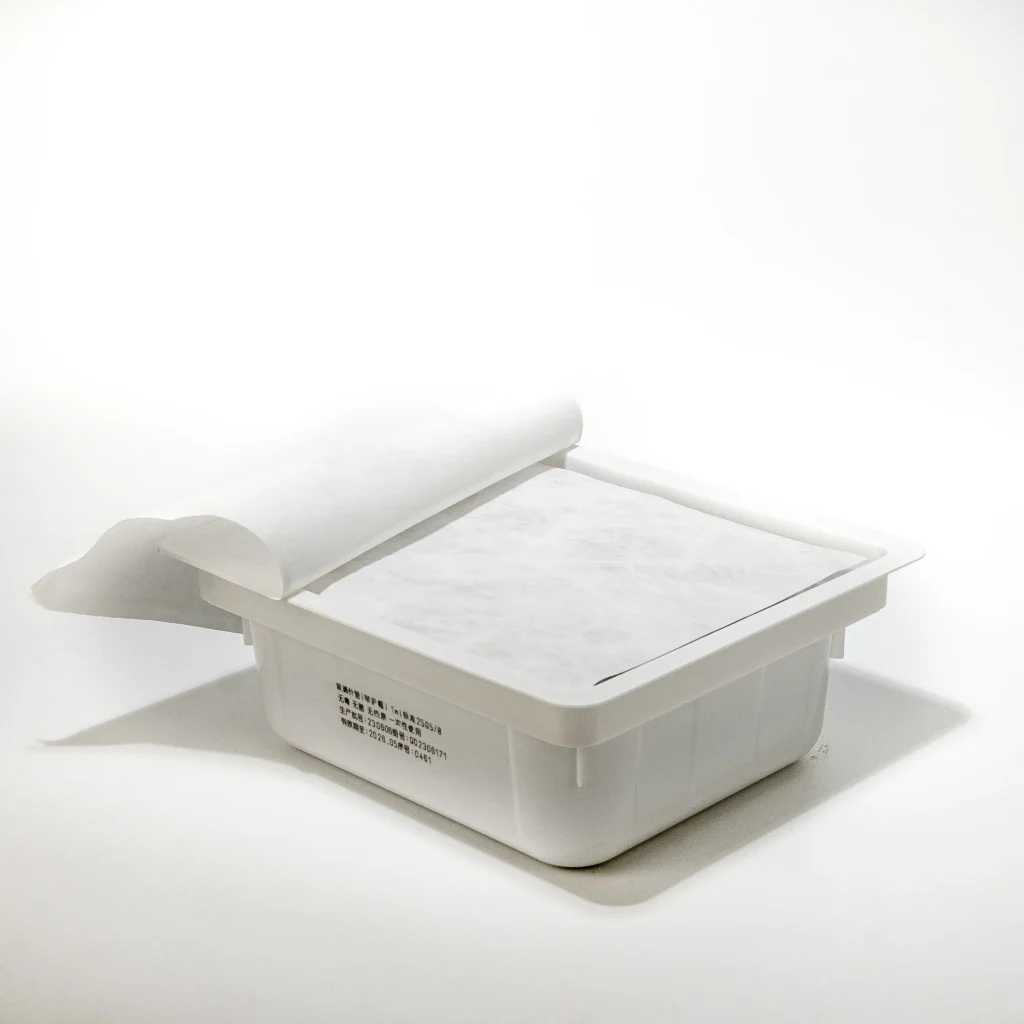
The purpose of ink-free coding in pharmaceutical packaging is to create an identifier without applying printing ink at that operation.
For buyers evaluating contamination risks, this removes the need to assess printing ink as an input to the selected coding step. It can therefore help address concerns associated with ink application and related material handling.
The appropriate claim is specific: laser coding helps reduce ink-related particle contamination concerns. It does not mean that every ink-based process causes contamination, or that laser coding guarantees a particle-free product.
A useful assessment considers the complete marking operation:
For particle control in RTU glass vials, the coding method is one part of the production process. Cleaning, handling, inspection and packaging remain relevant to the overall assessment.
LINUO also incorporates a Class 100 negative-pressure fume extraction and dust collection system into its laser coding operation. The system helps capture and remove fumes and particulate matter generated during marking, limiting their dispersion into the surrounding production environment.
Ink-free marking and local extraction address different concerns: the former avoids printing ink at the coding step, while the latter helps control emissions generated by the laser marking process.
Choosing a marking method requires more than comparing whether it uses ink. Buyers should evaluate its suitability for the selected material, production environment and identification requirement.
| Review area | LINUO’s packaging laser coding | Ink coding | Buyer’s qualification question |
| Marking input | Applies identification without printing ink | Uses ink to create the printed identifier | Which materials are introduced at the coding step? |
| Marking location | Nest, tub, Tyvek lid or outer bag; no direct laser marking on the glass vial body | Depends on the selected printing configuration | Which component carries the identifier? |
| Cleanliness assessment | Includes negative-pressure extraction to help control marking-generated fumes and particles | Requires review of ink application and related handling | How is the operation integrated into contamination control? |
| Surface suitability | Assessed for the selected packaging material and marking location | Must be assessed for the selected printing surface | Is the method suitable for the actual component? |
| Code verification | Online OCR/OCV verification with automatic rejection of failed units | Depends on the installed checking system | How are unreadable or incorrect codes controlled? |
| Traceability | Packaging-level batch identification supported by Siemens MES recording | Depends on the code’s connection to controlled records | Which batch records are associated with the identifier? |
This comparison avoids treating either method as universally suitable or unsuitable. For sterile packaging, the decision should follow the application and the evidence supporting the controlled process.
LINUO applies laser coding to the nest, tub, Tyvek lid or outer bag within the selected RTU packaging configuration—not directly to the glass vial body.
This distinction matters because the glass container is not exposed to the laser marking operation. Packaging-level identification therefore avoids introducing a direct laser processing step on the vial surface.
This benefit should be described precisely. It avoids direct laser exposure of the glass during coding; it does not replace the separate assessment of glass integrity, delamination performance or container closure integrity.
For the selected packaging configuration, the coding specification should define:
For Tyvek lids and outer bags, marking suitability should also be assessed with regard to the packaging material and sterile barrier function.
A clear code is useful only when it also contains the correct information.
Buyers should therefore distinguish between code readability and code correctness. Readability concerns whether the identifier can be interpreted under the agreed conditions. Correctness concerns whether it matches the intended product, batch or packaging reference.
Depending on the project, the review may include human-readable information, machine-readable information or both. The format and checking method should be agreed with the supplier.
LINUO uses online OCR/OCV visual verification to check the applied code against the expected coding information. OCR supports recognition of the marked characters, while OCV supports verification against the approved reference.
Packaging units that fail the configured verification criteria are automatically rejected. This provides an active control for incomplete, unclear or incorrect identification.
The coding-control workflow is:
Laser coding → Online OCR/OCV verification → Automatic rejection of failed units → Siemens MES recording
During qualification, customers can review the code specification, verification criteria, rejection handling and associated records. These details establish how the process controls both readability and agreement with the intended batch information.
RTU vial traceability depends on a reliable relationship between an identifier and the records it represents.
Laser coding can support batch identification, but the code is the access point to information rather than the information system itself. Buyers need to understand what records are associated with the identifier and how those records can be reviewed.
LINUO uses Siemens MES to support its production-record and batch-traceability workflow. The packaging coding process combines code application, online OCR/OCV verification, automatic rejection and MES recording.
The identification described here operates at packaging and batch level. It does not assign a unique laser-marked identifier to each glass vial.
For customer qualification, the record review should establish:
Batch identification and individual-unit serialization are different requirements. If a project needs a unique identifier for every vial, that requirement should be discussed explicitly rather than inferred from a general statement about laser coding or MES tracking.
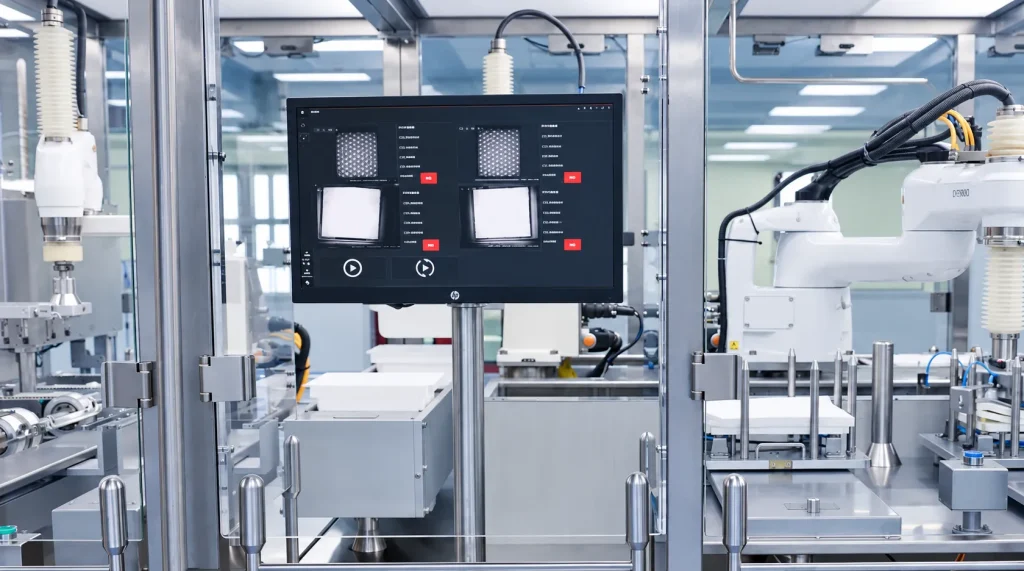
LINUO combines packaging laser coding, online OCR/OCV verification, automatic rejection and Siemens MES recording within its batch identification workflow. Each element performs a defined role.
| Element | Main purpose | What buyers should review |
| Packaging laser coding | Provides ink-free batch identification on packaging components without directly marking the glass vial | Marked component, position, approved content and material suitability |
| Negative-pressure fume extraction | Helps capture fumes and particles generated during laser marking | Extraction performance, maintenance and monitoring |
| Online OCR/OCV verification | Checks code readability and agreement with expected information | Verification scope, reference information and acceptance criteria |
| Automatic rejection | Removes packaging units that fail the configured verification checks | Rejection handling, segregation and disposition |
| Siemens MES recording | Records the coding-control workflow and supports batch traceability | Relationships between coding, verification, rejection and batch records |
| Batch documentation | Provides information for customer review and material acceptance | Agreement between the delivered material, identifier and batch documents |
These elements become useful together when their relationships are defined. An identifier should correspond to the right records; inspection results should be interpreted within their detection scope; and the customer’s documentation should match the material received.
LINUO’s laser coding capability forms part of a broader approach to sterile packaging production and quality management.
The company applies full lifecycle product management, supported by a quality management system, validation planning, ongoing production-environment monitoring and standardized finished-product release testing. Its core quality, production, equipment and process teams have pharmaceutical-factory experience.
Within this framework, LINUO applies ink-free batch identification to the sterile packaging system while keeping the laser marking operation away from the glass vial body. Negative-pressure fume extraction helps control marking-generated emissions, while online OCR/OCV verification and automatic rejection support identification accuracy. Siemens MES recording connects these controls with the batch-traceability workflow.
For customers, the qualification task is to connect these capabilities to the actual vial and packaging configuration being purchased. General manufacturing information provides useful background; product-specific clarification establishes what applies to the order.
A focused coding review does not require an unnecessarily long questionnaire. Start with the information needed to understand the identification process and its relationship with the supplied batch.
| Review item | Information to clarify | Purchasing value |
| Marking configuration | Marked packaging component, location and production stage | Establishes where batch identification applies |
| Code specification | Approved content, format and reading requirements | Aligns the identifier with customer needs |
| Packaging suitability | Assessment of marking settings and location for the selected material | Supports review of packaging condition and sterile barrier considerations |
| Extraction controls | Qualification, maintenance and monitoring information for the negative-pressure extraction system | Supports review of marking-generated fume and particle control |
| OCR/OCV verification | Verification scope, expected information and acceptance criteria | Explains how readability and correctness are checked |
| Automatic rejection | Rejection handling, segregation and disposition procedures | Explains how failed packaging units are controlled |
| Siemens MES records | Relationship between coding, verification, rejection and production batch records | Supports batch review and quality investigations |
| Documentation | Applicable batch documents and access arrangements | Supports qualification and incoming-material assessment |
Document availability and review depth should be agreed according to the project stage. Buyers should also explain whether their priority is batch recognition, incoming inspection, supplier qualification or a more detailed traceability requirement.
When evaluating laser coding for RTU vials, focus on packaging suitability, marking-related particle control, verified code accuracy and the connection to batch records.
LINUO combines packaging-level laser coding, Class 100 negative-pressure fume extraction, online OCR/OCV verification, automatic rejection and Siemens MES recording. The code is applied to the selected RTU packaging component rather than directly to the glass vial body.
Share your vial configuration, packaging format, intended batch coding content and reading requirements with LINUO. Clarify at which receiving, unpacking or transfer stages the identifier needs to remain available.
Contact Us to discuss ink-free packaging identification, batch traceability and the technical information relevant to your supplier assessment.
LINUO applies laser coding to RTU packaging components, including the nest, tub, Tyvek lid and outer bag, according to the selected configuration. The code is not applied directly to the glass vial body.
Packaging-level coding keeps the laser marking operation away from the glass vial body. This avoids direct laser exposure of the container during coding while providing batch identification on the packaging system.
LINUO incorporates a Class 100 negative-pressure fume extraction and dust collection system into the coding operation. It helps capture and remove marking-generated fumes and particles as part of the overall contamination-control approach.
Online OCR/OCV visual verification checks the applied code against the expected information. Packaging units that fail the configured verification criteria are automatically rejected, with the workflow recorded through Siemens MES.
No. The process described here provides batch identification on RTU packaging components. It does not represent individual-vial serialization.
Siemens MES supports recording of the coding, verification and rejection workflow and its relationship with batch information. The applicable records and review scope can be discussed during supplier qualification.
We will reply to you within 24 hours. If for urgent case, please add WhatsApp/WeChat: +8615953131507, Or call +8618615646416 directly.
*We respect your confidentiality and all information are protected.
We will only use your information to respond to your inquiry and will never send unsolicited emails or promotional messages.