









About Us
If you have any problems during product use,please feel free to contact us


Scroll Down

 October 27, 2026
Clinical packaging orders need to match the next manufacturing batch while allowing for changes in formulation, filling equipment and future demand. Purchasing substantially more containers than a project can use may tie up development funds and create avoidable inventory.
For teams sourcing small-volume orders of RTU vials for clinical trials, a practical approach is to confirm a suitable standard configuration, calculate the complete packaging requirement and evaluate samples before committing to clinical supply.
Ready-to-use packaging can reduce or remove customer-side vial washing, depyrogenation and sterilization steps for the selected workflow. The commercial arrangement—including minimum order quantity, packaging-unit size and delivery timing—must then be agreed for the selected product.
LINUO supports project discussions covering product selection, samples, applicable quality information and supply requirements. This guide explains how to turn those discussions into a clearer clinical packaging purchase.
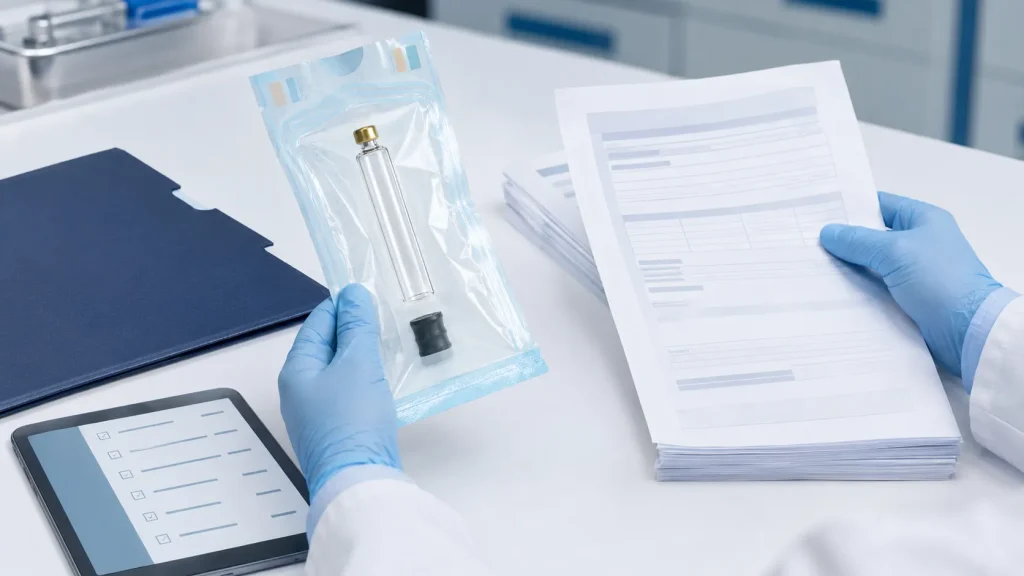
Start by distinguishing the quantities involved. The number of vials needed for one filling batch may differ from the supplier’s packaging unit, minimum order and total purchase commitment.
| Quantity | What it means for the buyer |
| Clinical batch requirement | Containers needed for the planned manufacturing and testing activities |
| Sealed packaging-unit quantity | Containers supplied within the agreed unopened packaging configuration |
| Minimum order quantity | The smallest order accepted for the selected specification and supply arrangement |
| Total purchase commitment | The quantity the buyer is contractually purchasing, including any agreed later deliveries |
Ask which of these quantities creates the procurement barrier.
If the issue relates to customization, evaluate whether an existing standard vial and RTU presentation can meet the technical requirement. If it relates to order timing, discuss whether an alternative production schedule is feasible.
Scheduled deliveries can also be explored, subject to agreement. They do not necessarily reduce the total quantity purchased, so confirm ownership, storage responsibilities, delivery quantities and remaining shelf life.
An effective MOQ discussion addresses both the immediate batch and the total commitment.
LINUO’s published RTU vial portfolio covers 2R–50R sizes, including 2R, 4R, 6R, 8R, 10R, 15R, 20R, 25R, 30R and 50R, in Nest & Tub and Tray presentations.
These published options provide a starting point for specification review. They do not establish current inventory or small-order availability for every configuration.
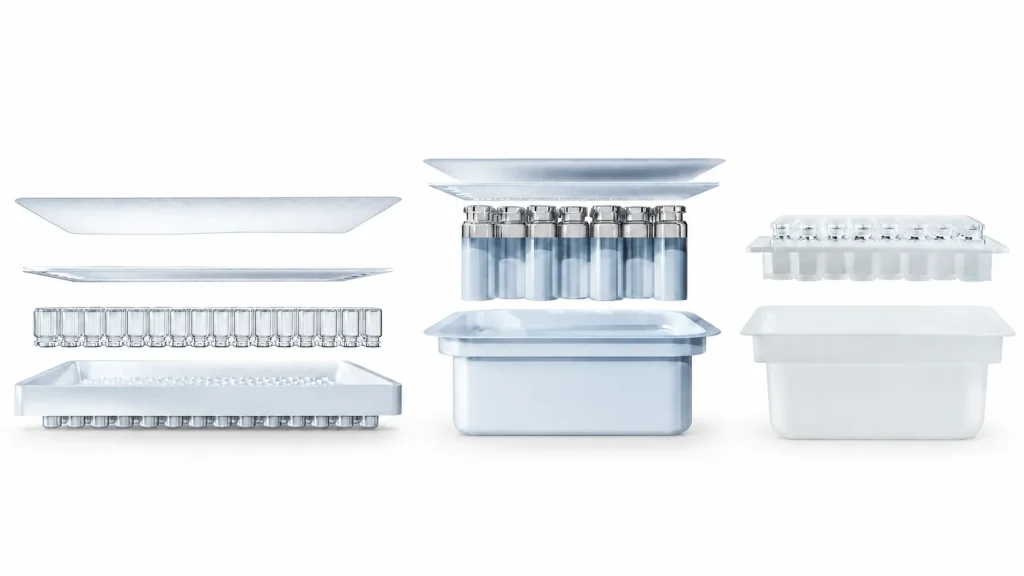
Begin with the LINUO RTU glass vial range and identify:
LINUO can support sample evaluation with applicable CoA and test data, subject to the selected product and project. Agree the sample’s intended use and supply status before ordering. Samples for dimensional checks or equipment setup should not automatically be treated as material released for clinical manufacturing. Learn more
Request the vial drawing and packaging configuration together. The filling partner needs both to assess whether the selected presentation fits the intended equipment.
If the clinical programme is being developed for a compatible pen or another cartridge-based delivery system, the project team may also need to evaluate a 3 mL RTU glass cartridge as a separate packaging pathway. This may be relevant when an applicable GLP-1 development programme is intended for a compatible cartridge-based delivery system. However, the cartridge specification, filling process, device compatibility, MOQ and supporting documents must be assessed separately from the RTU vial portfolio.
Clinical packaging demand includes more than the units intended for administration.
A useful planning calculation is:
Order quantity = planned filled units + setup and engineering units + testing, stability and retention units + justified process allowance − qualified usable inventory
Round the result up to the applicable sealed packaging unit or ordering increment, and then compare it with the confirmed MOQ.
The project team should establish what each allowance covers. For example, a filling-line trial, destructive testing and stability programme may each require separate quantities. Avoid counting the same units twice.
The sponsor, CDMO and quality team should agree these assumptions before the purchase order is issued.
For a development programme with several batches, provide three separate figures:
Keeping these figures separate helps the supplier assess demand while giving the buyer a clear view of its inventory exposure.
RTU can reduce the need to install or operate selected container-preparation equipment for the intended workflow. Its financial value depends on the filling facility’s existing capabilities.
A site without suitable preparation infrastructure faces a different decision from a CDMO already operating qualified bulk-vial washing and depyrogenation equipment.
Compare the complete process:
| Cost area | Bulk-vial route | RTU-vial route |
| Packaging purchase | Bulk vials and associated packaging | Prepared RTU vials and sterile packaging |
| Container preparation | Relevant washing, depyrogenation and sterilization activities | Supplier-side vial preparation completed according to the confirmed RTU configuration and release status |
| Equipment and utilities | Applicable preparation equipment, WFI, energy and maintenance | Applicable RTU handling equipment, format parts and maintenance |
| Qualification and testing | Supplier, container, preparation and filling evaluations | Supplier, container, sterile-packaging, transfer and filling evaluations |
| Logistics and inventory | Transport, storage and unused material | Transport, storage, packaging volume and unused material |
Use the same batch assumptions for both routes:
Total packaging-related cost = purchased materials + allocated preparation costs + qualification and testing + logistics and storage + unused inventory costs.
If a CDMO quotation already includes container preparation, do not add that charge again.
RTU may reduce the preparation burden without producing the lowest vial unit price. Request a project-specific comparison that shows which activities are included in each quotation.
An example CoA used during supplier evaluation, a sample-lot report and a batch-linked release document package for containers intended for clinical supply serve different purposes.
| Project stage | Information to establish |
| Initial technical review | Proposed specification, drawing revision and RTU packaging configuration |
| Sample evaluation | Sample identity, intended use, supply status and applicable CoA or test information |
| Clinical supply | Approved specification, batch identity, agreed release documents and storage instructions |
| Ongoing supply | Traceability, relevant change notifications and agreed quality responsibilities |
LINUO’s RTU product page distinguishes public references from controlled records linked to the product configuration and project stage. It also identifies a batch-linked CoA or agreed release package as distinct from a generic sample CoA.
For the selected configuration, discuss the applicable:
Appearance and dimensional acceptance criteria.
These are topics for an agreed document package, rather than a claim that every record accompanies every shipment.
For projects intended for the U.S. market, applicable FDA DMF information should be confirmed against the exact product, specification and manufacturing scope under review. FDA DMF No. 040947 covers the subject identified in the applicable FDA listing and should not be assumed to cover every vial size, cartridge specification or RTU configuration. A DMF filing does not constitute FDA approval of the product. Where the DMF is to be incorporated by reference into a regulatory submission, the applicable authorization and reference scope should be confirmed separately.
Review public materials in the LINUO Download Center, then identify the additional product-specific information required by the project.
Plan towards the date the packaging must be approved for filling, rather than considering the shipping date alone.
| Milestone | Decision or confirmation needed |
| Technical definition | Agree the vial, closure interface and RTU presentation |
| Sample and qualification review | Complete the necessary technical checks and document assessment |
| Supply confirmation | Establish the order quantity, inventory or production arrangement and delivery terms |
| Supplier release | Confirm the required processing and batch-release status |
| Receipt and approval | Allow for transport, customs, incoming checks and customer approval |
Some activities can run in parallel. Others depend on approved drawings, sample results or quality decisions.
When asking about ready-to-ship RTU vials, confirm whether the exact configuration is packaged, sterilized, released and available in sufficient quantity. Also confirm remaining shelf life and document availability.
For material requiring production, ask which approvals are needed before the schedule can be confirmed.
LINUO’s published information does not establish one delivery period for all clinical orders. Lead time should be confirmed against the selected product, quantity, release requirements and destination.
For clinical procurement, the relevant manufacturing question is how the supplier controls the preparation and release of the selected packaging.
LINUO’s sterile-product workshop is supported by dedicated water-treatment, automated handling, inspection, coding, packaging and traceability systems.
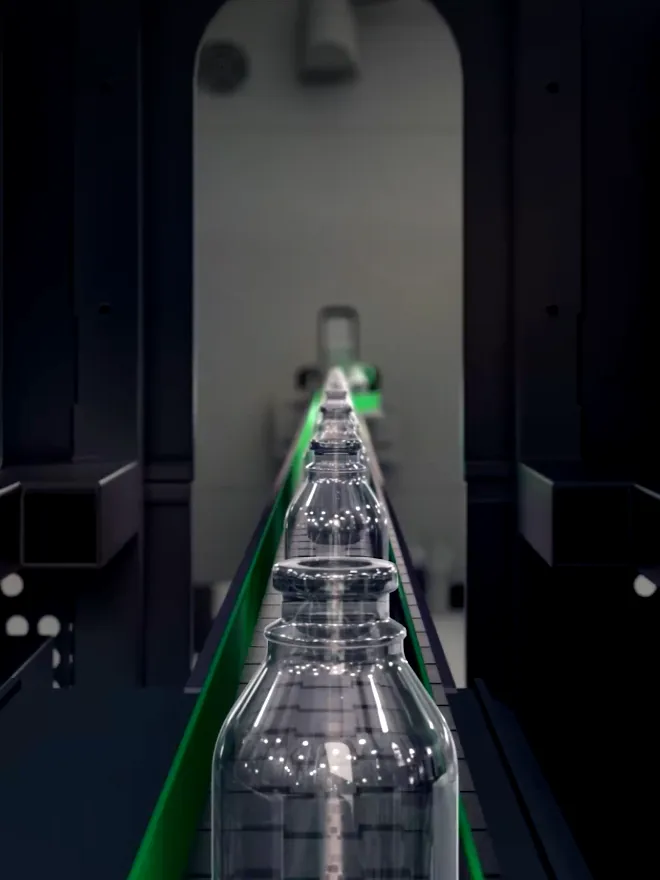
Its RTU manufacturing approach includes automated material handling, non-contact vial transfer, washing-stage inspection, laser coding, automatic material replenishment and automated double-layer breathable-bag packaging. Lifecycle quality management links production controls with testing, release and traceability.

These capabilities provide subjects for supplier qualification. They do not, by themselves, establish a low MOQ, available stock or a delivery commitment.
For clinical buyers, focus the review on three questions:
A complete enquiry allows technical suitability and commercial feasibility to be assessed together.
| Enquiry field | Information to provide |
| Product requirement | Formulation category, intended fill volume and proposed vial size |
| Packaging configuration | Nest & Tub or Tray, closure requirements and relevant drawings |
| Filling process | Filling-line manufacturer and model, handling method and planned trial |
| Quantity | Sample demand, immediate clinical requirement and separate forecast |
| Schedule and destination | Required receipt date, planned filling date and delivery location |
| Quality scope | Requested documents, qualification needs and target-market requirements |
Use the information to agree the next steps: specification review, sample evaluation, quality assessment and supply confirmation.
Before committing, obtain clear answers on:
Future batches should be planned against the same approved vial SKU, drawing revision, RTU presentation and release requirements. Changes to the glass specification, container dimensions, closure system, packaging format, sterilization status, filling site or supply arrangement should enter the project’s technical assessment and change-control process before implementation.
Contact LINUO with your vial specification, required quantity, filling-line information and target delivery date.
Request confirmation of sample availability, applicable MOQ, quality-document scope and delivery planning for your selected RTU configuration.
Can LINUO supply small batch RTU vials for clinical trials?
Project-specific small-batch supply can be evaluated, but availability is not guaranteed for every vial size and RTU configuration. The applicable quantity, packaging unit, MOQ, release status and delivery schedule must be confirmed for the selected product.
What is LINUO’s minimum order quantity for RTU vials?
A universal MOQ is not publicly specified. The applicable minimum depends on vial size, format and configuration and is confirmed during quotation. Ask for the MOQ and ordering increment alongside the technical specification.
Can I request samples before placing a clinical packaging order?
Samples and applicable CoA or test information can be discussed according to the product and project. Confirm the quantity, intended evaluation, processing status and documentation. Evaluation samples are not automatically suitable for clinical manufacturing.
Can RTU vials reduce the need for an in-house washing and depyrogenation line?
Applicable RTU configurations can remove those customer-side preparation steps from the selected workflow because preparation is completed before supply. The filling facility still needs qualified receiving, sterile-transfer, filling and closure procedures.
Are small-batch RTU orders available for immediate delivery?
Availability must be confirmed for the exact configuration. Establish whether the required quantity is packaged, sterilized and released, with suitable remaining shelf life and the agreed documents. Published product availability does not establish current stock.
What documents should I request with a clinical RTU vial order?
Agree the package with the quality team and supplier. It may include the approved specification, batch-linked CoA, applicable processing and release information, identification and traceability details, and storage instructions. Supporting validation records should be addressed separately where required.
We will reply to you within 24 hours. If for urgent case, please add WhatsApp/WeChat: +8615953131507, Or call +8618615646416 directly.
*We respect your confidentiality and all information are protected.
We will only use your information to respond to your inquiry and will never send unsolicited emails or promotional messages.