







About Us
If you have any problems during product use,please feel free to contact us


Scroll Down

 October 27, 2026
The right pharmaceutical glass packaging depends on the formulation, delivery method and production process. A 3 ml cartridge for a GLP-1 pen, a prefillable syringe for a dermal filler and a vial for a monoclonal antibody each have different interfaces and evaluation requirements.
For pharmaceutical manufacturers, biotech companies and CDMOs, selection starts with the complete system: the glass container, closure, formulation and, where applicable, the delivery device.
LINUO supplies pharmaceutical glass cartridges, prefillable syringe components and glass vials for subsequent pharmaceutical filling. This guide explains how to assess four applications: GLP-1 pen cartridges, hyaluronic acid dermal filler containers, monoclonal antibody and ADC vials, and dental anesthetic cartridges.
| Application | Packaging to Evaluate First | Initial Selection Focus |
| GLP-1 or peptide pen | 3 ml glass cartridge, where appropriate | Cartridge dimensions, pen interface, plunger and closure |
| Hyaluronic acid dermal filler | Prefillable syringe or cartridge | Delivery method, formulation flow behavior and connection |
| Monoclonal antibody or ADC | Glass vial | Liquid or lyophilized presentation, compatibility and closure |
| Dental local anesthetic | 1.8 ml dental glass cartridge | Injection-system dimensions, diaphragm and plunger |
The table provides a starting point. Each configuration must be assessed for the intended formulation and manufacturing process.
When evaluating a 3 ml GLP-1 pen cartridge supplier, begin with the proposed pen system and cartridge specification. LINUO’s glass cartridge range includes 1.5 ml, 1.8 ml and 3 ml formats for pharmaceutical packaging projects.
A 3 ml format may be considered for a pen presentation, but the nominal capacity does not establish compatibility with every GLP-1 formulation or device. The cartridge, closure components and pen mechanism must be evaluated together.
Confirm Cartridge Dimensions and Pen Fit
Review the selected cartridge drawing against the pen manufacturer’s requirements. Relevant dimensions may include overall length, outer and inner diameter, neck geometry and the interfaces with the plunger and closure.
Also distinguish between:
These values serve different purposes. A 3 ml cartridge does not automatically define how much product is filled or delivered.
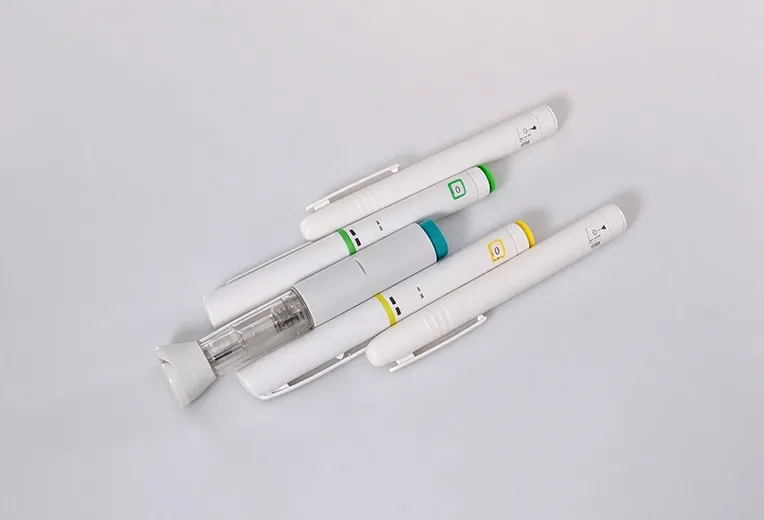
The glass surface, plunger, formulation and pen mechanism interact during delivery. The development team should define suitable tests for break-loose force, glide force, dose accuracy and delivery performance using the selected cartridge, plunger, formulation and pen mechanism under representative conditions.
LINUO lists inner-wall siliconization as an available product feature. The applicable siliconization process and resulting performance should be confirmed for the selected cartridge configuration.. The applicable process and resulting performance should be confirmed for the selected configuration. Siliconization alone does not establish acceptable dosing performance for every formulation and device.
A useful enquiry includes:
If you are searching for a “semaglutide cartridge supplier” or a “GLP-1 cartridge manufacturer,” state whether you require the empty glass packaging component for subsequent filling.
For a hyaluronic acid dermal filler, first determine whether the intended delivery system uses a prefillable syringe or a cartridge.
A prefillable syringe and a cartridge connect to their respective delivery systems differently. The correct format depends on how the product will be stored, prepared and administered.
Regulatory classification and submission requirements for dermal fillers vary by product and target market. In the United States, dermal fillers are generally regulated as medical devices rather than conventional injectable drug products.

Formulation viscosity is one factor affecting delivery performance. Needle dimensions, connector geometry, plunger movement and target injection time are also relevant.
For a prefillable syringe project, review the barrel, plunger, tip closure, needle or accessory and any locking adapter as a system.
For a cartridge project, include the cartridge closure and the intended delivery-device mechanism.
The development team should establish suitable testing for the actual formulation. A general description such as “dermal filler” does not define the required delivery force or prove that a particular container is suitable.
LINUO’s prefillable syringe portfolio includes three interface configurations: staked-needle, Luer-slip and Luer-lock configurations
A staked-needle configuration incorporates a permanently attached needle, while Luer-slip and Luer-lock configurations use compatible detachable needles or connectors. Luer configurations support a compatible detachable accessory. Each proposed assembly requires its own fit and functional assessment.
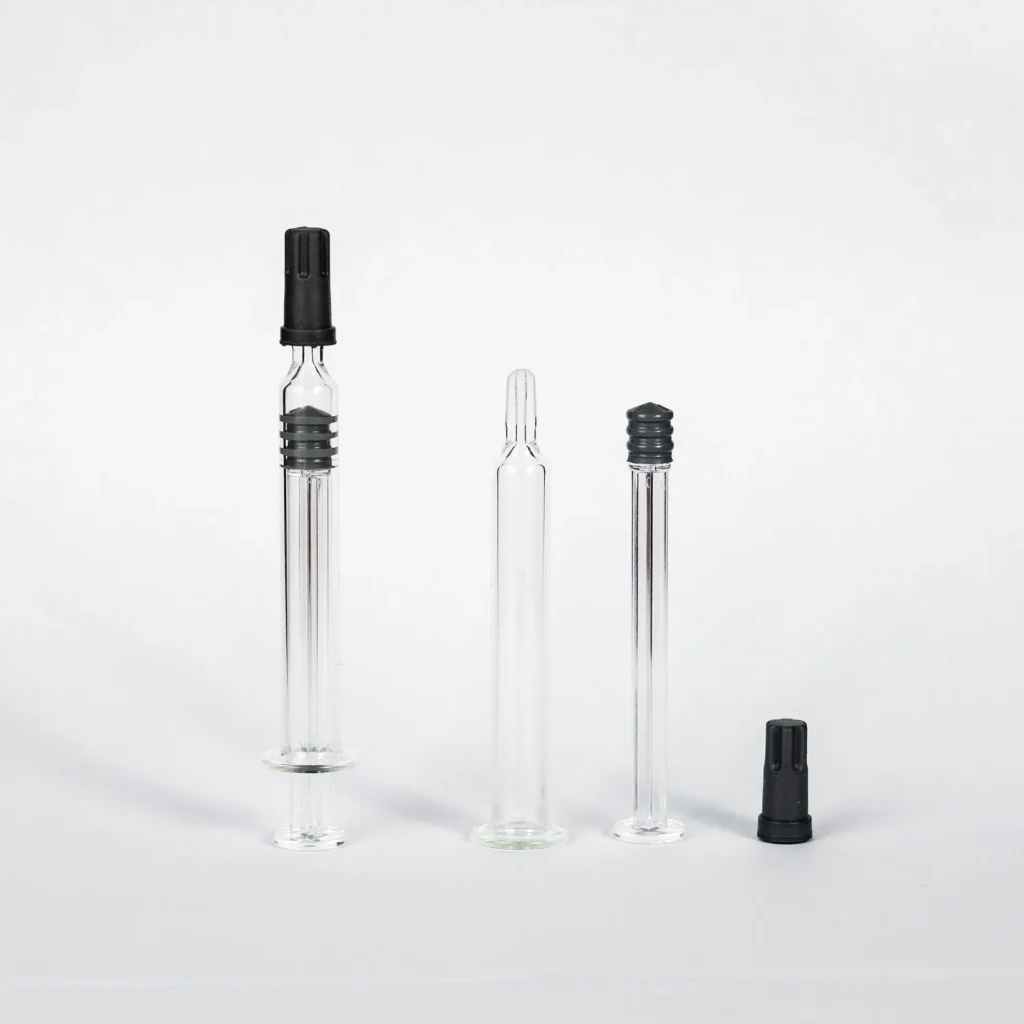
For monoclonal antibody glass vials, begin by defining whether the product will be supplied as a liquid or a lyophilized presentation.
The selected vial must be assessed with the formulation and closure system. Relevant questions include the intended fill volume, headspace, storage conditions and the materials that contact the product.
Liquid Monoclonal Antibody Presentations
For a liquid presentation, establish which compatibility and stability evaluations are appropriate for the formulation and proposed shelf life.
Depending on the formulation, the assessment may include protein adsorption or aggregation, visible and subvisible particles, extractables and leachables, glass-surface interactions, stopper compatibility and container-closure integrity throughout the proposed shelf life. The study plan should reflect the actual formulation rather than a general assumption about all biologics.
Lyophilized Monoclonal Antibody Presentations
For a lyophilized presentation, assess the vial and stopper with the intended filling, partial-stoppering, freeze-drying and final stoppering process.
A product described as suitable for freeze-drying can be a starting point for evaluation. It does not establish suitability for every formulation or lyophilization cycle.
An antibody-drug conjugate, or ADC, should be assessed according to its specific formulation, presentation and process requirements.
An ADC designation alone does not determine the correct vial capacity, surface treatment or storage conditions. Begin by identifying whether the product will be liquid or lyophilized, then define the proposed container-closure system. The assessment may also need to consider light sensitivity, low-temperature storage, freeze–thaw exposure, adsorption, particle risk and the consequences of container breakage, depending on the actual formulation and manufacturing process.
| Review Area | Information to Establish |
| Presentation | Liquid or lyophilized product |
| Container | Capacity, dimensions and required glass specification |
| Closure | Stopper and seal configuration |
| Formulation | Relevant compatibility and stability requirements |
| Manufacturing | Filling and processing conditions |
| Storage | Intended storage and transport conditions |
A vial used for one antibody product should not be assumed suitable for another. The pharmaceutical development team must determine the project-specific evaluation scope.
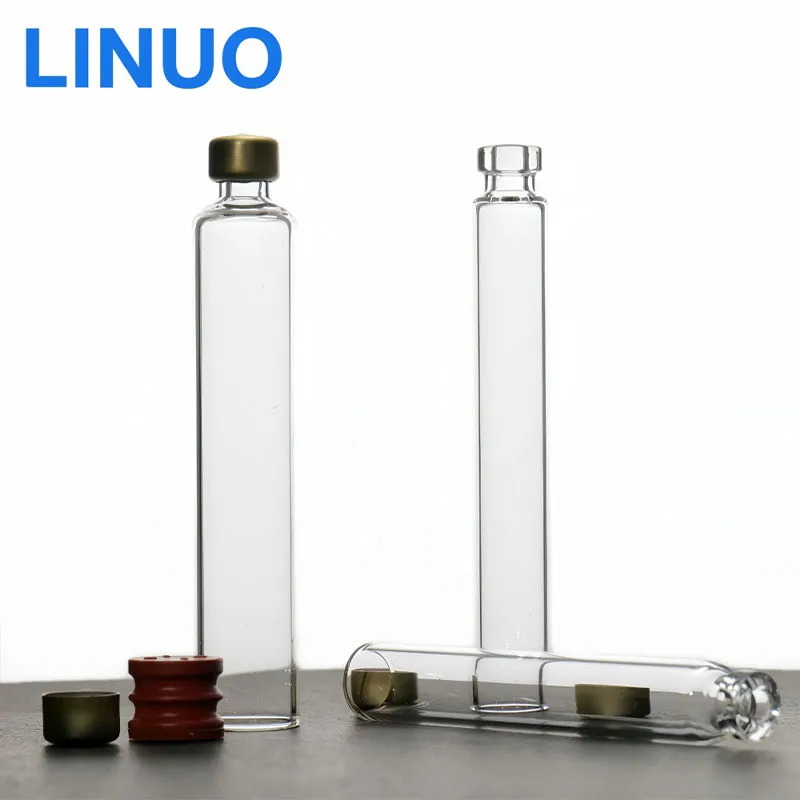
A 1.8 ml dental glass cartridge, sometimes referred to as a dental carpule, is one format used for dental local-anesthetic presentations.
The nominal capacity is only the starting point. Review the cartridge dimensions against the intended dental injection system and assess the complete combination of glass body, diaphragm, plunger and associated components.
Relevant evaluation topics may include dimensional fit, closure performance, plunger movement and the intended needle interface.
Depending on the target market and selected product, evaluation may include the applicable requirements of ISO 11040-1 and ISO 11499, together with dimensional fit, leakage, plunger movement, extractable volume, diaphragm performance and compatibility with the intended dental syringe and needle.
For an existing product or second-source project, provide the current cartridge drawing and component specifications. This creates a more reliable comparison than requesting an alternative solely by capacity.
After identifying the container format, determine the required supply state.
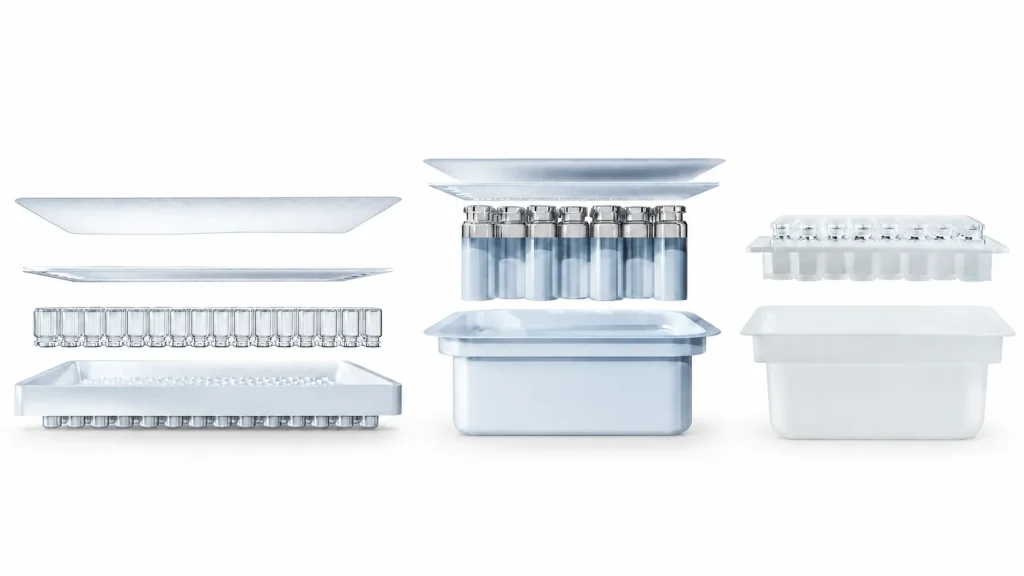
Bulk and ready-to-use packaging involve different preparation and handling arrangements. The appropriate choice depends on the customer’s facilities, equipment, transfer method and production process.
For an RTU project, confirm the exact product and packaging configuration, including its processing status, sterile-barrier arrangement, storage conditions and applicable release documents.
LINUO’s RTU glass vial range includes Nest & Tub and Tray configurations. The selected vial and packaging format should be reviewed against the intended handling and filling process.
RTU supply does not remove the need to assess formulation compatibility, closure performance or device fit.
A useful document package should correspond to the specific product and supplied configuration.
| Information | Purpose |
| Product drawing | Defines container dimensions and interfaces |
| Material specification | Identifies the proposed glass and component materials |
| Component configuration | Establishes which closure, plunger or adapter is included |
| Supply-state information | Defines processing and packaging status |
| Sample identification | Connects evaluation samples to the proposed configuration |
| Applicable quality documentation | Supports qualification and incoming-material review |
| Change-control arrangements | Defines communication about relevant product or process changes |
Company-level quality information is useful background. The selected container and complete system still require assessment for the intended formulation and application.
LINUO’s portfolio includes glass cartridges, prefillable syringe components and vials for pharmaceutical packaging projects.
To identify a suitable product, share the intended presentation and as much of the following information as available:
Contact LINUO to discuss the appropriate product family, available specifications and evaluation sample requirements.
Are all 3 ml glass cartridges suitable for GLP-1 pens?
No. Compatibility depends on the cartridge dimensions, closure components, formulation and selected pen system. Nominal capacity alone is insufficient.
Should a hyaluronic acid dermal filler use a cartridge or a prefillable syringe?
The choice depends on the intended delivery system. Evaluate the formulation, container, plunger, closure and needle or connector as a complete assembly.
Can the same vial be used for monoclonal antibodies and ADCs?
A vial may be considered as a candidate, but suitability must be evaluated separately for each formulation, presentation and manufacturing process.
Does a 1.8 ml dental cartridge fit every dental injection system?
No. Confirm the cartridge drawing, closure configuration and functional requirements against the intended system.
Does ready-to-use packaging eliminate the need for compatibility testing?
No. RTU describes the supplied preparation state. Formulation compatibility, container-closure performance and equipment suitability still require project-specific assessment.
We will reply to you within 24 hours. If for urgent case, please add WhatsApp/WeChat: +8615953131507, Or call +8618615646416 directly.
*We respect your confidentiality and all information are protected.
We will only use your information to respond to your inquiry and will never send unsolicited emails or promotional messages.