








À propos de nous
Si vous rencontrez des problèmes lors de l'utilisation du produit, n'hésitez pas à nous contacter


Faites défiler vers le bas

 September 20, 2026
 For pharmaceutical manufacturers, CDMOs and fill-finish facilities, choosing RTU glass vials is not only about vial size or price. Buyers also need to evaluate how the vials are washed, transferred, inspected, packaged and released before they enter an aseptic filling line.
LINUO RTU glass vials are supplied washing-free, depyrogenation-free and pre-sterilized. The available size range includes 2R, 4R, 6R, 8R, 10R, 15R, 20R, 25R, 30R and 50R, with RTU Nest & Tub and RTU Tray formats designed for aseptic filling-line integration.
Compared with conventional RTU vial production practices, LINUO focuses on higher automation, non-contact handling, enhanced washing design, online inspection, laser coding, double sterile barrier packaging and full lifecycle quality management. These differences help pharmaceutical buyers reduce preparation risk, improve process stability and support cleaner transfer into aseptic filling environments.
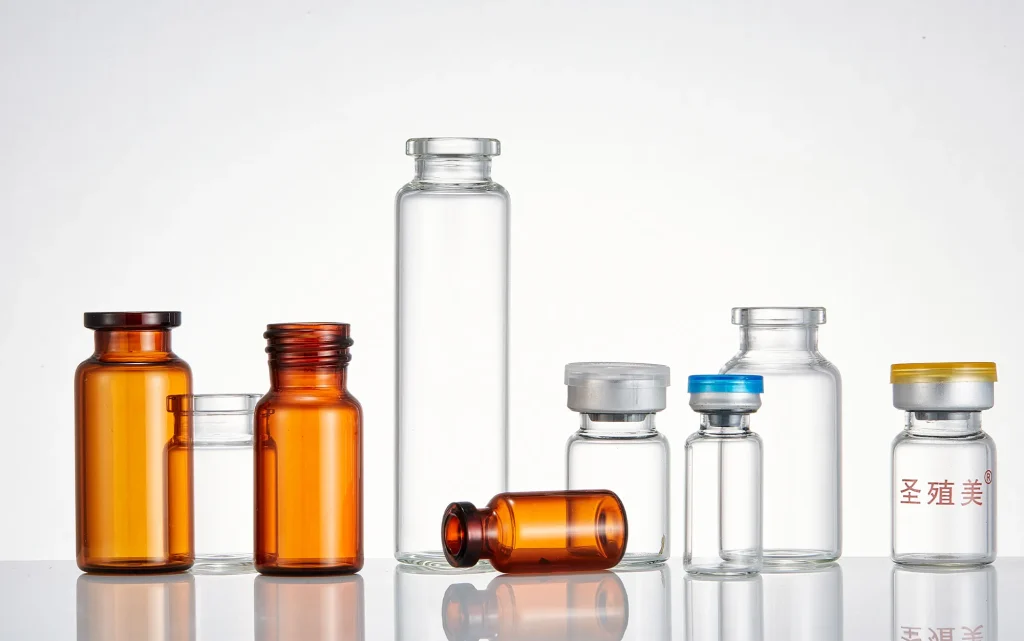
The main difference of LINUO RTU glass vials is not only that they are ready to use. The difference is how the RTU vial is produced and controlled before delivery.
LINUO’s RTU vial process focuses on:
For buyers, these differences matter because RTU vials are used directly in aseptic filling projects. The cleaner and more controlled the upstream process is, the easier it is for pharmaceutical manufacturers to manage contamination control, filling-line preparation and supplier qualification.
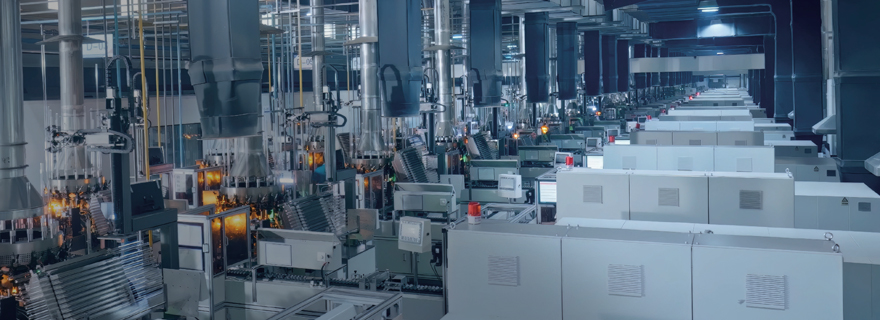
LINUO’s sterile product workshop for RTU vial production involved a total investment of RMB 400 million. The workshop is also equipped with a Chutian Huatong water treatment system, with single equipment investment exceeding RMB 10 million.
For pharmaceutical buyers, hardware investment is not just a factory detail. It reflects whether the supplier has built a dedicated production foundation for sterile packaging products.
RTU glass vials are different from standard bulk vials. They are supplied after controlled preparation and must support direct integration into aseptic filling workflows. Therefore, the water system, clean production environment, automation level and validation support all become important supplier evaluation points.
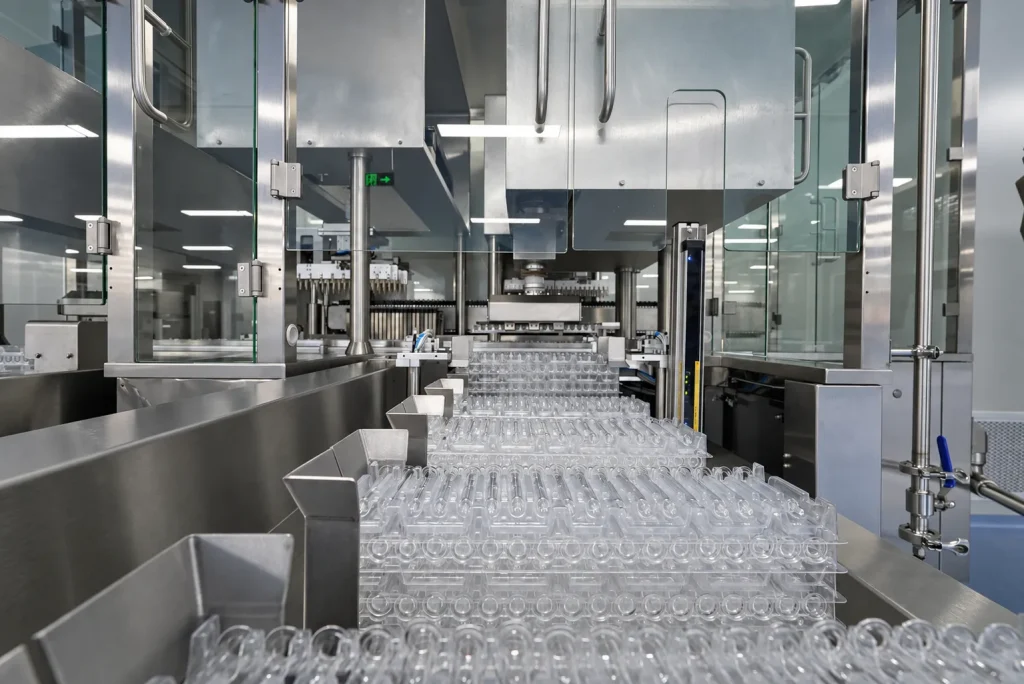
One of the most important differences in LINUO’s RTU vial process is automation.
The production line uses automatic tray loading, 8-station independent cleaning and rail-based transfer. During transfer, the vials are handled in a way that reduces bottle-to-bottle contact. This helps avoid scratches, collision marks and appearance defects that may occur in traditional contact-based transfer processes.
RTU vial system uses independent cavity suspension to enable non-contact handling and prevent glass-to-glass collision during transit, decrating and filling-line loading.
For buyers, this brings two direct values:
It helps reduce personnel-related contamination risk.
It helps reduce scratches, bumps and glass-to-glass contact defects.
This is especially important for high-value injectable drug projects where appearance quality, particle control and batch consistency are closely reviewed during supplier qualification.
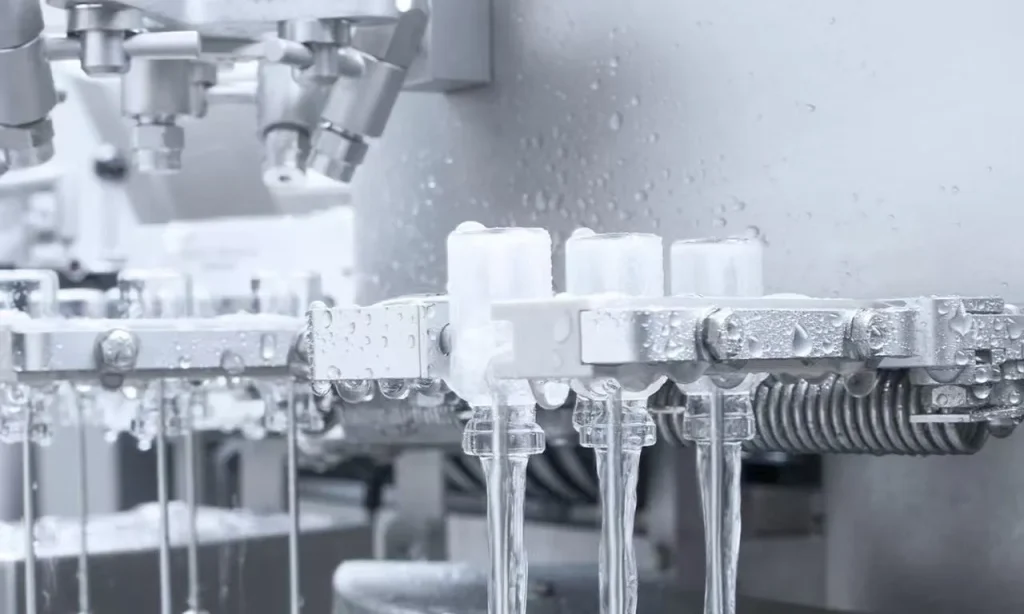
Cleaning is one of the core control points in RTU vial manufacturing.
According to the provided process information, LINUO adopts a four-water and five-gas washing design, including two routes of high-purity water and two routes of Water for Injection. Compared with the more common three-water and three-gas process used in some conventional production models, this configuration is designed to support better endotoxin control.
The process also includes automatic online inspection at two stages: during cleaning and after cleaning. This means the process is not only completed, but also monitored at key control points.
For pharmaceutical buyers, this is important because RTU vials are intended to reduce customer-side washing, depyrogenation and sterilization preparation work. A stronger upstream washing and inspection process gives buyers more confidence when evaluating supplier capability.
Many buyers focus only on final inspection. However, for RTU glass vials, in-process control is also important.
LINUO’s differentiated process includes online inspection during cleaning and online inspection after cleaning. This dual-node inspection configuration helps detect process abnormalities earlier and supports more stable product quality before downstream packaging and sterilization.
LINUO’s RTU vial page also lists AI inspection and MES tracking as part of its RTU vial process flow and quality control system.
For buyers, dual inspection is valuable because it helps move quality control from a final-check mindset to a process-control mindset.
Product identification is necessary for pharmaceutical packaging, but the marking method matters.
LINUO uses laser coding for RTU vial identification. Compared with ink coding, laser coding helps avoid the potential particle contamination risk associated with ink materials. For RTU packaging used in aseptic filling projects, this is a practical advantage.
For buyers, laser coding supports product identification and traceability while reducing unnecessary contamination sources in the packaging process.
This difference is especially relevant for sterile packaging projects where buyers pay attention to particles, fibers, printing residues and clean transfer into controlled environments.
RTU vial production requires stable, continuous line operation. If material shortage or manual intervention occurs frequently, it may affect production stability and increase contamination risk.
LINUO’s RTU vial production line integrates automatic material-shortage detection and automatic replenishment. This helps keep the line running smoothly and reduces unnecessary manual handling.
For buyers, this reflects a more advanced self-control concept in RTU vial manufacturing. The goal is not only to produce ready-to-use vials, but to maintain stable, repeatable and controlled operation throughout the production process.
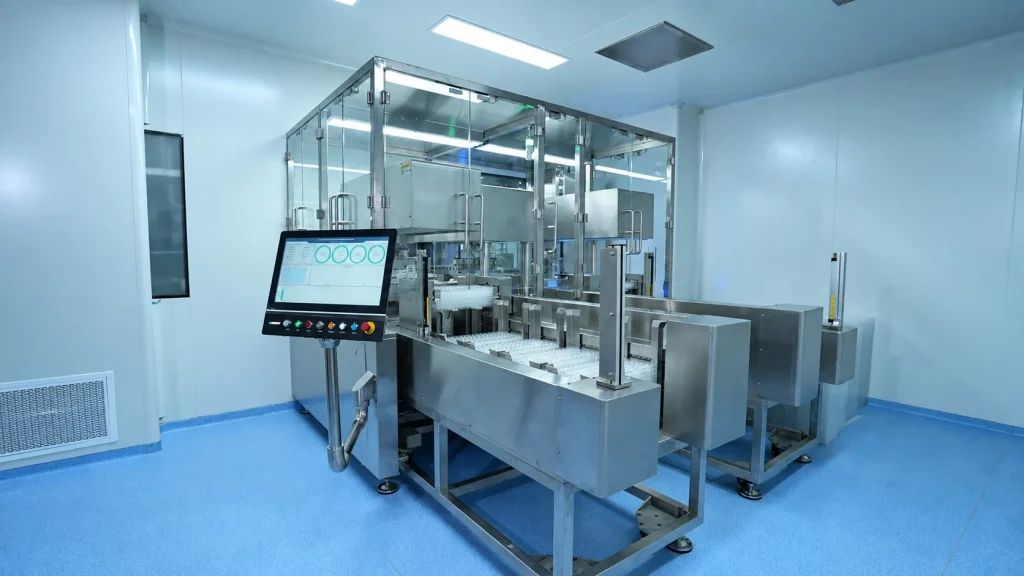
Sterile barrier packaging is a key difference between standard bulk vials and RTU sterile vials.
According to the provided project information, LINUO uses automated double-layer breathing bag sealing. Compared with manual single-layer bagging, automated double-layer packaging helps reduce personnel contamination risk and improves sterile barrier reliability.
LINUO’s RTU vial page also states that vacuum-sealed Tyvek double breathing bags and clean-peel technology help prevent fibers or particles from entering the sterile zone and support Grade A/B transfer.
For pharmaceutical filling plants, this is highly practical. The RTU vial must not only be sterile when supplied; it must also support safe and clean transfer into the customer’s aseptic environment.
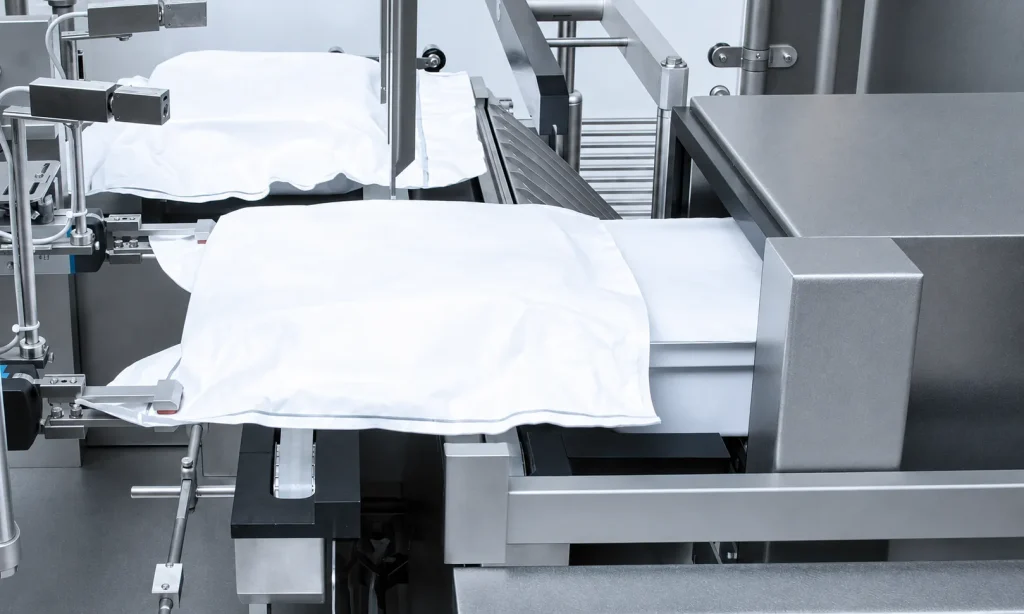
LINUO applies full lifecycle product management for RTU vial projects. According to the provided information, the quality system covers raw materials, production process control, environmental monitoring, finished product testing and product release.
This is important because RTU glass vials are not ordinary packaging materials. They are primary packaging components used in aseptic filling workflows. Buyers often need supplier documents, validation support, release testing information and traceability records.
LINUO’s company profile also states that the company has a CNAS-accredited laboratory, FDA DMF, EU CEP and ISO 15378 certifications, and provides documentation such as FDA DMF reference letters, ISO certificates, CNAS test reports, EU CEP and batch CoA.
For buyers, this supports supplier qualification, audit preparation and long-term pharmaceutical packaging cooperation.
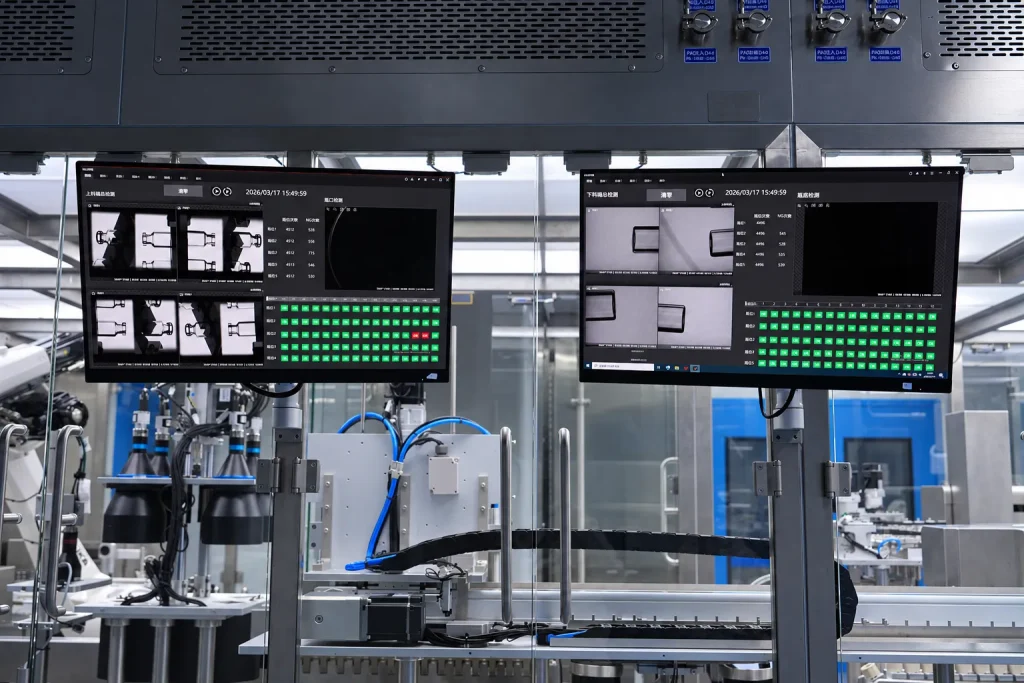
Equipment is important, but people and process experience are also critical.
LINUO’s core teams in quality, production, equipment and process management have pharmaceutical factory work experience. This helps the team apply pharmaceutical-grade management standards and better understand the regulatory expectations of sterile injectable packaging.
For buyers, this matters because RTU vial projects require more than glass manufacturing knowledge. They require an understanding of aseptic filling, contamination control, process validation, batch release and pharmaceutical documentation.
| Comparison Area | LINUO RTU Glass Vials | Buyer Value |
| Workshop Investment | RMB 400 million sterile product workshop investment with an advanced water treatment system | Supports a stronger manufacturing foundation for sterile RTU packaging |
| Material Transfer | Fully automated transfer with tray loading, eight-station independent cleaning, and rail-based movement | Reduces manual intervention and contamination risk |
| Bottle Handling | Non-contact handling designed to reduce bottle-to-bottle collisions | Helps prevent scratches, bumps, and appearance defects |
| Washing Process | Four-water and five-gas design with high-purity water and Water for Injection routes | Supports better cleaning control and endotoxin-control expectations |
| Inspection Control | Online inspection during and after cleaning | Improves process monitoring before final release |
| Identification | Laser coding instead of ink coding | Helps reduce the risk of ink-related particle contamination |
| Line Control | Automatic material-shortage detection and replenishment | Supports stable and continuous production |
| Sterile Barrier | Automated double-layer breathing-bag sealing | Improves sterile-barrier reliability and reduces manual-bagging risks |
| Quality Management | Full-lifecycle control from raw materials to finished-product release | Supports supplier qualification, audits, and batch traceability |
| Team Capability | Quality, production, equipment, and process teams with pharmaceutical-factory experience | Provides better alignment with sterile injectable packaging requirements |
To help LINUO recommend the right RTU vial solution, buyers should prepare the following information before inquiry:
Required vial size, such as 2R, 4R, 6R, 8R, 10R, 15R, 20R, 25R, 30R or 50R
The more complete the project information is, the easier it is to confirm whether the RTU vial format matches the customer’s filling workflow.
LINUO is not only a glass vial manufacturer. It is an integrated pharmaceutical glass packaging supplier with large-scale manufacturing, quality testing and regulatory documentation capability.
The company profile states that LINUO operates a 900,000 m² smart factory with 500+ machines, delivers 9.6B+ units annually and has an integrated supply chain from 13K+ tons of glass tubing to finished tubular and molded vials.
For global buyers, this means LINUO can support RTU glass vial projects with manufacturing scale, stable supply, in-house glass tubing resources, quality documentation and long-term cooperation capability.

The difference between LINUO RTU glass vials and conventional RTU vial supply is not limited to product size or packaging format. The key difference lies in process control.
LINUO combines a high-investment sterile workshop, automated non-contact transfer, enhanced washing design, dual online inspection, laser coding, automatic line control, double-layer breathing bag packaging, full lifecycle quality management and pharma-experienced teams.
For buyers who need RTU glass vials for aseptic filling, these differences can help support cleaner production, lower contamination risk, better batch consistency and more reliable supplier qualification.
LINUO RTU glass vials are ready-to-use sterile glass vials supplied washing-free, depyrogenation-free and pre-sterilized for aseptic filling applications.
LINUO RTU glass vials are available in 2R, 4R, 6R, 8R, 10R, 15R, 20R, 25R, 30R and 50R sizes.
LINUO provides RTU Nest & Tub and RTU Tray formats for aseptic filling-line integration.
Non-contact handling helps reduce glass-to-glass collision, scratches, breakage risk and appearance defects during transfer, transport and filling-line loading.
Laser coding helps support identification and traceability while avoiding potential particle contamination risks related to ink coding.
Double-layer breathing bag packaging helps improve sterile barrier reliability and reduces contamination risk during transfer into controlled aseptic environments.
Buyers should provide vial size, RTU format, drug product type, filling-line requirements, closure system, sterile barrier needs, annual demand, documentation requirements and validation schedule.
We will reply to you within 24 hours. If for urgent case, please add WhatsApp/WeChat: +8615953131507, Or call +8618615646416 directly.
*Nous respectons votre confidentialité et toutes les informations sont protégées.
Nous utiliserons vos informations uniquement pour répondre à votre demande et n'enverrons jamais de courriels non sollicités ou de messages promotionnels.