








Sobre nosotros
Si tiene algún problema durante el uso del producto, no dude en ponerse en contacto con nosotros



Desplácese hacia abajo

 October 21, 2026
Staked needle, Luer cone and Luer lock syringes differ primarily in how the needle or accessory connects to the syringe. A staked needle is fixed to the barrel. A non-locking Luer cone uses a tapered friction-fit connection. A Luer lock combines a tapered connection with threaded retention.
For pharmaceutical manufacturers, biotech companies and CDMOs, choosing a prefilled syringe interface requires more than comparing connector shapes. The decision should reflect the intended administration workflow, needle requirements, formulation characteristics and any delivery device involved.
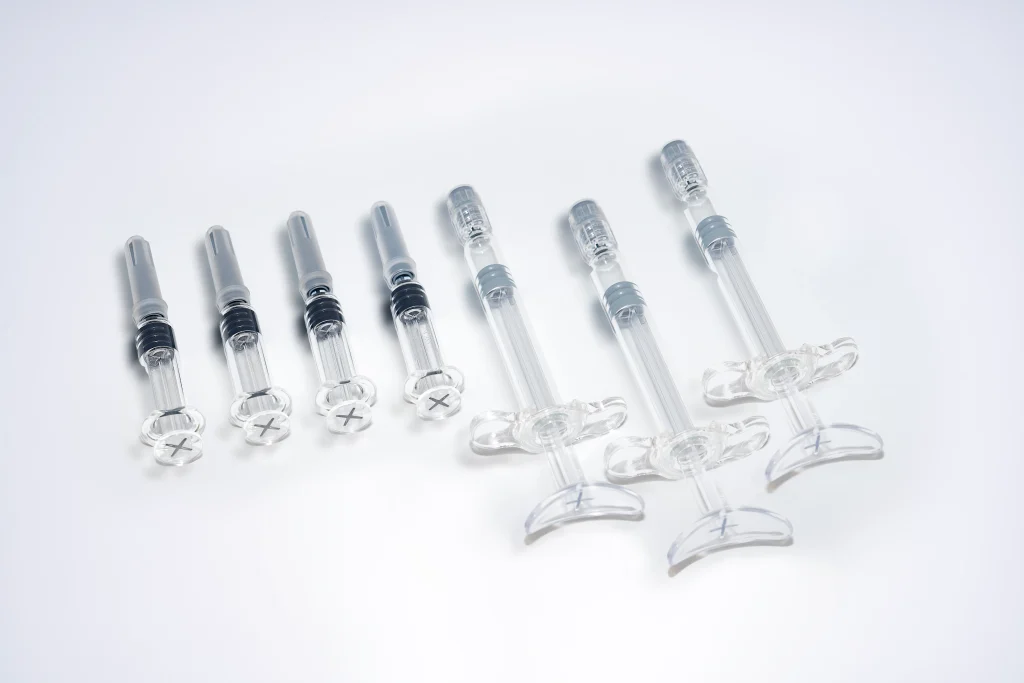
A prefillable syringe is a container or component system intended for subsequent pharmaceutical filling. A prefilled syringe is the resulting presentation containing the formulated product.
When sourcing a sterile prefillable syringe, buyers should specify the required barrel, closure, plunger, needle or adapter, together with the processing and assembly state.
| Selection factor | Staked needle | Luer cone / Luer slip | Luer lock |
| Basic structure | Needle fixed to the barrel | Tapered connector without a locking collar | Tapered connector with threaded locking |
| Needle connection | Established during manufacturing | Compatible accessory attached when required | Compatible accessory attached through locking engagement |
| Needle selection | Defined as part of the supplied configuration | Detachable accessory selected for the intended use | Detachable locking accessory selected for the intended use |
| Preparation workflow | No separate attachment of the fixed needle | Includes accessory connection where required | Includes accessory connection and locking |
| Main evaluation focus | Needle, shield and complete syringe performance | Fit, retention and leakage performance | Fit, locking engagement and adapter performance |
The practical starting point is straightforward: evaluate a staked needle when the project requires a fixed needle; evaluate Luer options when it requires a detachable accessory. Then determine whether the intended connection requires a locking mechanism.
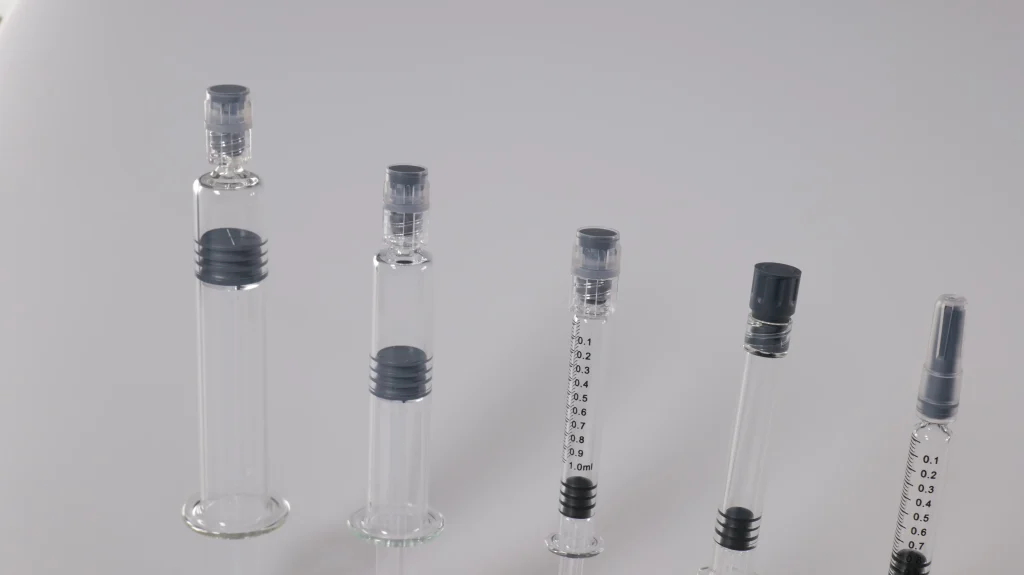
A staked needle syringe, also called a staked-in needle or fixed-needle syringe, has a needle attached to the barrel and protected by a needle shield.
This configuration is relevant when the project requires a defined needle specification and an administration workflow without a separate needle-attachment step.
The needle is selected as part of the syringe system. Its dimensions and flow characteristics must therefore be considered early in development rather than left for the user to choose.
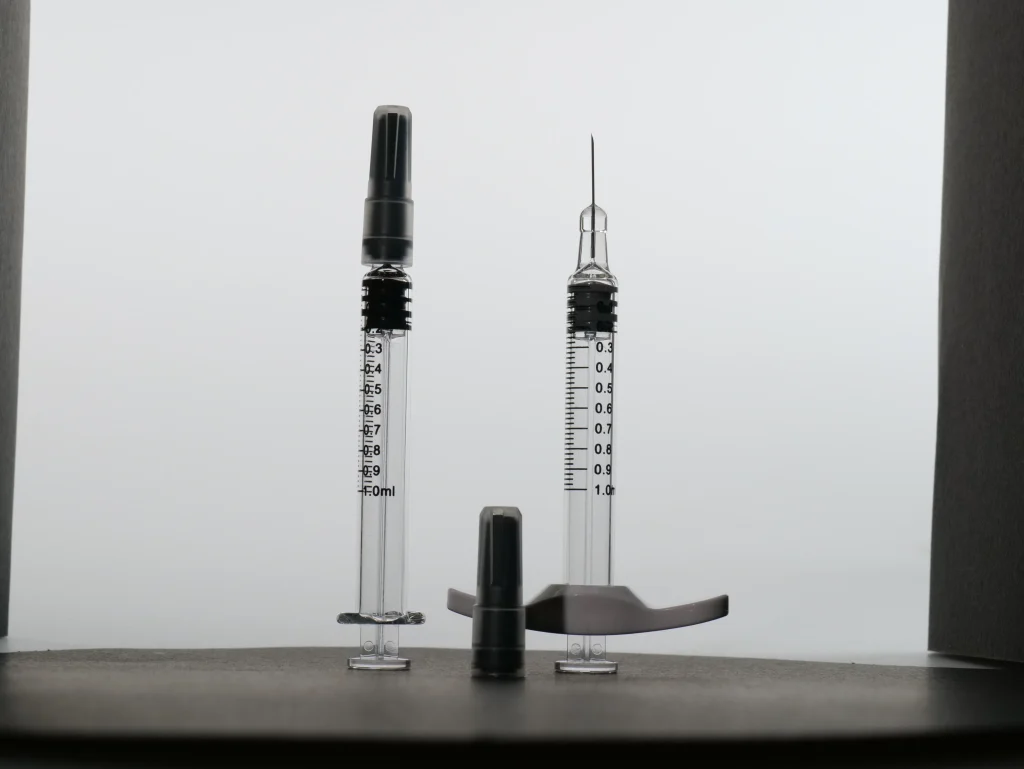
For a staked needle prefillable syringe, evaluate the needle attachment, shield interaction and delivery requirements alongside the barrel and plunger.
If the syringe will be incorporated into an autoinjector, the assessment must cover the exact syringe-device combination. Barrel geometry, flange dimensions, needle projection, shield removal and operating forces can all influence integration.
A fixed needle alone does not establish autoinjector compatibility.
A Luer cone syringe uses a tapered tip that connects to a suitable mating accessory. When supplied without a locking collar, it is commonly described as a Luer slip syringe.
This configuration may be considered when the intended workflow requires a detachable needle or accessory and a non-locking tapered connection.
Before administration, the user may need to remove the tip closure and attach the selected accessory. Those actions should form part of the workflow assessment.
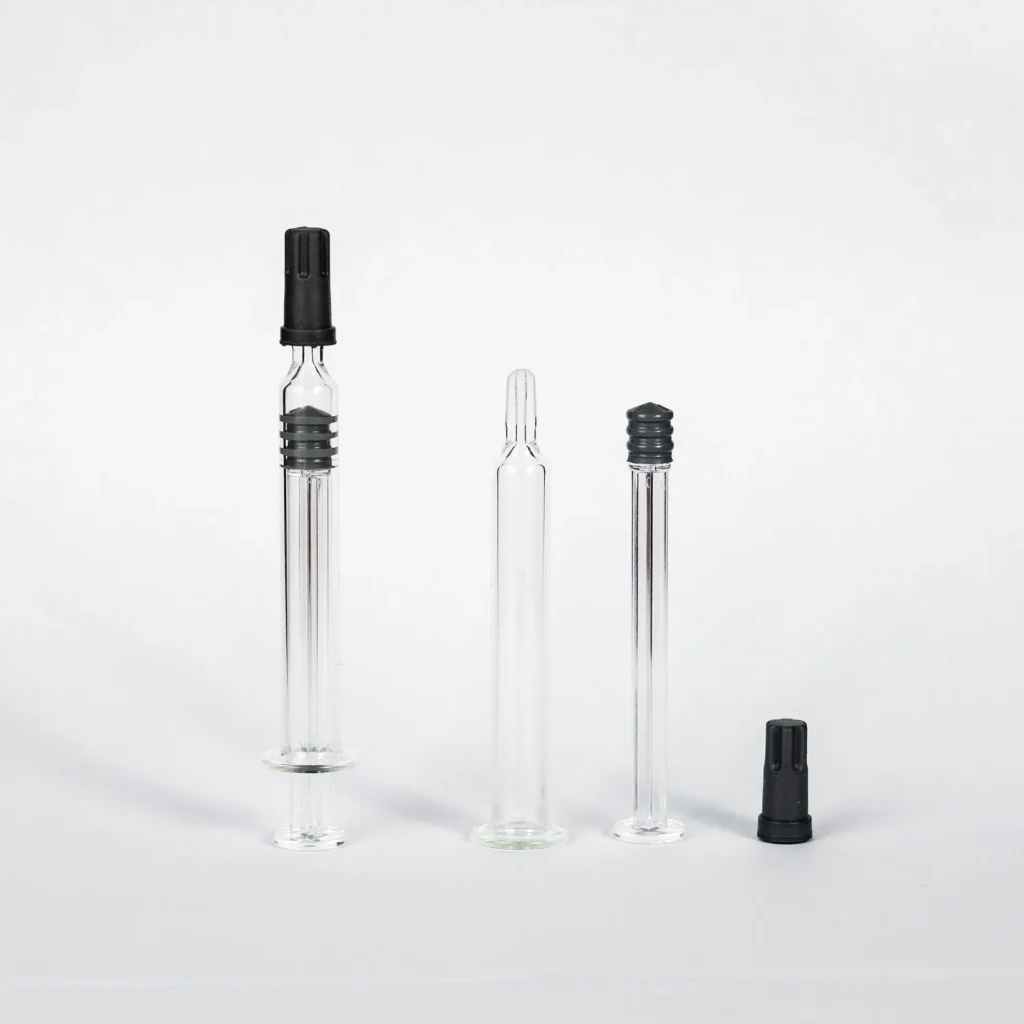
In product descriptions, “Luer cone” often identifies the non-locking configuration. However, the cone is also the tapered geometry used within a Luer lock connection.
For an unambiguous purchasing specification, state “non-locking Luer cone” or “Luer slip” and confirm the design on the supplier’s drawing.
Connection fit, retention and leakage performance should be assessed with the actual mating accessory.
A Luer lock syringe combines tapered mating surfaces with a threaded mechanism that secures a compatible needle or accessory.
It is relevant when a detachable connection with threaded retention is part of the project requirement. For glass prefillable syringes, the assembly may include a Luer lock adapter associated with the glass tip.
The adapter and mating accessory should be evaluated together. The presence of a locking feature does not remove the need to assess correct assembly, leakage, mechanical performance and usability.
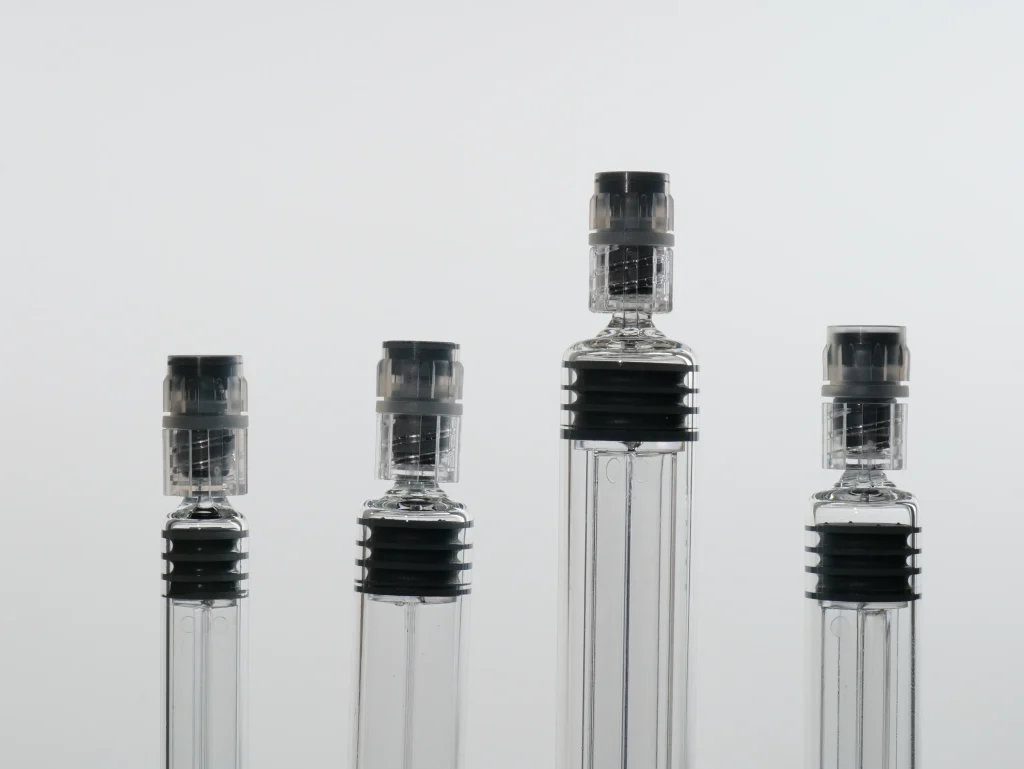
Start with the administration workflow, then assess the formulation and complete delivery system.
| Project requirement | Interface direction to evaluate |
| One specified needle must remain fixed to the syringe | Staked needle |
| A separate needle or accessory must be attached before use | Luer cone or Luer lock |
| The accessory connection requires threaded retention | Luer lock |
| The workflow specifies a non-locking tapered connection | Luer cone / Luer slip |
| The syringe will be used within an additional delivery device | Assess the exact syringe-device combination |
| Several accessories are proposed | Evaluate each intended combination |
These directions narrow the options; they do not replace product-specific qualification.
The intended user also matters. A workflow designed for a healthcare professional may involve different preparation steps from one intended for patient self-administration. Interface selection should account for the tasks users are expected to perform.
Viscosity alone does not determine whether a syringe should use a staked needle, Luer cone or Luer lock.
Delivery performance also depends on needle bore and length, formulation flow behavior, target delivery time, plunger movement and applied force.
For a higher-viscosity formulation, the project team should evaluate the complete flow path and connection requirements. Selecting Luer lock does not, by itself, establish acceptable injection force or delivery time. Selecting a fixed needle does not establish those outcomes either.
Provide the supplier with relevant formulation characteristics and delivery requirements so that the proposed configuration can be assessed meaningfully.
LINUO’s published prefillable syringe tables identify the following formats:
| Interface | Published formats | Selection note |
| Staked needle | 1 ml long, 1 ml, 2.25 ml, 3 ml | Confirm the needle and shield configuration |
| Luer cone / taper tip | 1 ml long, 1 ml, 2.25 ml, 3 ml, 5 ml | Confirm the tip, closure and intended accessory |
| Luer lock | 1 ml long, 1 ml | Confirm the adapter, closure and mating accessory |
Do not assume that every capacity is available with every interface. Additional formats and component combinations require project confirmation.
Also distinguish 1 ml long from 1 ml during selection. Equal nominal capacity does not mean identical barrel dimensions or device fit.
Explore LINUO’s prefillable syringe configurations and request the drawing corresponding to your proposed format.
Request PFS specifications and interface drawings to begin your configuration review.
Interface selection is one part of evaluating the complete prefilled syringe system.
The barrel, plunger, closure, needle or connector, formulation and any delivery device must be considered together. The development team should establish the required evaluation scope.
| Área de evaluación | Purpose |
| Dimensions and interfaces | Confirm fit with the selected components and equipment |
| Formulation compatibility | Assess suitability of drug-contact materials |
| Container closure integrity | Evaluate the closed system under intended conditions |
| Functional performance | Assess plunger movement and delivery performance |
| Needle or connector performance | Evaluate the intended attachment and connection |
| Storage and transport | Assess performance after relevant exposures |
| Usability and device integration | Evaluate the proposed preparation and delivery workflow |
A precise enquiry helps identify the relevant prefillable syringe configuration and avoids comparing incomplete or different assemblies.
Provide:
Contact LINUO to discuss the applicable configuration, technical information and evaluation sample requirements for your PFS project.
A staked needle syringe has a needle fixed to the barrel. A Luer lock syringe allows a compatible detachable accessory to be secured through a threaded locking connection.
A non-locking Luer cone relies on a tapered friction fit. A Luer lock adds threaded retention around the tapered connection.
There is no universal choice based on viscosity alone. Evaluate the formulation, needle, connection, delivery force and target delivery time as a complete system.
No. Compatibility requires assessment of the specific syringe and device, including dimensions, needle projection, shield interaction and functional performance.
Provide the required capacity, proposed interface, needle or accessory specification, component requirements, delivery method and qualification needs.
Te responderemos en un plazo de 24 horas. Si se trata de un caso urgente, añadenos en WhatsApp o WeChat: +8615953131507, o llama directamente al +8618615646416.
*Respetamos su confidencialidad y toda la información está protegida.
Solo utilizaremos su información para responder a su consulta y nunca enviaremos correos electrónicos no solicitados ni mensajes promocionales.