








Sobre nosotros
Si tiene algún problema durante el uso del producto, no dude en ponerse en contacto con nosotros



Desplácese hacia abajo

 August 07, 2026
 Choosing a pharmaceutical glass vial manufacturer should start with four checks: the declared glass composition and pharmacopoeial type, dimensional tolerances traceable to the applicable ISO standard, hydrolytic-resistance data under the relevant pharmacopoeia, and a documentation package that your quality and regulatory teams can review. Price, lead time, and packaging format should be evaluated after the technical and quality requirements are defined.
Most sourcing problems in injectable packaging appear during line trials, stability studies, or supplier audits rather than at the quotation stage. The purpose of this guide is to help buyers define the questions that need to be answered before a vial is qualified.
A quotation that says only “glass vial” is incomplete. Type I, Type II, and Type III are pharmacopoeial classifications based primarily on hydrolytic resistance; they are not universal quality tiers and do not, by themselves, determine suitability for every parenteral product.
| Dimension | Type I Borosilicate | Type II Surface-Treated Soda-Lime | Type III Soda-Lime |
|---|---|---|---|
| Composition Basis | Borosilicate glass; resistance comes from the bulk composition | Soda-lime glass with an inner-surface treatment | Untreated soda-lime glass |
| Hydrolytic Resistance | High | Improved at the treated surface | Lower than Types I and II |
| Thermal-Process Suitability | Often suitable for depyrogenation and lyophilization, subject to vial design and process profile | Must be confirmed for the specific dimensions and thermal cycle | Must be confirmed for the specific dimensions and thermal cycle |
| Common Applications | Many injectable, biologic, vaccine, and lyophilized products | Certain aqueous parenteral products after compatibility qualification | Commonly oral, diagnostic, or other non-parenteral applications; product-specific assessment is still required |
When a supplier uses the word “borosilicate,” ask for the pharmacopoeial classification, the applicable reference standard, and the test report. Composition and hydrolytic-resistance classification are related but are not interchangeable terms. Type II performance depends on the treated surface, so the treatment durability must be assessed against the customer’s washing, sterilization, and handling processes rather than assumed from the label alone.
The principal references commonly used for pharmaceutical glass include USP General Chapter <660> and European Pharmacopoeia 3.2.1. Confirm the current edition, the market in which the container will be used, and the exact acceptance criteria in the purchase specification.
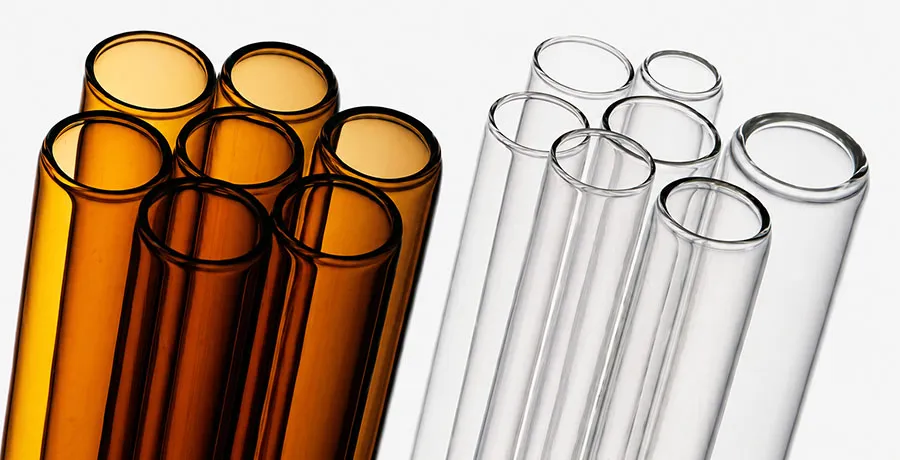
Type I borosilicate glass is not delamination-proof. Glass delamination or flake formation depends on the glass surface, forming and converting history, thermal exposure, and the drug formulation. High pH and some buffer systems, including citrate and tartrate systems, can increase the risk under particular storage conditions.
Ask the supplier for the converting-temperature controls, inner-surface inspection method, and any delamination or particulate data generated for a formulation family close to yours. A composition certificate alone cannot establish formulation compatibility. Where the product risk justifies it, perform a product-specific compatibility and stability assessment.
The `R` designation is an ISO size designation associated with a nominal capacity class. It is not a statement of the exact usable fill volume or the brimful capacity. Working fill volume must leave room for headspace, stopper displacement, lyophilization requirements, inspection limits, and the filling-line tolerance.
Do not select a vial from the `R` code alone. Request the supplier’s dimensional drawing and confirm the nominal capacity, brimful capacity, target fill volume, stopper reference, and applicable headspace. The commonly used tubular range includes 2R, 4R, 6R, 8R, 10R, 15R, 20R, 25R, 30R, and 50R, but availability and dimensions vary by supplier.
The same nominal size may be supplied with different neck finishes. A 13 mm crimp neck, a 20 mm crimp neck, and a screw-neck version are different container-closure configurations and may not be compatible with the same stopper or capping equipment.
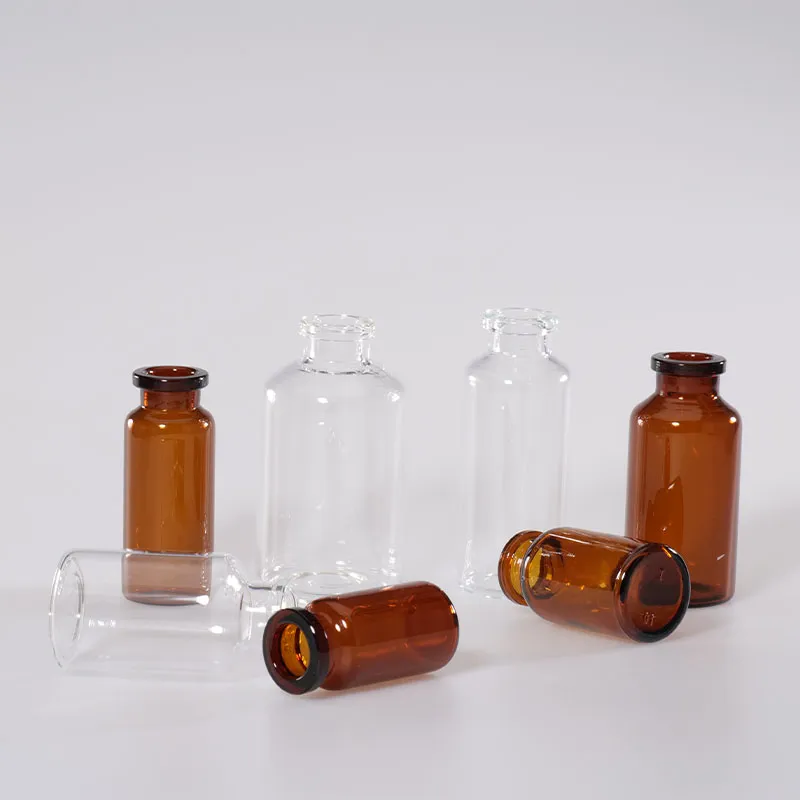
Tubular vials are formed from glass tubing, so tubing control and converting control both contribute to the final dimensions. A catalogue wall-thickness range of approximately 0.5-1.2 mm may be useful for orientation, but qualification should be based on the drawing, tolerance band, and measured distribution for the selected vial.
The following features commonly affect filling, inspection, and capping:
ISO 8362-1 is commonly used for injection vials made of glass tubing. The complete container-closure system should also identify the applicable standards and specifications for the elastomeric stopper, aluminum seal, and any coating or treatment. Listing a vial standard while leaving the closure components undefined describes only part of the system.
Supply-state terms are not used identically by every supplier. Define the required state in the specification instead of relying on the acronym alone.
Bulk vials are generally supplied for the customer to wash, depyrogenate, and process at its own site. This can suit established fill-finish operations with validated washing and depyrogenation capacity.
RFF (ready-to-fill) y RTU (ready-to-use) may include different combinations of washing, depyrogenation, packaging, sterilization, and release testing. In many supply chains RTU is supplied sterile, while RFF may be supplied in a ready-to-fill but not necessarily sterile state. Confirm the following for the exact SKU: bioburden and endotoxin limits, sterility status, packaging format, sterilization method, validation summary, particulate controls, and shipping conditions.
RTU can reduce open handling and the customer’s investment in washing and tunnel capacity, but it transfers part of the validation and supplier-qualification burden to the packaging supplier. The comparison should therefore use total validated cost, facility capacity, clinical-stage flexibility, and contamination-control strategy rather than unit price alone. EU GMP Annex 1 requires a risk-based contamination-control strategy; RTU may reduce some handling steps, but it does not remove the customer’s responsibility to qualify the supplied sterile barrier and process.
If ethylene oxide (EtO) is used for a particular RTU vial, cartridge, or packaging configuration, request the sterilization cycle summary, residual limits, test method, aeration data, and release criteria. Do not generalize the EtO statement to all RTU products.
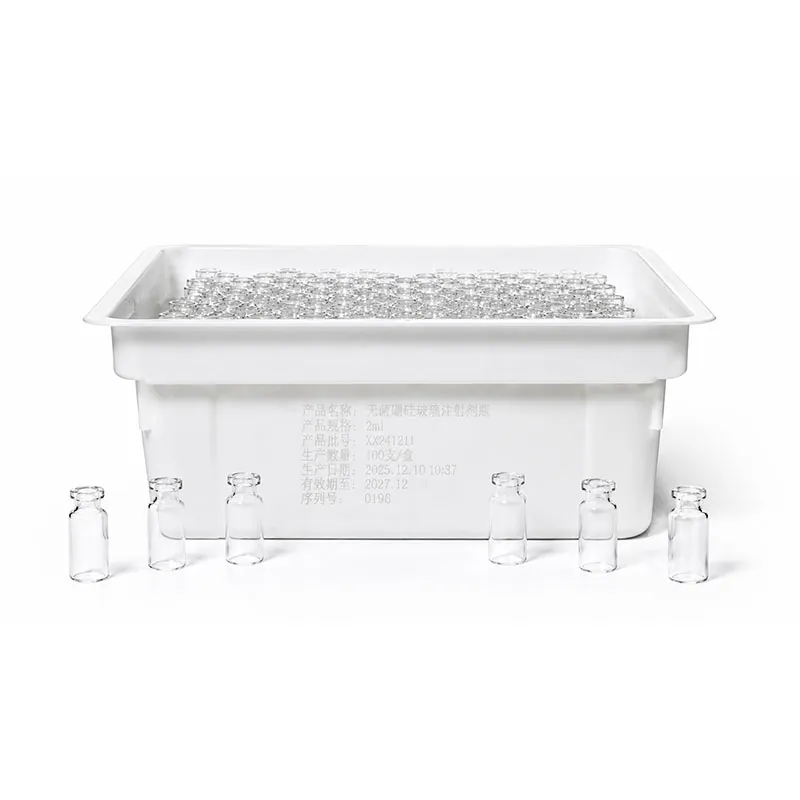
The parameters below are the publicly published ranges for the LINUO pharmaceutical glass vial line. For a final specification, the applicable approved technical data sheet is the governing document.
| Parameter | Published Range or Option |
|---|---|
| Series | Standard Series, Lyophilization-Ready, Siliconized, RTU/RFF, Micro-Volume |
| Nominal Capacity | Approximately 0.1 mL to 50 mL |
| Glass | USP Type I neutral borosilicate glass |
| Colour | Clear; amber |
| Neck and Closure Formats | 13 mm crimp, 20 mm crimp, screw neck, inner-cone design, V-bottom design |
| Wall Thickness | Approximately 0.5–1.2 mm |
| Surface Options | Untreated; siliconized |
| Packaging Formats | Bulk; Nest and Tub; RFF; RTU |
| RTU Tubular Sizes | 2R, 4R, 6R, 8R, 10R, 15R, 20R, 25R, 30R, 50R |
| RTU Delivery Condition | Washed, depyrogenated, packaged, and terminally sterilized using ETO |
| Typical Applications | Liquid injections, lyophilized drugs, vaccines, diagnostic reagents, biological products, and antibody drugs |
Two capability points sit behind that range. LINUO produces pharmaceutical borosilicate glass tubing in-house at a stated annual volume of more than 13,000 metric tons, which places tubing dimensional control and converting under one quality system rather than across a supply boundary. Published tubular pharmaceutical vial capacity is approximately 50 million units per year.
On the quality side, inspection is stated as 100% AI-based visual inspection with MES-supported production traceability, and testing is performed in a CNAS-accredited laboratory under accreditation number L5691, with stated reference to the Chinese Pharmacopoeia, United States Pharmacopeia, European Pharmacopoeia and Japanese Pharmacopoeia.
Micro-volume and V-bottom formats deserve a separate mention, because they are the configurations most often needed for cell and gene therapy and high-value low-fill products, and they are the configurations most often missing from a general catalogue.
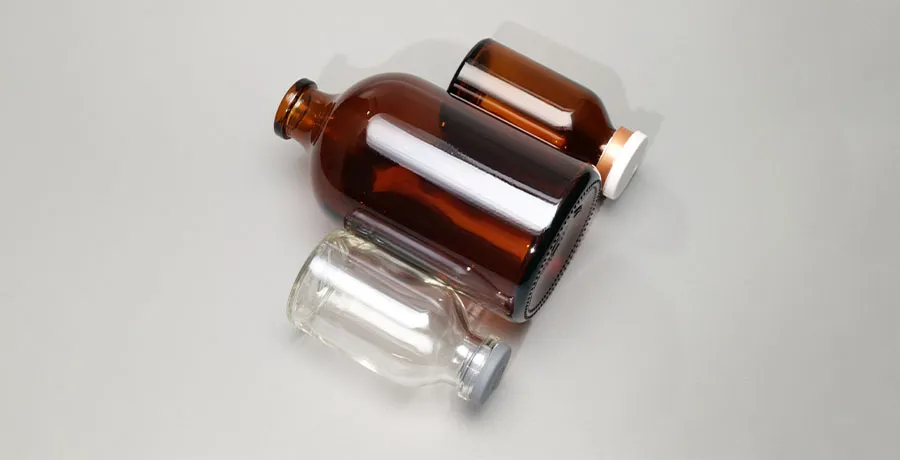
Vertical integration from glass melting through tubing, converting, inspection, and RTU processing can shorten root-cause investigations because the relevant records may be held within one quality system. It does not remove the need to verify each process step, change-control commitment, and product-specific qualification.
Include the following questions in the supplier risk assessment:
Type I is a pharmacopoeial hydrolytic-resistance classification. Borosilicate describes a glass composition family. Ask for both the composition and the classification with the applicable test reference.
Not necessarily. The `R` code is a nominal size designation, while validated fill volume depends on headspace, stopper displacement, product requirements, and filling tolerances. Confirm the drawing and intended fill volume with the supplier.
Bulk can suit sites with validated washing and depyrogenation capacity. RTU can suit clinical-stage programmes or sites without tunnel capacity, provided the supplier’s sterile-barrier, sterilization, particulate, and release data meet the customer’s requirements. Compare total validated cost rather than unit price alone.
No. A Drug Master File is a confidential regulatory submission referenced by an application; it is not product approval. Confirm the file scope and the Letter of Authorization with the DMF holder.
Amber glass can reduce transmission in the ultraviolet and short-wavelength visible range, but suitability should be confirmed using the product’s light-protection requirements and the supplier’s transmission data. Clear glass with protective secondary packaging may be appropriate for some products.
Siliconization may reduce protein adsorption and improve handling. It also requires control of treatment coverage, particles, compatibility, and any relevant extractables and leachables. Specify it only when the product and process require it.
Timing depends on sample availability, dimensional and functional testing, line trials, and stability requirements. Work backwards from the first stability pull and request samples before the final specification is frozen.
There is no reliable general per-unit price. A quotation depends on glass type, dimensions and tolerances, supply state, sterilization requirement, volume, documentation scope, and delivery terms.
Customized outside diameter, wall thickness, printing and coding, and surface treatment may be available subject to technical confirmation. Ask for tooling lead time, minimum volume, validation requirements, and change-control terms at the enquiry stage.
Le responderemos en un plazo de 24 horas. Si se trata de un caso urgente, añada WhatsApp/WeChat: +8618615646416 o llame directamente al +8618615646416.
*Respetamos su confidencialidad y toda la información está protegida.
Solo utilizaremos su información para responder a su consulta y nunca enviaremos correos electrónicos no solicitados ni mensajes promocionales.