







Sobre nosotros
Si tiene algún problema durante el uso del producto, no dude en ponerse en contacto con nosotros



Desplácese hacia abajo

 August 11, 2026
 Aseptic filling requires pharmaceutical containers to enter the filling environment in a controlled and properly prepared condition. When conventional bulk glass containers are used, pharmaceutical manufacturers may need to complete multiple preparation processes before filling, including washing, depyrogenation, sterilization and container handling.
Ready-to-use, or RTU, sterile packaging changes this workflow by moving key container preparation processes to the pharmaceutical packaging supplier. RTU glass vials and cartridges are supplied in protected packaging systems after controlled cleaning, processing and sterilization. This allows compatible containers to be introduced into aseptic filling operations with fewer in-house preparation steps.
LINUO supplies Viales de vidrio RTU in Nest and Tub or Tray formats, as well as RTU sterile glass cartridges in Nest and Tub systems. These products are designed for pharmaceutical manufacturers, CDMOs and fill-finish facilities working with biologics, vaccines, blood products and other injectable formulations.
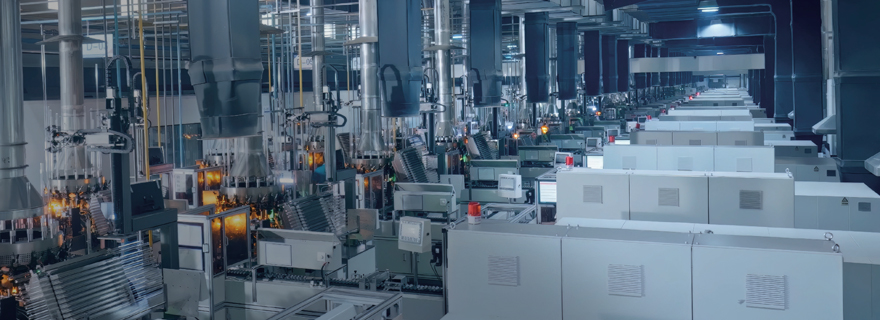
RTU sterile packaging refers to pharmaceutical containers that have already undergone defined preparation processes before delivery to the filling facility.
Depending on the selected product and configuration, the RTU process can include:
The purpose of this system is to supply containers in a prepared format that can be integrated into a compatible aseptic filling process without repeating every preparation step inside the pharmaceutical facility.
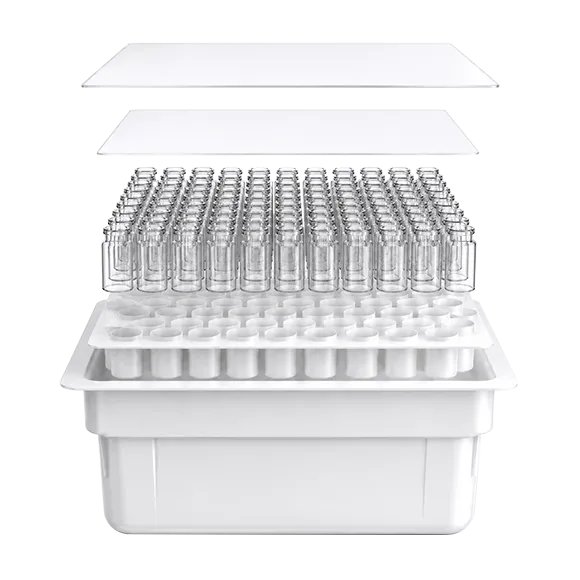
LINUO’s RTU vial systems use borosilicate glass injection vials with protective packaging components such as PP nests or trays, tubs, Tyvek sterile-barrier materials and double sterile bags. Its Cartuchos de vidrio RTU are also supplied in a Nest and Tub system for direct integration into suitable sterile filling workflows.
The efficiency advantage of RTU sterile packaging begins before filling. Conventional bulk containers may require the pharmaceutical manufacturer to establish and manage internal preparation processes for washing, depyrogenation, sterilization, sorting and transfer.
RTU containers arrive after these defined processes have been completed by the packaging supplier. This can reduce the preparation work that must be performed at the filling site.
LINUO RTU vial products are supplied in a washing-free format. The RTU cartridge process includes a multi-stage cleaning program consisting of six air-blowing steps, two purified-water rinses and two WFI rinses.
Completing these processes before delivery reduces the need for the filling facility to wash every container before use.
de LINUO RTU Nest and Tub vials include pyrogen-control process support, while the RTU Tray products are described as depyrogenation-free at the customer’s site.
Moving this process to the container supplier helps reduce the number of preparation stages that must be completed before the vials enter an aseptic filling operation.
Siliconization is used where required by the specific product configuration. LINUO’s RTU production workflow includes optional siliconization for vials. Its RTU cartridges use silicone oil and are processed for applications that require controlled plunger movement and dosing performance.
Because siliconization requirements vary by container and drug-delivery system, the required treatment should be confirmed during product and filling-line evaluation.
The exact sterilization method depends on the product and packaging configuration. LINUO project materials describe tunnel depyrogenation for specified vial processes, while EO sterilization applies to selected RTU systems or components. The applicable cycle and release documentation should be confirmed for the exact SKU
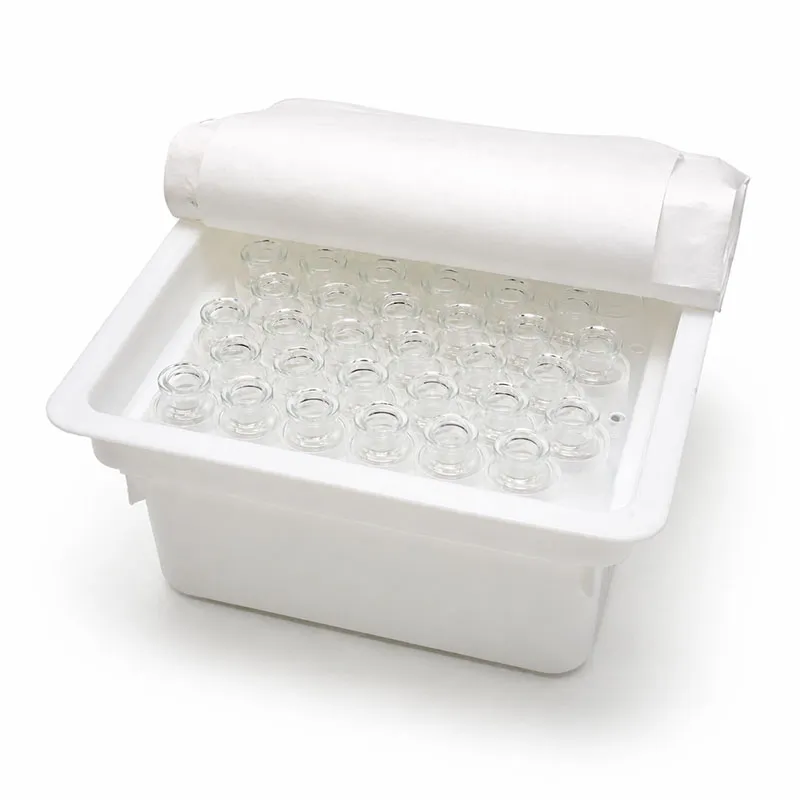
RTU containers are supplied in nests or trays that hold individual vials or cartridges in defined positions. This reduces the need to sort loose containers manually before loading them into compatible filling equipment.
By reducing these preparation and handling stages, RTU sterile packaging can simplify the workflow between container receipt and aseptic filling.
RTU packaging does not increase efficiency through one isolated feature. Its value comes from combining prepared containers, organized packaging and sterile-barrier protection into a system that supports filling-line integration.
When containers are supplied after washing, pyrogen-control processing and sterilization, the filling facility can reduce the number of internal steps required before filling.
This helps simplify the sequence between container receipt, transfer into the controlled area and integration with the filling line.
Loose bulk containers may require sorting and repeated transfer before filling. RTU nests and trays keep individual containers in defined positions throughout packaging, transportation and filling preparation.
Reducing unnecessary container handling helps simplify operations and limits direct contact with individual vials or cartridges.
Standardized Nest and Tub systems are designed to support automated loading and stable transfer on compatible aseptic filling equipment.
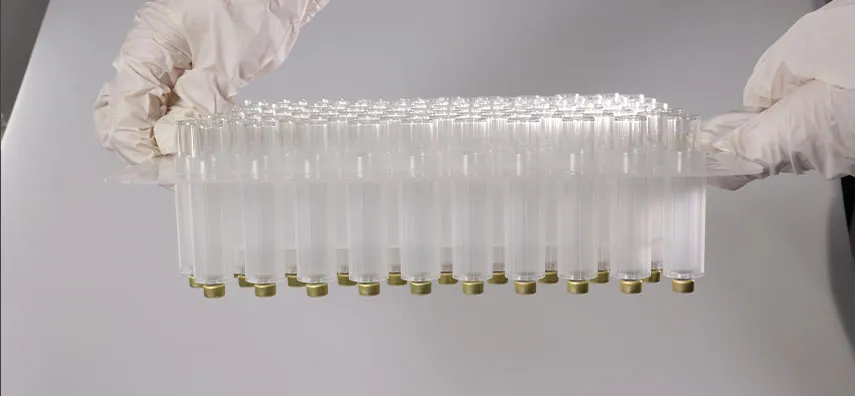
For RTU Tray vials, the independent cavity design keeps each vial separated. For RTU Nest and Tub systems, individual containers remain positioned within the nest during handling and loading.
The filling-line compatibility of the selected container and packaging format must still be confirmed before commercial use.
The nest and tray structures separate individual containers. This helps reduce vial-to-vial or cartridge-to-cartridge contact during transportation, handling and filling preparation.
Lower contact can help reduce scratches, collisions and breakage risks compared with loosely handled containers. It also helps maintain the visual condition of the container before inspection and filling.
LINUO’s RTU systems use Tyvek sterile-barrier materials and double sterile bags. These packaging components protect the prepared containers during storage, transportation and transfer into the filling environment.
The sterile-barrier system supports controlled entry into sterile production areas while reducing the need to handle individual containers before filling.
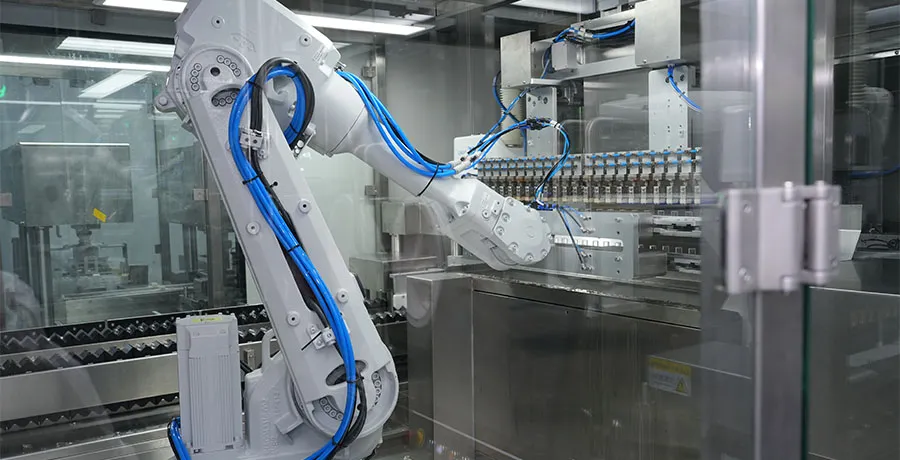
The Nest and Tub system combines several components into one organized packaging format.
For LINUO RTU vials, the system includes:
The nest holds the vials separately, while the tub provides external structural support. Tyvek® components and sterile bags form the protective barrier used during transportation and controlled transfer.
LINUO offers RTU Nest and Tub vials in the following sizes:2R, 4R, 6R, 8R, 10R, 15R, 20R, 25R, 30R and 50R.
This size range allows pharmaceutical manufacturers to evaluate the appropriate vial format according to the drug product, filling volume, closure system and filling equipment.
RTU Tray vials use a tray with independent positions to separate and organize the containers. LINUO supplies its Tray vials after washing, pyrogen-control processing, packaging and ETO sterilization.
The main characteristics of the Tray format include:
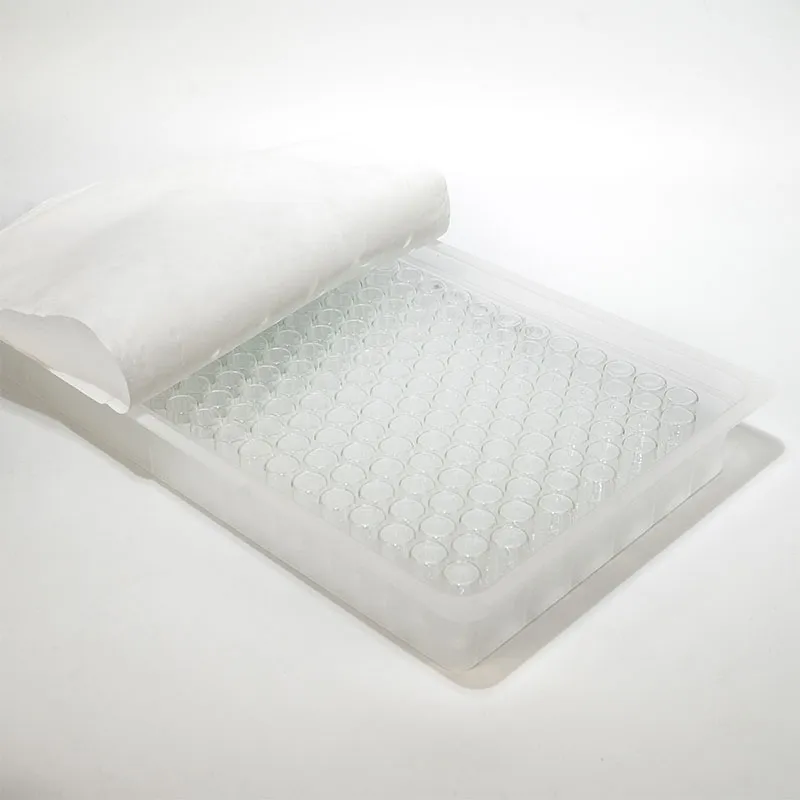
LINUO’s RTU Tray vials are available in the same 2R–50R range as the Nest and Tub series.
Nest and Tub and Tray packaging should not be treated as interchangeable without evaluation. The appropriate option depends on the filling equipment, container-loading method, required vial size and handling workflow.
| Comparison | Nest and Tub Vials | Tray Vials |
| Container positioning | Individual vials held in a nest | Individual vials held in tray cavities |
| Primary handling value | Organized loading and reduced vial contact | Flexible tray handling and vial separation |
| Sterile barrier | Tyvek® components and double sterile bags | Tyvek components and double sterile bags |
| Esterilización | ETO | ETO |
| Available vial sizes | 2R–50R | 2R–50R |
| Selection basis | Filling-line and loading compatibility | Filling-line and tray-handling compatibility |
The RTU concept also applies to pharmaceutical glass cartridges. LINUO’s RTU sterile cartridges are designed for pharmaceutical manufacturers, CDMOs and fill-finish operations that require prepared cartridges for pen injectors and other injectable drug applications.
Standard RTU cartridge capacities include:
Dual-chamber cartridge capacities include:
The dual-chamber formats are intended for powder-and-solvent combinations requiring reconstitution.
The RTU cartridge system includes borosilicate glass barrels, rubber components, seals, silicone oil, PP nests, PS tubs, Tyvek® materials, double sterile bags and ETO sterilization.
Because the cartridges are supplied after controlled washing, siliconization, packaging and sterilization, they can reduce the preparation work required before integration into a compatible aseptic filling process.
RTU vials and cartridges support several pharmaceutical application directions.
LINUO recommends RTU vials, prefillable syringes and cartridges for monoclonal antibodies and ADC products. These applications require packaging selection based on drug compatibility, dimensional requirements and fill-finish conditions.
RTU Nest and Tub vials are presented for vaccines and blood products. Prepared vial formats can help manufacturers reduce container-processing work before aseptic filling.
LINUO recommends RTU vials and prefillable syringes for cell and gene therapies and nucleic acid drugs where particulate control and sterility requirements are important packaging considerations.
RTU vials are also included in LINUO’s packaging direction for aesthetic injectable products, with printing and branding options available as part of its customization capabilities.
RTU cartridges are designed for pen injector systems and high-value injectable drug applications. Standard and dual-chamber cartridge options are available for different project requirements.
The final container format must be selected according to the formulation, filling process, closure system, delivery device and required packaging configuration.
RTU packaging reduces preparation work only when the container and packaging system are suitable for the customer’s filling process. Buyers should therefore confirm the following points before placing an order.
The first decision is whether the project requires an RTU vial or an RTU cartridge.
For vials, LINUO offers 2R–50R sizes. For cartridges, standard and dual-chamber capacities are available.
For RTU vials, buyers need to select between Nest and Tub and Tray packaging. The decision should be based on the container-loading method and compatibility with the filling line.
Nest, tub and tray dimensions must match the intended handling and filling equipment. Samples and technical evaluation should be completed before commercial-scale use.
Optional siliconization is available for RTU vials, while RTU cartridges include siliconization for controlled inner-surface performance. The treatment requirement should be evaluated according to the drug product and delivery system.
Vial projects must confirm stopper and cap matching. Cartridge projects must confirm rubber stoppers, seals and downstream device-assembly requirements.
The required dimensional reports, visual inspection data, certificates and regulatory documentation should be defined during the sourcing process.
LINUO’s support services include product selection, custom development, samples with CoA and testing data, dimensional and visual inspection reports, DMF-related assistance and audit support.
RTU packaging combines glass containers, polymer components, sterile-barrier materials and sterilization processes. Testing is therefore an important part of product evaluation and batch-quality support.
LINUO operates a CNAS-accredited pharmaceutical packaging testing center under accreditation number L5691. The laboratory conducts in-house testing to ChP, USP, EP and JP requirements.
Its published testing capabilities include:
LINUO also uses MES-based traceability to connect raw-material batches, production parameters, inspection records and packaging data with finished shipments.
The main efficiency value of RTU sterile packaging is the transfer of defined container-preparation processes from the filling site to the packaging supplier.
Instead of receiving loose containers and completing every preparation stage internally, the pharmaceutical manufacturer receives vials or cartridges that have already undergone controlled processing and are protected within an organized sterile-barrier system.
The resulting efficiency improvements can include:
These benefits depend on selecting the correct container, packaging format and filling-line configuration. RTU packaging should therefore be evaluated as a complete system rather than as an isolated glass container.
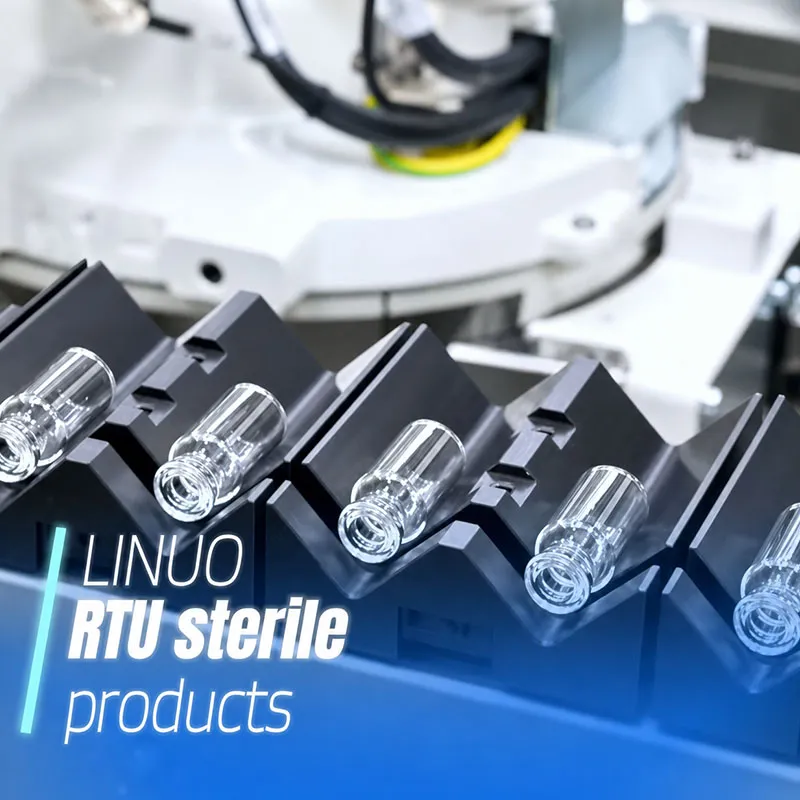
RTU sterile packaging improves aseptic filling efficiency by supplying prepared glass vials and cartridges in protected Nest and Tub or Tray systems. Controlled washing, pyrogen-control processing, optional siliconization, inspection, sterile-barrier packaging and ETO sterilization are completed before the containers reach the filling facility.
This approach helps pharmaceutical manufacturers, CDMOs and fill-finish operations reduce in-house preparation steps, limit unnecessary container handling and integrate organized container formats into compatible aseptic filling lines.
LINUO provides RTU glass vials from 2R to 50R, standard RTU cartridges from 1ml to 3ml and dual-chamber cartridges from 3ml to 5ml. Product selection should be based on the formulation, filling equipment, closure system, siliconization needs, packaging format and required testing documentation.
RTU means ready-to-use. RTU pharmaceutical containers undergo defined preparation processes such as washing, pyrogen control, packaging and sterilization before delivery for compatible aseptic filling operations.
RTU vials are supplied after key container-preparation processes have been completed. This reduces the washing, depyrogenation, sterilization, sorting and handling work that may otherwise be required at the filling facility.
Nest and Tub systems hold individual vials in a nest placed inside a supporting tub. Tray systems use independent tray cavities to separate the vials. Both formats use sterile-barrier packaging, but selection depends on filling-line and handling compatibility.
LINUO offers RTU vials in 2R, 4R, 6R, 8R, 10R, 15R, 20R, 25R, 30R and 50R sizes.
Yes. LINUO offers standard RTU glass cartridges in 1ml, 1.5ml, 1.8ml and 3ml formats, as well as dual-chamber cartridges in 3ml, 4ml and 5ml formats.
The RTU vial and cartridge pages specify EO-sterilized RTU system. The prepared containers are protected with Tyvek® sterile-barrier components and double sterile bags.
No. Container size, nest or tray format, loading method and filling-equipment compatibility should be evaluated before commercial use. Samples and technical data can support this assessment.
Le responderemos en un plazo de 24 horas. Si se trata de un caso urgente, añada WhatsApp/WeChat: +8618615646416 o llame directamente al +8618615646416.
*Respetamos su confidencialidad y toda la información está protegida.
Solo utilizaremos su información para responder a su consulta y nunca enviaremos correos electrónicos no solicitados ni mensajes promocionales.