









About Us
If you have any problems during product use,please feel free to contact us


Scroll Down

 October 28, 2026
Neither bromobutyl nor chlorobutyl rubber stoppers are universally better for injectable drugs. The right choice depends on the finished rubber formulation, stopper design, processing conditions and performance with the intended drug and container.
For pharmaceutical manufacturers, biotech companies and CDMOs, selection should follow three steps: define the application, compare specific stopper formulations, and evaluate the complete vial–stopper–seal system.
LINUO supplies bromobutyl and chlorobutyl rubber stopper options for pharmaceutical packaging projects. This guide explains the differences that matter when shortlisting components, requesting samples or evaluating a second supplier.
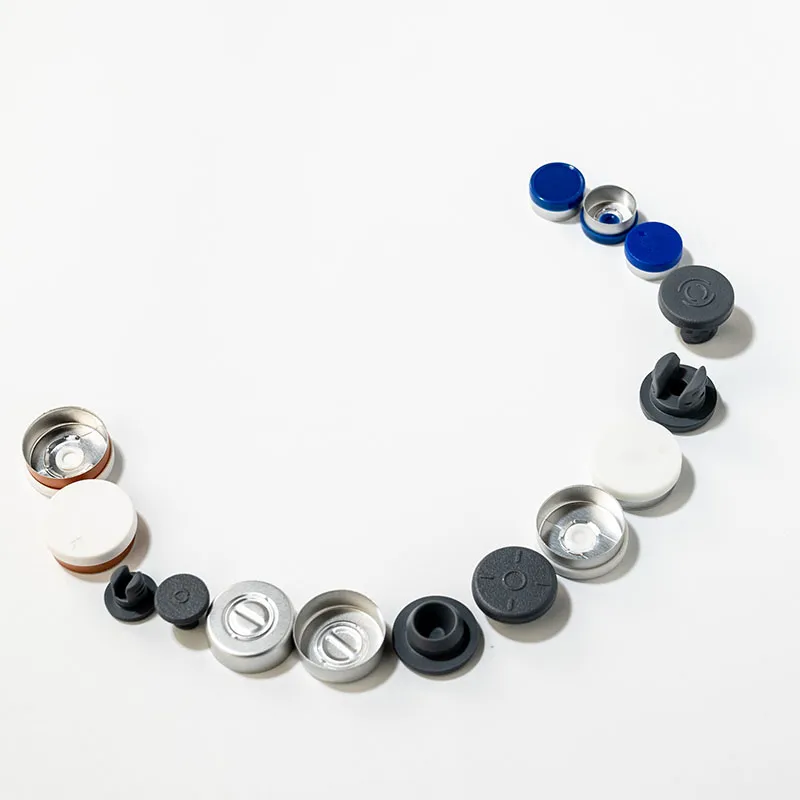
Bromobutyl and chlorobutyl belong to the halobutyl rubber family. Their base polymers are produced by modifying butyl rubber with bromine or chlorine, respectively.
Both are used in pharmaceutical closures. However, a finished stopper also contains ingredients used for compounding, curing and stabilization. Its design, surface treatment and processing history further influence performance.
The comparison should therefore focus on the specific finished formulation, rather than assume that the base polymer determines compatibility, cleanliness or sealing.
| Comparison Point | Bromobutyl Rubber Stoppers | Chlorobutyl Rubber Stoppers |
| Base material | Brominated butyl rubber | Chlorinated butyl rubber |
| Pharmaceutical application | Used in pharmaceutical closure formulations | Used in pharmaceutical closure formulations |
| Chemical profile | Depends on the complete formulation and processing | Depends on the complete formulation and processing |
| Functional performance | Requires assessment of the selected component | Requires assessment of the selected component |
| Selection basis | Product-specific data and system evaluation | Product-specific data and system evaluation |
Start with the drug presentation and intended use. This identifies the evidence needed to compare candidate pharmaceutical rubber stoppers.
| Project Requirement | Priority Evaluation Areas |
| Liquid injectable | Formulation compatibility, extractables and leachables, closure integrity |
| Lyophilized product | Lyophilization stopper design, stopper moisture contribution, container-closure moisture ingress, partial-stoppering performance and process fit |
| Repeated needle access | Fragmentation, penetrability and resealing under defined puncture conditions |
| Low-temperature storage | Assembled-system integrity at the intended temperature and relevant cycles |
| Second-source replacement | Formulation, dimensions, treatment, processing and change-control assessment |
These priorities guide the evaluation plan. They do not assign one rubber family to an entire drug category.
A biologic, vaccine or small-molecule injectable still requires assessment of its own formulation, manufacturing conditions and proposed shelf life.
LINUO’s closure offering includes bromobutyl and chlorobutyl rubber stoppers, together with aluminum caps and plastic-aluminum flip-off caps.
The listed stopper sizes are 13 mm, 20 mm, 28 mm and 32 mm. Confirm the available material, design and processing state for the selected size.
Explore LINUO’s pharmaceutical rubber stoppers and caps and provide your vial drawing when discussing a suitable configuration.
Request the applicable stopper specification and discuss evaluation sample requirements before finalizing material selection.
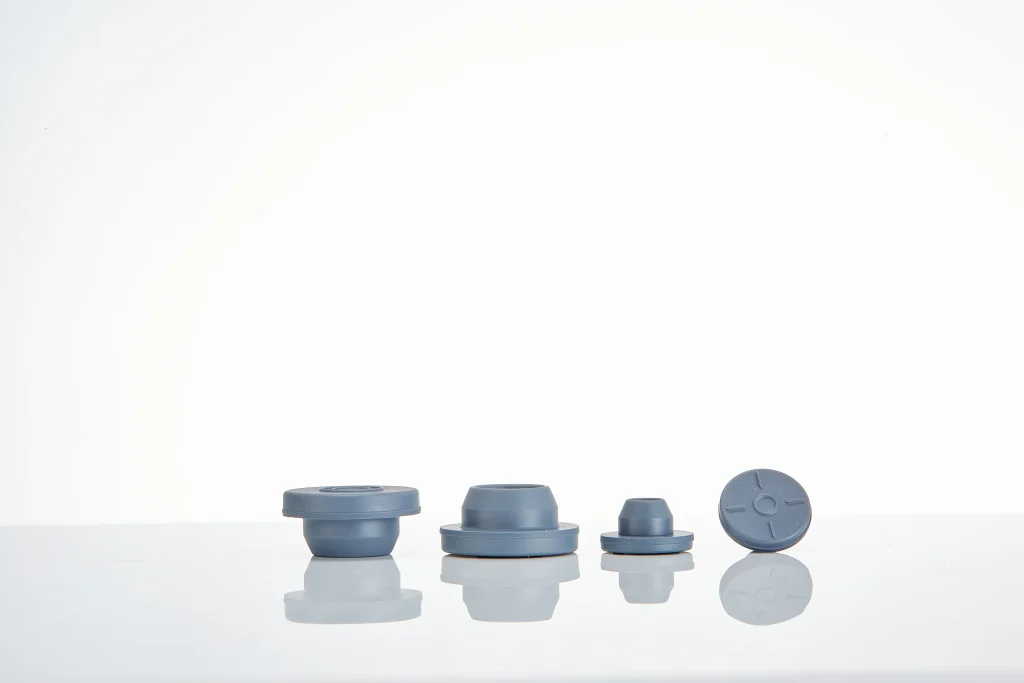
A specification stating only “bromobutyl stopper” or “chlorobutyl stopper” is incomplete.
Identify the supplier’s compound reference, component drawing, surface treatment and processing state. These details connect the technical data, evaluation samples and proposed commercial supply.
The compatibility assessment should reflect the drug’s composition, contact conditions and storage period. Depending on the product, it may need to address migration from packaging components, interaction with formulation ingredients or changes in relevant quality attributes.
Extractables are substances released from a material or component under defined laboratory extraction conditions.
Leachables are substances that migrate into the drug product under manufacturing, storage or use conditions. Identified extractables and leachables should be assessed in relation to their concentration, patient exposure, route of administration, dosing frequency and applicable toxicological thresholds. The analytical study design and safety assessment remain product-specific.
Supplier extractables information can support an assessment, but its relevance depends on the tested formulation, treatment and conditions. It does not automatically replace a drug-specific leachables study.
Review the available chemical data alongside the intended application. Packaging suitability involves safety, compatibility, protection and functional performance.
For injectable vial stoppers intended for needle access, compare how the selected finished components perform under relevant test conditions.
| Property | What It Addresses |
| Penetrability | Force required for needle penetration |
| Fragmentation | Elastomer fragments released during penetration |
| Self-sealing | Ability to reseal after the defined puncture sequence |
Stopper formulation, geometry, surface treatment and processing can affect these properties. The needle and penetration conditions also matter.
A repeated-access presentation should be assessed using an appropriate puncture sequence. Results obtained with one needle or test arrangement should not automatically be extended to every use condition.
The applicable methods and acceptance criteria should be established for the intended product.
Container closure integrity is a system property. Choosing an appropriate rubber formulation is only part of establishing a suitable closure.
Review the vial finish, stopper dimensions and insertion position, aluminum seal configuration, stopper compression, capping parameters and applicable dimensional tolerances together.
For example, a “20 mm stopper” description should be supported by the relevant drawing and tolerances. The assembled configuration then needs evaluation under the intended processing, storage and transport conditions.
Low-temperature storage requires particular attention to the specified conditions. A result obtained at room temperature should not be assumed to establish performance throughout a cold-storage program.
Use the selected glass vial configuration as the basis for component matching.
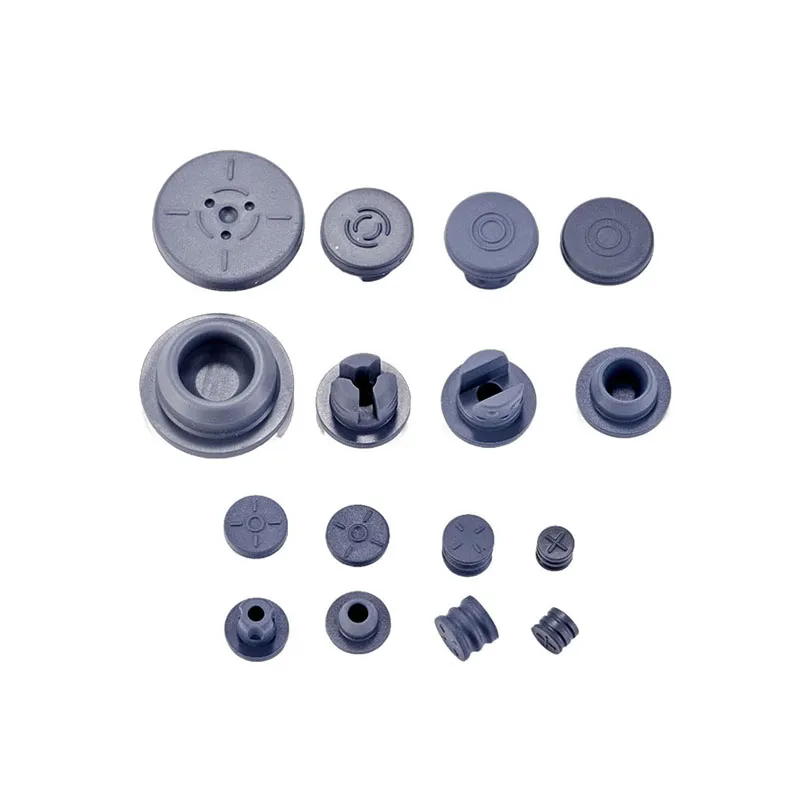
Compare stoppers in a state representative of their intended use.
Clarify whether the proposed component is supplied untreated, washed, ready to sterilize, ready to process or sterile, and confirm the supplier’s definition of each supply state. Supporting information should identify the applicable processing and packaging configuration.
If a coating, barrier film or siliconization is proposed, establish its type and location. These features are additional selection variables; they should not be inferred from the base rubber description.
Their availability must also be confirmed for the selected LINUO product. Discussing a treatment as an evaluation option does not establish that every stopper model is supplied with it.
Vial stoppers should be distinguished from syringe or cartridge plungers. Although related elastomer families may be used, plungers have movement and delivery requirements that vial-stopper data alone cannot establish.
A complete enquiry helps suppliers identify suitable components and relevant documentation.
| Information | What to Provide |
| Application | Liquid or lyophilized presentation and intended access conditions |
| Container | Vial drawing, neck finish and dimensions |
| Stopper | Current drawing or required design and material |
| Formulation | Relevant drug-contact characteristics |
| Processing | Planned cleaning, sterilization and other exposures |
| Storage | Temperature, duration and transport conditions |
| Supply state | Required preparation and packaging |
| Qualification | Sample quantity, project stage and document requirements |
For a second-source project, identify the currently approved component and proposed differences. Changes in compound, treatment or processing can require review even when nominal dimensions remain the same.
Contact LINUO with your vial and stopper requirements to discuss specifications, component matching and evaluation samples.
Is bromobutyl better than chlorobutyl for injectable drugs?
Neither is universally better. Compare the specific finished formulations and their suitability for the intended drug, container and process.
Which material has fewer extractables?
The answer depends on the complete compound, processing and extraction conditions. The base polymer name does not establish the extractables profile.
Does the correct rubber material guarantee a leak-tight vial?
No. Container closure integrity depends on the assembled vial, stopper and seal, together with the closing process and relevant environmental conditions.
Can bromobutyl and chlorobutyl stoppers be interchanged?
A proposed substitution requires an appropriate technical and change-control assessment. Matching size does not establish chemical or functional equivalence.
What is needed to request LINUO stopper samples?
Provide the vial drawing, stopper requirements, intended application, processing and storage conditions, supply state and qualification needs.
We will reply to you within 24 hours. If for urgent case, please add WhatsApp/WeChat: +8615953131507, Or call +8618615646416 directly.
*We respect your confidentiality and all information are protected.
We will only use your information to respond to your inquiry and will never send unsolicited emails or promotional messages.