









About Us
If you have any problems during product use,please feel free to contact us


Scroll Down

 November 09, 2026
To obtain an accurate bulk tubular glass vial quotation, pharmaceutical buyers should provide the required vial size, glass type, dimensional drawing, neck finish, color, supply condition, estimated quantity, packaging requirements, and delivery destination. These details allow suppliers to evaluate manufacturing feasibility, prepare comparable quotations, and identify the documentation needed for supplier qualification.
For pharmaceutical manufacturers, CDMOs, packaging distributors, and international sourcing teams, purchasing glass vials in large quantities involves more than securing a competitive unit price. Container dimensions, closure compatibility, packaging protection, batch consistency, and long-term supply arrangements can all affect the final purchasing decision.
This guide provides a practical bulk tubular glass vial RFQ checklist, explains how to compare supplier quotations, and outlines the steps buyers should complete before approving a large-volume order.
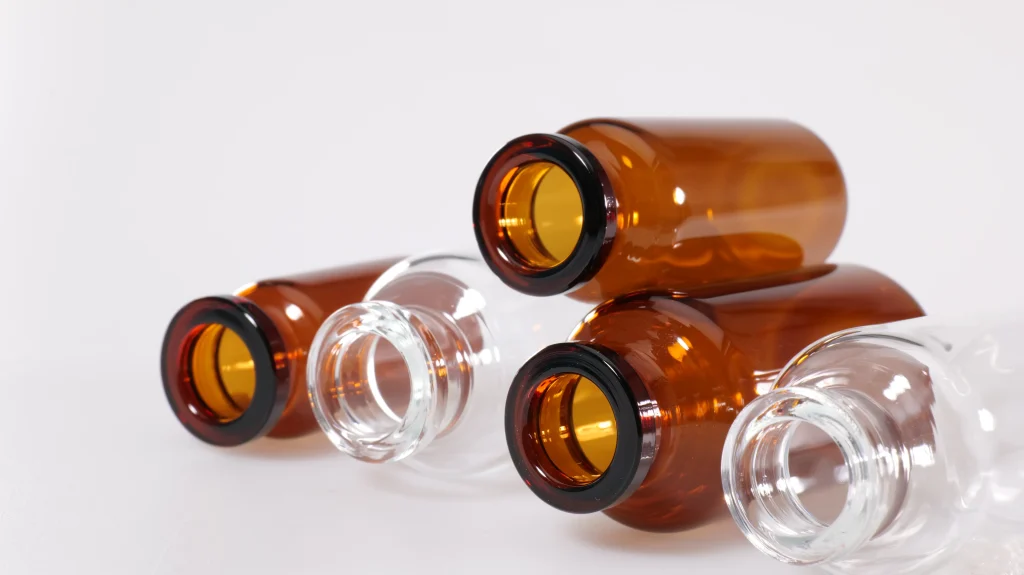
An RFQ, or Request for Quotation, should define both the technical requirements of the glass vial and the commercial conditions of the purchase.
Simply requesting a price for “10 mL pharmaceutical glass vials” is not enough. Vials with the same nominal capacity may differ in outside diameter, height, neck geometry, wall thickness, and packaging configuration.
The more complete the initial RFQ, the easier it is for suppliers to identify a suitable existing product or evaluate whether customization is required.
Bulk Tubular Glass Vial RFQ Checklist
| RFQ Item | Information Buyers Should Provide |
| Product Type | Pharmaceutical tubular glass vial |
| Nominal Capacity | Required vial size or designation |
| Glass Type | Required glass composition and pharmacopoeial classification |
| Color | Clear or amber |
| Dimensions | Outside diameter, height, wall thickness, tolerances |
| Neck Finish | Neck diameter, geometry, and approved drawing |
| Surface Treatment | Untreated or specified coating, if required |
| Supply Condition | Bulk, non-sterile, or another confirmed presentation |
| Packaging | Carton configuration, protection, and labeling requirements |
| Order Quantity | Initial order volume and estimated annual demand |
| Destination | Delivery country, port, or receiving location |
| Quality Documents | Technical data sheet, drawing, CoA, and other required records |
| Commercial Terms | Requested Incoterm, payment terms, and delivery schedule |
The following example illustrates how a pharmaceutical buyer might organize an inquiry.
| Specification | Example RFQ Requirement |
| Product | Tubular injection glass vial |
| Nominal Capacity | 10 mL |
| Glass Type | USP Type I borosilicate glass |
| Color | Clear |
| Neck Finish | To be confirmed against approved drawing |
| Supply Format | Bulk, non-sterile |
| Initial Quantity | 100,000 pieces |
| Annual Forecast | To be provided by buyer |
| Packaging | Export-ready bulk packaging |
| Required Documents | Technical drawing, specification, CoA requirements |
| Delivery Term | FOB or CIF, named port to be confirmed |
Note: This is an illustrative buyer RFQ, not a statement of LINUO’s standard MOQ, available stock, or confirmed product configuration.
The buyer should replace the example values with the actual project requirements before requesting a quotation.
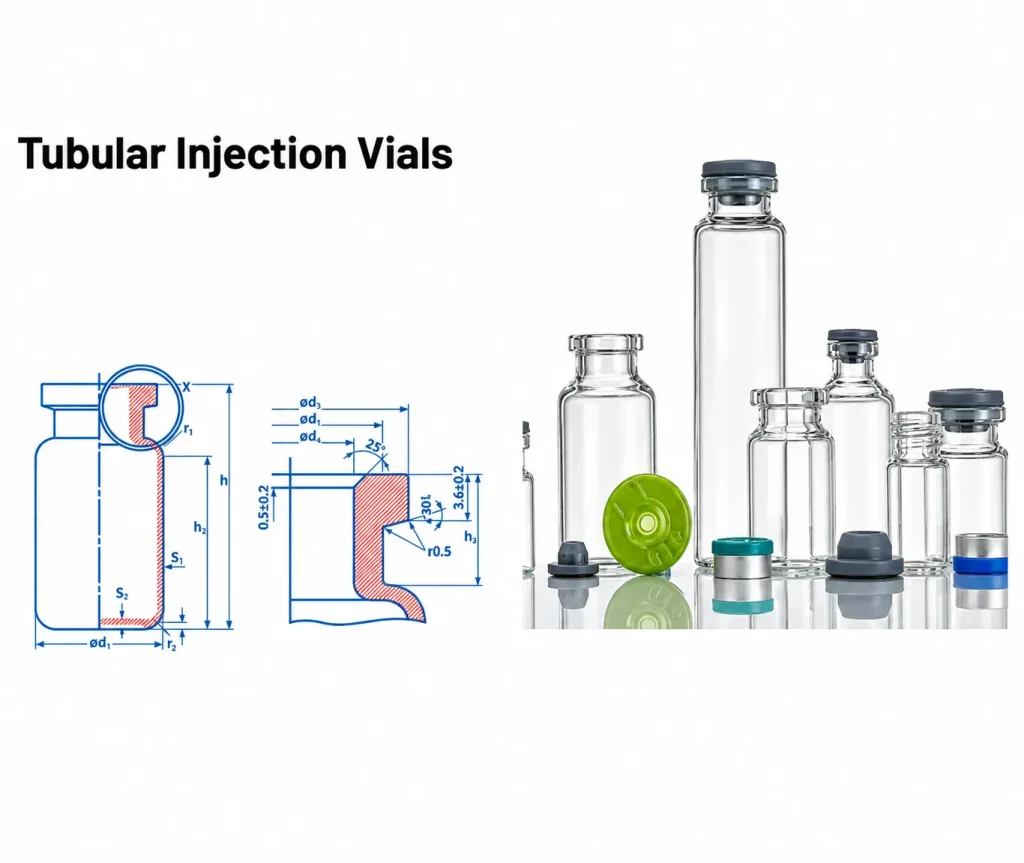
The technical specification determines whether a vial meets the intended pharmaceutical and manufacturing requirements.
Three areas deserve particular attention: glass characteristics, container dimensions, and closure compatibility.
Glass Type and Product Requirements
Pharmaceutical glass vials are commonly evaluated according to their glass composition and hydrolytic resistance.
Type I borosilicate glass is widely used in injectable packaging because of its chemical resistance. However, the selected glass must still be assessed for the intended drug formulation, manufacturing process, and applicable pharmacopoeial requirements.
Buyers should confirm:
LINUO supplies pharmaceutical glass vial options for injectable applications. The exact glass classification and specifications should be verified for the selected product rather than assumed for every vial in the portfolio.
Explore LINUO’s pharmaceutical glass vial range for available container configurations.
Capacity, Dimensions, and Tolerances
Nominal capacity alone does not determine whether a vial will fit an existing filling line.
Critical dimensions may include:
These parameters affect container handling, filling-line transfer, stoppering, capping, and automated inspection.
The intended fill volume should also be evaluated separately from nominal or brimful capacity. A container’s usable fill volume depends on the drug product and filling requirements.
LINUO’s Standard Series Glass Vials cover a published range of 1–50 mL, with selected 0.1 mL and 0.3 mL micro-volume options available upon request.
Buyers requiring custom dimensions should provide their technical drawings and application details so that feasibility can be evaluated.
Neck Finish and Closure Compatibility
A glass vial should be evaluated together with the stopper and cap intended for the finished pharmaceutical product.
A mismatch between vial neck geometry and closure components may lead to assembly difficulties, inconsistent crimping, or additional qualification requirements.
Before finalizing a bulk order, confirm:
A vial with the correct nominal capacity is not necessarily compatible with the customer’s existing closure system.
Where possible, qualification samples should be evaluated using the actual components and processing conditions planned for production.Dimensional compatibility does not by itself demonstrate container-closure integrity. The pharmaceutical manufacturer should evaluate the selected vial, stopper and seal as a complete container-closure system under the intended filling, processing, storage and transport conditions.

When ordering thousands or millions of pharmaceutical glass vials, the packaging configuration can affect transport costs, receiving efficiency, storage requirements, and product protection.
Buyers should request a packaging specification before comparing final quotations.
Bulk Packaging Checklist
| Packaging Detail | What Buyers Should Verify |
| Units per Carton | Actual quantity and packing arrangement |
| Inner Protection | Materials and methods used to protect glass containers |
| Carton Dimensions | Length, width, height, and gross weight |
| Pallet Configuration | Cartons per pallet, stacking arrangement, and protection |
| Carton Identification | Product code, batch details, and labeling requirements |
| Transport Protection | Measures against vibration, impact, and breakage |
| Receiving Requirements | Inspection and handling expectations at destination |
These details help buyers estimate the actual volume and handling requirements of a shipment.
For international distributors, standardizing carton and pallet information can also simplify inventory management and onward distribution.
Confirm the Supply Condition
Conventional bulk glass vials should not be confused with ready-to-use sterile vials.
Bulk vials are generally supplied for further preparation by the pharmaceutical manufacturer, which may include washing, depyrogenation, and other steps required by the validated filling process.
RTU vials are supplied according to a different preparation and packaging process.
Before placing an order, buyers should confirm whether the requested product is:
Terms such as “ready-to-fill” and “ready-to-use” should not be relied upon without confirming the exact supplied condition in the product specification.
The supplier’s product specification should clearly identify the actual delivery condition.
For customers with established vial washing and depyrogenation equipment, conventional bulk vials may be an appropriate option. However, the decision should consider the complete filling workflow rather than unit price alone.
When purchasing from international suppliers, comparing unit prices without checking the underlying quotation conditions can be misleading.
Two quotations may refer to different vial specifications, packaging quantities, inspection requirements, or shipping arrangements.
Compare Quotations on the Same Basis
| Comparison Factor | Questions Buyers Should Ask |
| Product Specification | Are both quotations based on the same drawing and tolerances? |
| Unit Price | Is the price based on the same quantity and configuration? |
| MOQ | What minimum quantity applies to the selected specification? |
| Packaging | Are carton and pallet configurations equivalent? |
| Customization | Are tooling or additional processing costs included? |
| Samples | What samples and technical evaluations are required? |
| Lead Time | What production and shipment schedule is proposed? |
| Quality Documents | Which documents are included in the quotation? |
| Shipping Terms | What Incoterm and named delivery point apply? |
| Payment Terms | Are the payment conditions commercially acceptable? |
FOB, CIF, and Total Purchasing Cost
FOB and CIF quotations may be relevant to international sea shipments, but they are not directly comparable without understanding the included services and cost responsibilities.
Under Incoterms 2020, FOB and CIF allocate transportation-related responsibilities and risks differently. They are intended for sea and inland waterway transport; containerized shipments may call for other terms depending on the handover arrangement.
Buyers should confirm the agreed Incoterm, named port, freight arrangements, and insurance requirements.
Most importantly, the purchasing decision should consider the total cost of obtaining conforming, usable vials.
A lower unit price may offer limited value if packaging, freight, breakage, qualification, or delivery requirements create additional costs.
For long-term pharmaceutical supply, a technically suitable and consistently available product is often more important than the lowest initial quotation.
Pharmaceutical glass packaging requires clear documentation so that purchasing, quality assurance, and regulatory teams can assess whether a supplier’s product meets the project’s requirements.
The exact documents depend on the target market, drug product, and qualification process.
Recommended Supplier Documentation Checklist
| Document | Why Buyers Need It |
| Product Technical Data Sheet | Confirms the selected vial specification |
| Dimensional Drawing | Defines critical dimensions and tolerances |
| Certificate of Analysis | Supports review of specified batch test results |
| Glass Material Information | Helps assess material classification |
| Hydrolytic-Resistance Data | Supports evaluation of applicable glass requirements |
| Quality Management Certificates | Supports supplier quality-system assessment |
| Packaging Specification | Defines packing configuration and identification |
| Batch Traceability Information | Supports material tracking and investigation |
| Change-Control Information | Helps manage changes affecting qualified products |
| Applicable Regulatory Support | Supports customer registration and qualification needs |
Buyers may also need information relating to USP General Chapter <660>, European Pharmacopoeia Chapter 3.2.1 and ISO 8362-1:2018, depending on the exact vial and target market. ISO 8362-1 addresses the form, dimensions, capacities, materials and performance requirements of injection vials made from glass tubing.
These references should be selected according to the exact product and market requirements.
A supplier’s general regulatory registrations or quality certificates should not be interpreted as automatic approval of every individual glass vial specification.
Confirm Documentation Before Ordering
Quality documentation should be discussed during the RFQ stage, not after the shipment has been arranged.
Buyers should clarify which documents will be provided with samples, which are available for qualification, and which accompany commercial batches.
For recurring orders, agreed specifications and change-notification procedures also help reduce the risk of receiving an unintended configuration.
Bulk procurement frequently involves repeat orders and annual supply planning.
Therefore, buyers should evaluate the manufacturing system behind the quotation rather than relying on company size or production capacity figures alone.
Upstream Glass Tubing Supply
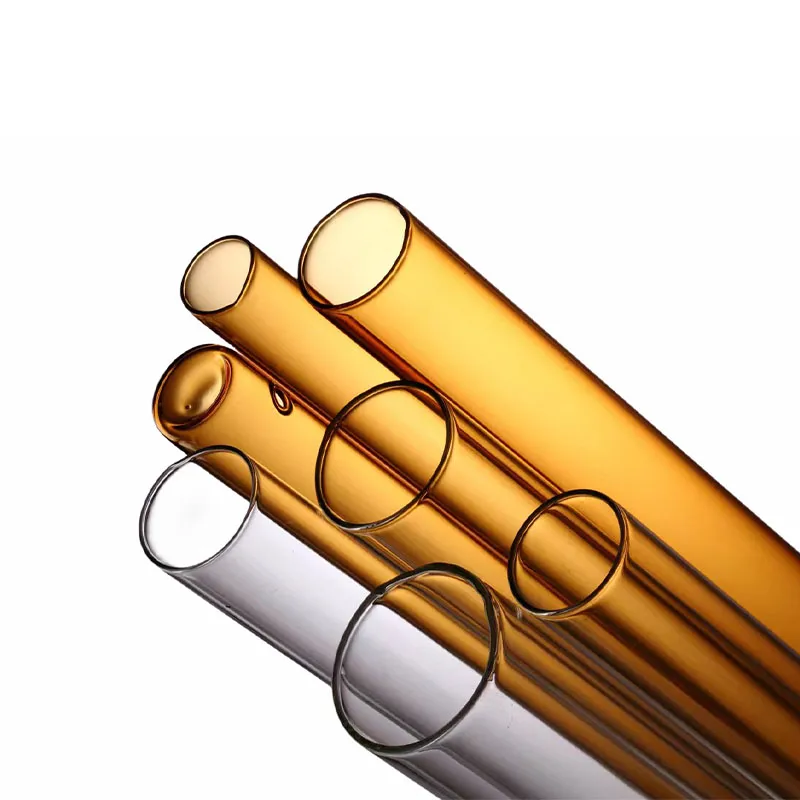
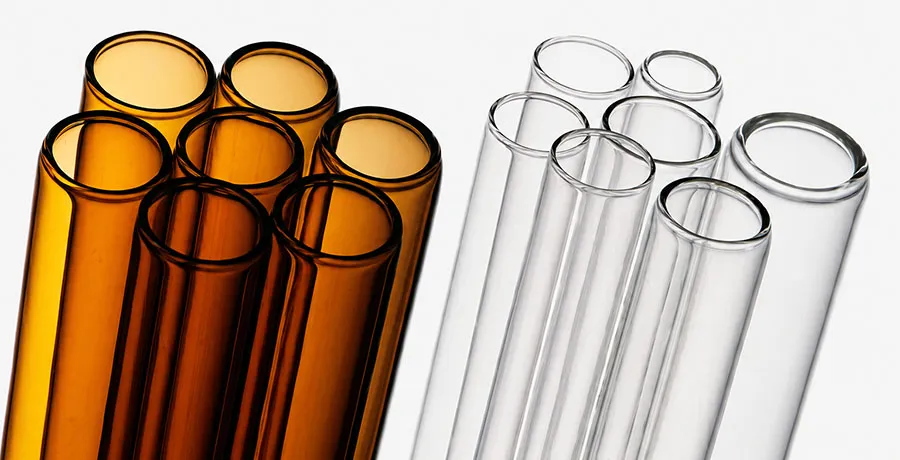
Tubular pharmaceutical glass vials are manufactured from glass tubing. The consistency of incoming tubing dimensions and material characteristics influences downstream container forming.
LINUO manufactures pharmaceutical glass tubing as part of its pharmaceutical glass business.
Its publicly described tubing operations include control of outside diameter, wall thickness, straightness, and ovality, together with automated inspection.
For buyers, integrated tubing and container manufacturing provides a basis for discussing material sourcing, production coordination, and traceability within one supplier organization.
However, actual manufacturing capacity and delivery availability must still be confirmed for the selected vial specification.
Tubular Vial Manufacturing and Inspection
LINUO describes dedicated tubular vial manufacturing lines using precision forming and online quality inspection.
Its published factory information identifies high-precision forming equipment, dimensional inspection, and protected packaging as elements of the tubular vial production process.
These capabilities are relevant to customers evaluating large-volume production consistency.
Buyers should still request product-specific inspection criteria and applicable documentation during supplier qualification.
Traceability and Quality Management
For pharmaceutical packaging, product traceability is important throughout manufacturing, inspection, storage, and release.
LINUO’s pharmaceutical glass factory describes MES-supported traceability and digitally managed manufacturing operations.
Such systems can support quality investigations and production-data management.
When assessing a supplier, buyers should ask how product batches are identified, how nonconformities are handled, and how inspection records can be traced to finished products.
Bulk Supply Capability Checklist
| Capability Area | What Buyers Should Confirm |
| Product-Specific Capacity | Available monthly capacity for the exact vial specification |
| Capacity Allocation | How capacity is reserved against forecasts and purchase orders |
| Lead Time | Sample, initial-order and repeat-order production schedules |
| Raw-Material Supply | Glass tubing source, specification control and supply continuity |
| Production Continuity | Alternative equipment or contingency arrangements for the selected product |
| Batch Consistency | Inspection criteria and records applied across recurring orders |
| Forecast Management | Procedures for volume increases, reductions and schedule changes |
| Change Control | Prior-notification requirements for drawings, materials, tooling, manufacturing site or process changes |
| Export Logistics | Carton, pallet, warehousing and shipping capacity |
| Quality Response | Traceability, complaint handling and investigation support |
Company-wide annual capacity should not be treated as evidence that the required vial is immediately available. Buyers should obtain product-specific capacity, lead-time and capacity-allocation confirmation for the proposed specification and purchasing schedule.
Long-Term Supply Planning
Annual manufacturing capacity does not necessarily indicate the immediate availability of a specific vial.
For repeat orders, purchasing teams should confirm:
These discussions help determine whether the supplier can support the customer’s intended purchasing schedule.
For international pharmaceutical buyers, sourcing from an established glass packaging manufacturer provides an opportunity to discuss both product specifications and the manufacturing process behind them.
LINUO offers several relevant capabilities for bulk tubular glass vial projects.
Integrated Tubing and Vial Manufacturing
LINUO combines pharmaceutical glass tubing manufacturing with downstream glass container production.
This supports technical discussions covering raw glass specifications, forming requirements, and finished-container quality.
Standard and Custom Vial Options
The published Standard Series Glass Vial range covers 1–50 mL, with selected smaller-volume configurations available upon request.
Buyers can discuss applicable options for dimensions, color, neck finish, surface treatment, and identification requirements.
Availability and feasibility must be confirmed for each specific configuration.
Dedicated Manufacturing and Quality Inspection
LINUO publishes information about its automated tubular vial production, dimensional inspection, and production traceability capabilities.
These provide useful starting points for customers conducting technical and quality supplier assessments.
Whether a customer requires standard bulk vials for recurring production or a customized container for a new injectable packaging project, LINUO can review the submitted requirements and discuss relevant product options.
To make the initial evaluation more efficient, buyers should prepare the technical drawing, estimated order volume, target market, packaging requirements, and requested delivery conditions.
To request a project review, provide the required vial capacity, controlled drawing, glass classification, neck finish, target fill volume, proposed closure system, supply condition, order quantity, annual forecast, destination, documentation requirements and requested delivery schedule.
LINUO can review the submitted information and discuss applicable product options, sample evaluation, packaging configuration and commercial supply requirements. Product availability, MOQ, lead time and documentation should be confirmed for the selected specification.
What information is required for a bulk tubular glass vial quotation?
A complete RFQ should include the vial size, glass classification, dimensional drawing, neck finish, color, supply condition, estimated order quantity, packaging requirements, destination, and requested quality documents.
What is the MOQ for bulk pharmaceutical glass vials?
MOQ depends on the specification, production arrangement, customization requirements, and purchasing volume. Buyers should request confirmation for the exact product rather than assuming a standard MOQ applies to every size.
Can LINUO supply custom tubular glass vial dimensions?
LINUO publishes customization options for selected glass vial configurations. Buyers should submit the required drawing and tolerances so that technical feasibility, tooling, and commercial conditions can be evaluated.
Are conventional bulk tubular glass vials sterile?
Bulk vials should not be assumed to be sterile. The receiving manufacturer must confirm the delivered condition and establish the preparation steps required by its validated process. Sterile RTU vials are a separate supply presentation.
How can buyers verify vial and stopper compatibility?
The vial neck, elastomeric stopper, aluminum seal, and relevant processing equipment should be assessed together. Representative samples and the appropriate testing are needed before approving the container-closure configuration.
What affects the cost of bulk tubular glass vials?
The product specification, glass type, dimensional tolerances, customization, order quantity, packaging requirements, quality documentation, and shipping terms can all affect the quoted price and total purchasing cost.
We will reply to you within 24 hours. If for urgent case, please add WhatsApp/WeChat: +8615953131507, Or call +8618615646416 directly.
*We respect your confidentiality and all information are protected.
We will only use your information to respond to your inquiry and will never send unsolicited emails or promotional messages.