









About Us
If you have any problems during product use,please feel free to contact us


Scroll Down

 November 05, 2026
Choosing molded glass infusion bottles for IV solutions requires a coordinated review of capacity, neck finish, closure components and production requirements. A bottle that matches the intended fill volume still needs to match the proposed stopper, cap and filling process.
For pharmaceutical procurement, packaging development and QA teams, the most useful starting point is an exact bottle model and controlled drawing.
Nominal capacity alone does not establish bottle interchangeability, sealing performance or filling-line compatibility.
Quick answer:Selecting a molded glass infusion bottle requires more than matching nominal capacity. Buyers should confirm the exact bottle model, brimful capacity, required headspace, neck finish, glass classification, stopper-and-cap system, filling-line compatibility, processing conditions and product-level quality documents. For U.S. projects, applicable FDA DMF information should be verified against the exact product and filing scope.
LINUO’s molded pharmaceutical glass bottle portfolio includes infusion bottles alongside injection vials and other pharmaceutical containers. This guide focuses on selecting an infusion bottle configuration for an IV solution project.
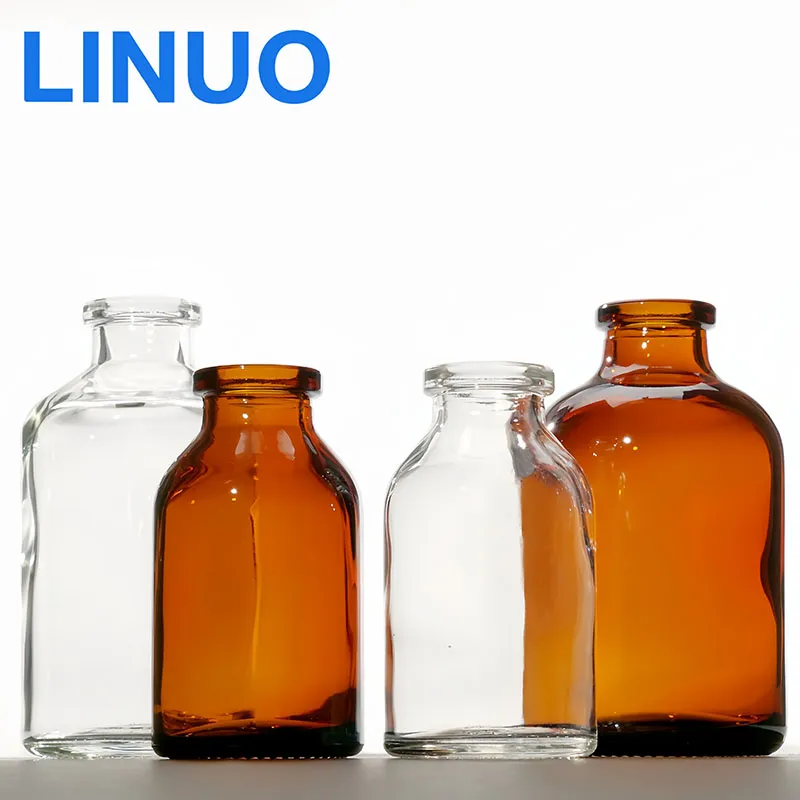
LINUO’s published infusion bottle table includes the following models:
| Model | Nominal capacity | Brimful capacity | Neck finish |
| 50mlA | 50 mL | 65 mL | ISO032 |
| 100mlA | 100 mL | 122 mL | ISO032 |
| 250mlA | 250 mL | 300 mL | ISO032 |
| 500mlA | 500 mL | 585 mL | ISO032 |
| 250mlF | 250 mL | 300 mL | F/26 |
| 250mlB | 250 mL | 300 mL | B/28 |
The model names and neck-finish codes above follow the website’s notation. Current availability, drawings and tolerances should be established for the proposed supply.
The table illustrates two purchasing distinctions. First, nominal capacity and brimful capacity are separate specifications. Second, the same nominal capacity can be associated with different neck finishes.
These differences should be resolved before comparing closure components or ordering qualification samples.
Buyers searching for 100 mL, 250 mL or 500 mL glass infusion bottles should identify both the intended fill volume and the proposed container specification.
Nominal capacity identifies the bottle’s stated size. Brimful capacity describes its capacity when filled to the brim. Neither field should be used on its own to define the pharmaceutical filling operation.
For example, LINUO’s published 500mlA entry lists a nominal capacity of 500 mL and a brimful capacity of 585 mL. The customer’s filling specification remains a separate project requirement.
A capacity review should establish:
Headspace should be defined together with fill volume, formulation, closure configuration and any planned thermal process; it should not be calculated only from the difference between nominal and brimful capacity.
For a second-source project, compare the proposed bottle with the existing approved specification rather than assume that two bottles with the same capacity are equivalent.
Buyers should request the current controlled drawing for bottle height, outer diameter, weight and critical dimensional tolerances. Website summary data should support initial selection but should not replace the approved product specification.
The infusion bottle neck finish connects the glass container with the stopper, cap and sealing equipment.
LINUO’s published 250 mL models include ISO032, F/26 and B/28 designations. Consequently, an inquiry for “250 mL glass IV bottles” needs a model or drawing to identify the intended neck configuration.
Use the full bottle and component drawings when reviewing compatibility.
| Interface | What buyers should review |
| Bottle mouth | Opening dimensions, rim geometry and appearance criteria |
| Neck finish | Profile and tolerances relevant to the closure |
| Stopper | Dimensions and proposed material specification |
| Retaining cap | Fit with the bottle and stopper combination |
| Sealing equipment | Tooling and assembly conditions requiring evaluation |
A neck-finish code is a reference for discussion. It does not replace the dimensional information needed to select the complete closure system.
Standards should be applied to the correct part of the infusion packaging system. ISO 8536-1 addresses the dimensions, performance and functional interchangeability requirements of single-use infusion glass bottles, while ISO 8536-2 addresses closures for infusion bottles. Aluminium caps or aluminium-plastic combination caps should be assessed against the applicable component standard and the selected bottle-and-closure configuration. The relevant edition, dimensional drawing and project-specific acceptance criteria should be confirmed before qualification.
For pharmaceutical infusion bottle sealing, define the complete component configuration before qualification.
The technical review should address three questions:
1. Do the bottle and closure drawings match?
2. What assembly conditions will be used?
3. What evidence is needed to demonstrate sealing performance under the intended conditions?
Agree on the relevant leakage or container-closure integrity evaluation, including the processing, storage and transport conditions that the project requires.
Where applicable, include the intended administration-set interface in the assessment. This should be treated as a requirement for the selected system, rather than a general compatibility claim for every infusion bottle.
Where the closure will be pierced by an infusion-set spike, the evaluation should define the intended spike or administration-set interface and the applicable requirements for penetration, fragmentation, leakage and sealing performance. Compatibility should be demonstrated for the selected bottle, closure, cap and administration-set combination rather than inferred from the neck-finish designation alone.
Also specify whether the quotation covers glass bottles alone or includes separately agreed closure components.
LINUO’s wider molded glass lists Type I, Type II and Type III glass, together with clear and amber options. These portfolio-level options should not be interpreted as confirmation that every infusion bottle model is available in every combination.
For a parenteral IV solution, the selected glass classification must meet the applicable pharmacopoeial requirements and be justified for the formulation, pH, processing conditions and shelf life. Portfolio availability of Type I, Type II or Type III glass does not establish suitability for a specific injectable product.
For an IV solution glass bottle inquiry, state the required glass classification and request confirmation for the proposed model.
The product specification should connect:
Material selection should be assessed against the formulation and manufacturing process. A general application description does not establish suitability for every IV solution.
Product suitability should be supported by an appropriate drug–container compatibility programme. Depending on the formulation and project, this may include hydrolytic-resistance data, relevant elemental or extractables-and-leachables evaluation, particle assessment, closure-material compatibility and stability studies using the intended commercial container-closure system.
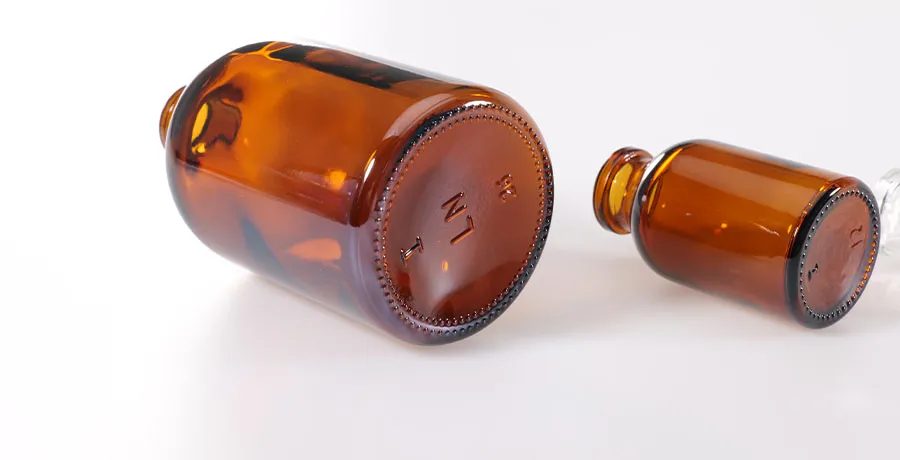
A bottle drawing provides the basis for discussing glass infusion bottle filling requirements with the equipment supplier and production team.
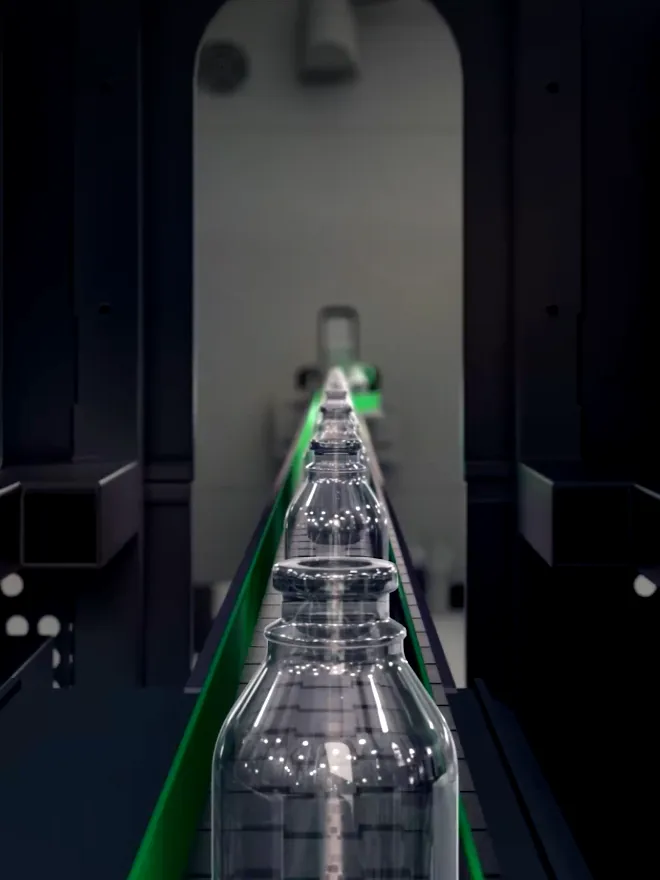
The assessment should cover the operations used by the customer:
| Production stage | Suggested review |
| Infeed and conveying | Bottle height, diameter and handling interfaces |
| Washing and preparation | Container presentation and equipment requirements |
| Filling | Bottle positioning and nozzle arrangement |
| Stoppering | Mouth geometry and selected stopper |
| Capping | Neck finish, cap and tooling |
| Inspection and labelling | Bottle geometry and presentation |
| Secondary packaging | Pack arrangement and handling protection |
These are suggested project checks, not claims that a published bottle model fits all filling machines.
For an existing line, provide the approved container drawing or equipment requirements. For a new installation, coordinate the bottle proposal with the equipment supplier before the specification is finalized.
Use Representative Samples
Sample evaluation should use the intended commercial configuration.
Record the bottle model, drawing revision, glass material, closure components and supplied condition. This creates a clear reference for reviewing results and assessing later changes.
A complete purchasing specification describes the condition in which the empty bottles will arrive and the preparation steps planned at the pharmaceutical manufacturer’s site.
Establish:
Where terminal sterilization is planned, the project review should define the actual sterilization cycle, fill volume, headspace, closure configuration, heating and cooling conditions and the required bottle-performance evidence. Thermal-shock resistance, internal-pressure resistance and closure performance should be assessed for the selected bottle system under the intended process rather than inferred from a general statement about glass thermal stability.
Do not assume that RTU capabilities described for another packaging family apply to molded infusion bottles. Similarly, a general statement about thermal performance should not replace assessment of the actual process.
For a molded glass infusion bottle supplier review, prioritize documents that identify the proposed product and support the agreed acceptance criteria.
LINUO’s CNAS-accredited pharmaceutical glass testing laboratory describes material and chemical analysis, physical and mechanical testing, and dimensional and appearance measurement capabilities. The applicable tests and reports should be discussed for the selected bottle.
A practical qualification package may include:
| Document | Purpose |
| Controlled drawing | Identify the bottle configuration |
| Material specification | Establish the agreed glass material |
| Inspection criteria | Define dimensional and appearance acceptance |
| Relevant test reports | Support technical evaluation |
| Batch-release documents | Record conformity with agreed supply requirements |
| Traceability information | Connect delivered batches with supporting records |
LINUO’s quality and documentation information describes specifications, certificates of analysis, inspection and testing documents, and supplier qualification support, depending on the product and project.
For projects intended for the U.S. market, applicable FDA DMF information should be confirmed against the exact molded infusion bottle model, glass classification, neck finish, manufacturing scope and site under review. Any DMF number should be cited only after confirming that the selected product falls within the subject and scope of the applicable filing. A DMF filing does not constitute FDA approval of the bottle, and any Letter of Authorization or right-of-reference requirement should be handled separately for the customer’s regulatory submission.

A clear inquiry helps align the technical proposal and commercial quotation.
Provide the following information when discussing LINUO’s published infusion bottle models:
Compare quotations against the same specification, supply scope and packaging requirements before comparing unit prices.
Contact LINUO to discuss the proposed bottle configuration and the samples and documents available for your IV packaging project.
What infusion bottle capacities does LINUO publish?
The published infusion bottle table includes 50 mL, 100 mL, 250 mL and 500 mL nominal-capacity models. Confirm the required model and current supply specification during inquiry.
What is the difference between nominal and brimful capacity?
Nominal capacity is the bottle’s stated size, while brimful capacity describes capacity at the brim. The intended pharmaceutical fill volume should be specified separately.
Can bottles with the same capacity use different closures?
Yes. LINUO’s published 250 mL entries have different neck-finish designations. Closure selection should therefore follow the exact bottle drawing.
Are stoppers and caps included?
The quotation should identify the scope of supply. State whether you require empty glass bottles alone or separately agreed closure components.
How can buyers assess filling-line compatibility?
Compare the bottle drawing with equipment requirements and evaluate representative samples using the intended preparation, filling and sealing arrangements.
What information is needed for a quotation?
Provide the capacity, model or drawing, material, neck finish, closure requirements, supplied condition, estimated quantity and delivery needs. Include required testing and quality documents in the initial inquiry.
We will reply to you within 24 hours. If for urgent case, please add WhatsApp/WeChat: +8615953131507, Or call +8618615646416 directly.
*We respect your confidentiality and all information are protected.
We will only use your information to respond to your inquiry and will never send unsolicited emails or promotional messages.