









About Us
If you have any problems during product use,please feel free to contact us


Scroll Down

 November 10, 2026
Before approving RTU glass cartridge Nest & Tub packaging, pharmaceutical filling teams should confirm cartridge dimensions, nest layout, tub geometry, sterile-barrier configuration, plunger compatibility, and filling-line handling requirements.
A cartridge supplied in a pre-sterilized, ready-to-use format is not automatically compatible with every filling system. Differences in cartridge bore, nest pitch, loading orientation, or piston insertion methods can affect equipment integration and qualification.
This guide explains what pharmaceutical manufacturers, CDMOs, and packaging engineers should verify before selecting RTU glass cartridges for aseptic filling.
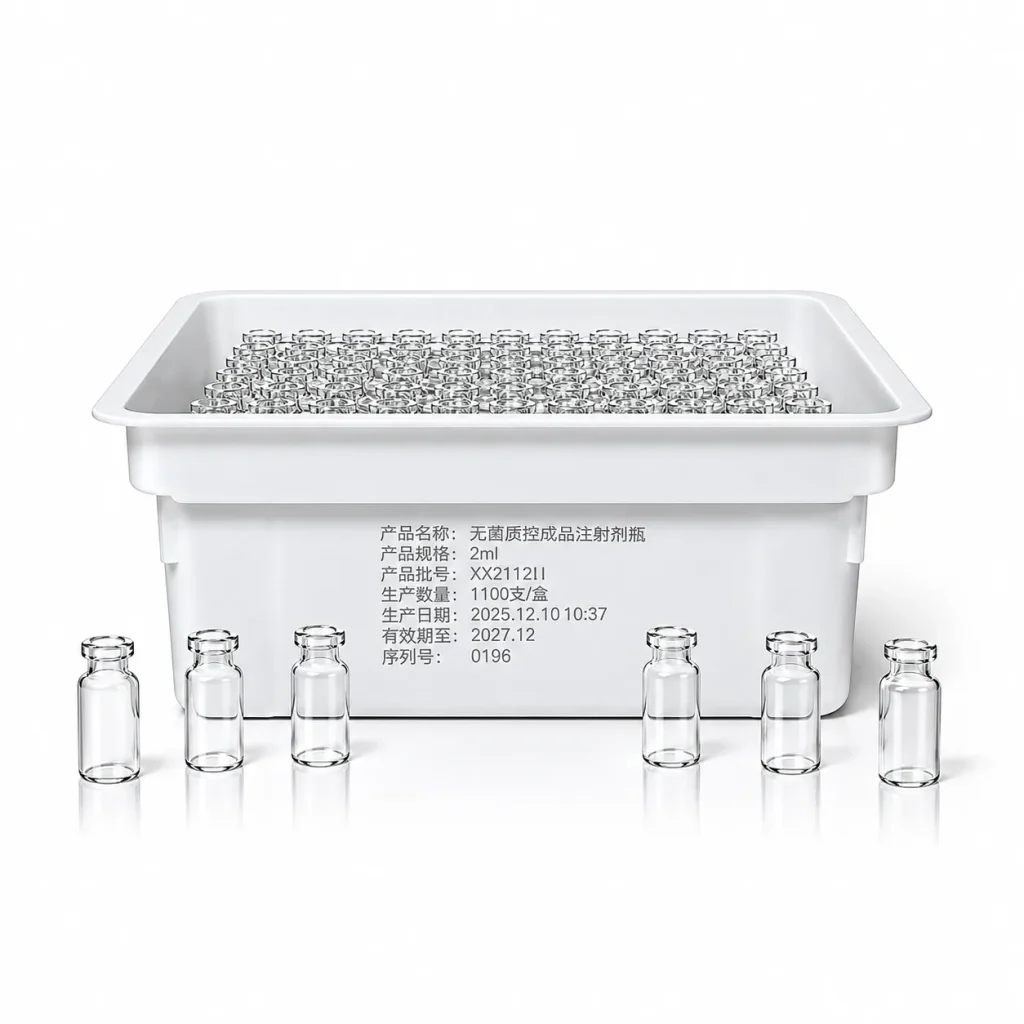
RTU glass cartridges are supplied in a prepared sterile packaging format designed to reduce customer-side washing, depyrogenation, and sterilization steps.
However, filling teams must still evaluate the container, packaging, and closure components as one system.
The initial assessment should cover:
LINUO offers RTU Glass Cartridges in 1 mL, 1.5 mL, 1.8 mL, and 3 mL standard formats, with additional dual-chamber configurations.
Unlike conventional glass vials, cartridges are designed to work with an internal elastomeric piston and a compatible delivery system.
This makes the relationship between the glass bore, surface condition, and plunger particularly important.
| Parameter | What Buyers Should Verify |
| Inside Diameter | Bore dimensions, tolerances, and piston fit |
| Outside Diameter | Equipment handling and positioning |
| Overall Length | Filling and assembly clearances |
| Opening Geometry | Closure and sealing compatibility |
| Surface Treatment | Siliconization requirements |
| Glass Specification | Material classification and technical drawing |
Why Are Bore Dimensions Important?
The inner surface of a cartridge interacts directly with the piston during filling, assembly, and drug administration.
Differences in bore dimensions or surface characteristics may affect piston insertion, break-loose force, glide force, and sealing behavior.
These properties must be assessed using the actual glass cartridge, elastomeric piston, and intended drug formulation.
Buyers should request an approved cartridge drawing and identify all critical dimensions before engineering samples are evaluated.
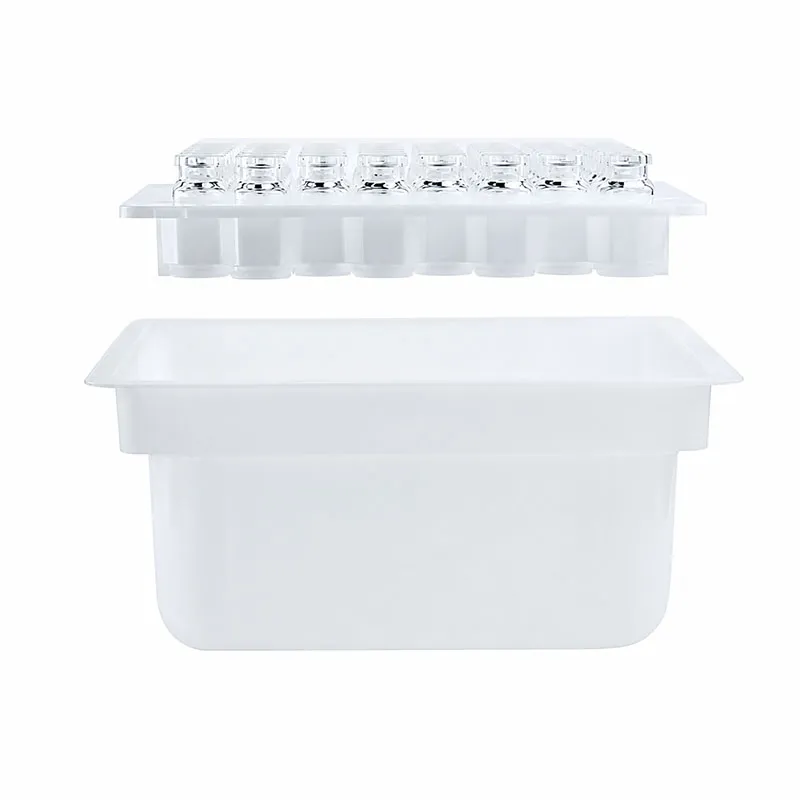
Nest & Tub packaging keeps individual cartridges positioned in separate cavities, helping reduce direct glass-to-glass contact during handling and transportation.
However, the nest and tub must match the intended filling equipment.
| Packaging Parameter | Required Confirmation |
| Nest Pitch | Center-to-center cavity spacing |
| Cavity Arrangement | Number and position of cartridges |
| Nest Dimensions | Overall size and tolerance |
| Tub Dimensions | Length, width, height, and tolerance |
| Cartridge Orientation | Position within each nest cavity |
| Packaging Quantity | Number of cartridges per unit |
| Handling Interface | Nest lifting, transfer, and de-nesting method |
| Sterile Barrier | Lid, bag configuration, and opening method |
LINUO has published a 100-count Nest & Tub configuration for selected 1.5 mL, 1.8 mL, and 3 mL RTU cartridges.
However, buyers should request the applicable engineering drawings rather than assume that packaging dimensions are interchangeable across suppliers.
A standardized Nest & Tub format does not automatically guarantee compatibility with a specific filling machine.
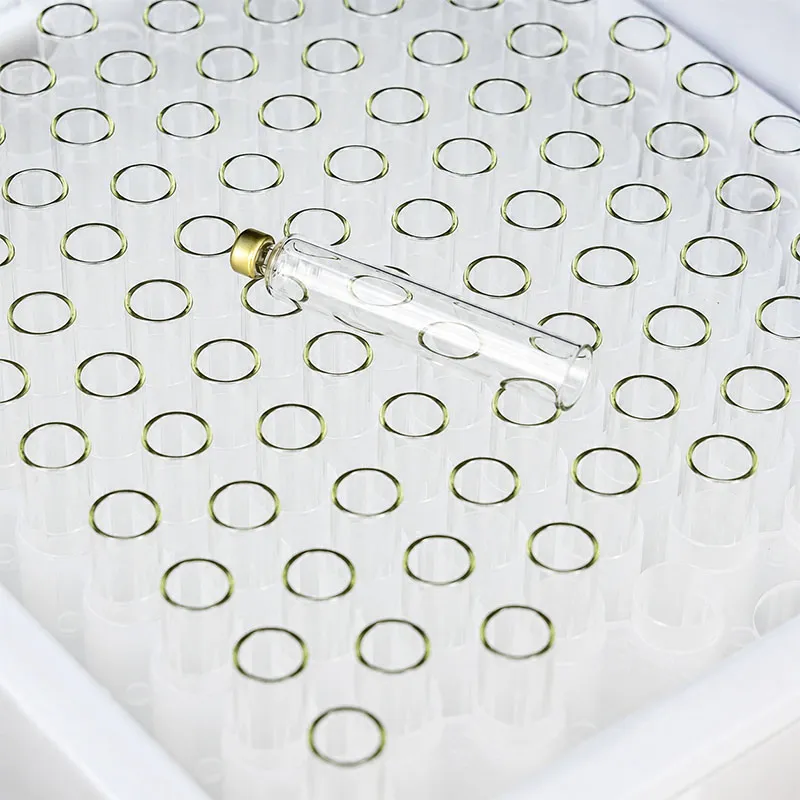
Filling-line compatibility depends on more than whether the tub fits the loading station.
The engineering team must confirm how cartridges move through each production step.
Important questions include:
The cartridge orientation inside the nest may affect filling access, robotic handling, and piston insertion.
If the filling system requires a different orientation or handling method, equipment changes or additional validation may be necessary.
The recommended approach is to evaluate the actual Nest & Tub configuration on the intended filling line before approving commercial supply.
Cartridge performance depends on the combined behavior of the glass body, inner surface, piston, and closure components.
LINUO lists optional siliconization among its RTU cartridge configurations.
Siliconization may influence friction between the cartridge bore and the elastomeric piston, but the required treatment depends on the formulation and delivery-system requirements.
Buyers should verify:
For pharmaceutical projects, piston movement and sealing performance should be assessed under relevant operating conditions.
Availability of individual components does not prove that the final assembled cartridge system has been validated.
For additional container configurations, explore LINUO’s Pharmaceutical Glass Cartridges.
Before supplier approval, packaging engineers and QA teams should review the technical information associated with the specific RTU cartridge configuration.
Recommended Qualification Documents
| Document | Purpose |
| Cartridge Technical Drawing | Confirms dimensions and tolerances |
| Nest & Tub Drawings | Supports equipment compatibility assessment |
| Packaging Material Specification | Identifies packaging and barrier materials |
| Sterilization Information | Supports review of the applicable process |
| Batch Quality Documents | Supports incoming inspection and qualification |
| Surface-Treatment Specification | Confirms siliconization requirements, where applicable |
| Closure Component Information | Supports piston and cap compatibility checks |
LINUO’s published RTU cartridge process includes double Tyvek sterile-barrier packaging and terminal EO sterilization. The documentation and release status for the selected product should be confirmed during supplier qualification.
Recommended Filling-Line Trial
A practical engineering trial should include five steps:
Engineering trials establish useful compatibility information, but do not replace the pharmaceutical manufacturer’s aseptic process validation or finished-product qualification.
To evaluate an RTU glass cartridge project efficiently, buyers should provide the following information.
| Inquiry Item | Information Required |
| Cartridge Size | Required capacity and drawing |
| Filling Equipment | Manufacturer, model, and handling configuration |
| Nest & Tub Requirements | Preferred layout, packaging quantity, and interface |
| Filling Process | In-nest filling or de-nesting requirements |
| Piston and Closure | Material and component specifications |
| Surface Treatment | Siliconization requirements |
| Project Quantity | Sample, clinical, or commercial demand |
| Documentation | Technical drawings and qualification requirements |
We supplies standard and dual-chamber RTU glass cartridge options supported by its pharmaceutical glass manufacturing and quality-control operations.
What dimensions are needed to evaluate RTU glass cartridge Nest & Tub compatibility?
Buyers should verify cartridge dimensions, nest pitch, cavity layout, tub dimensions, tolerances, orientation, and the equipment handling interface.
Can RTU glass cartridges be filled directly on any automated filling line?
Not automatically. Compatibility depends on the actual cartridge, Nest & Tub configuration, equipment model, filling process, and closure assembly requirements.
Does LINUO offer siliconized RTU glass cartridges?
LINUO lists optional siliconization for RTU glass cartridges. The applicable configuration and technical requirements should be confirmed for the selected product.
Are LINUO RTU glass cartridges supplied pre-sterilized?
LINUO identifies terminal EO sterilization and double Tyvek barrier packaging in its published RTU cartridge process. Buyers should request the relevant documentation for their specific supply configuration.
What should be checked before approving a commercial order?
Confirm the approved drawings, Nest & Tub configuration, filling-line trial results, closure components, sterile presentation, quality documents, and project-specific qualification requirements.
Selecting the right RTU glass cartridge requires coordinated evaluation of the container, packaging, filling equipment, and closure system.
LINUO offers RTU glass cartridges for pharmaceutical filling applications, with standard sizes, Nest & Tub packaging, and configurable product options.
If your team is preparing a new aseptic filling project or evaluating an additional cartridge supplier, share your cartridge specifications, filling-machine information, and packaging requirements with LINUO.
We will reply to you within 24 hours. If for urgent case, please add WhatsApp/WeChat: +8615953131507, Or call +8618615646416 directly.
*We respect your confidentiality and all information are protected.
We will only use your information to respond to your inquiry and will never send unsolicited emails or promotional messages.