









About Us
If you have any problems during product use,please feel free to contact us


Scroll Down

 November 04, 2026
Selecting 1.8 mL dental anesthetic glass cartridges starts with capacity, but the purchasing decision depends on how the container works with its closures, filling equipment and intended dental syringe.
For pharmaceutical manufacturers and packaging buyers, three questions guide the selection: Does the glass body match the required dimensions? Does the proposed closure and plunger configuration meet the project’s sealing requirements? Does the assembled cartridge function with the intended syringe?
A 1.8 mL capacity designation alone does not establish dimensional interchangeability, sealing performance or syringe compatibility.
LINUO’s pharmaceutical glass cartridge range includes 1.5 mL, 1.8 mL and 3 mL formats made from USP Type I neutral borosilicate glass, with dental local anesthesia among the listed applications. The appropriate configuration should be selected against the project specification.
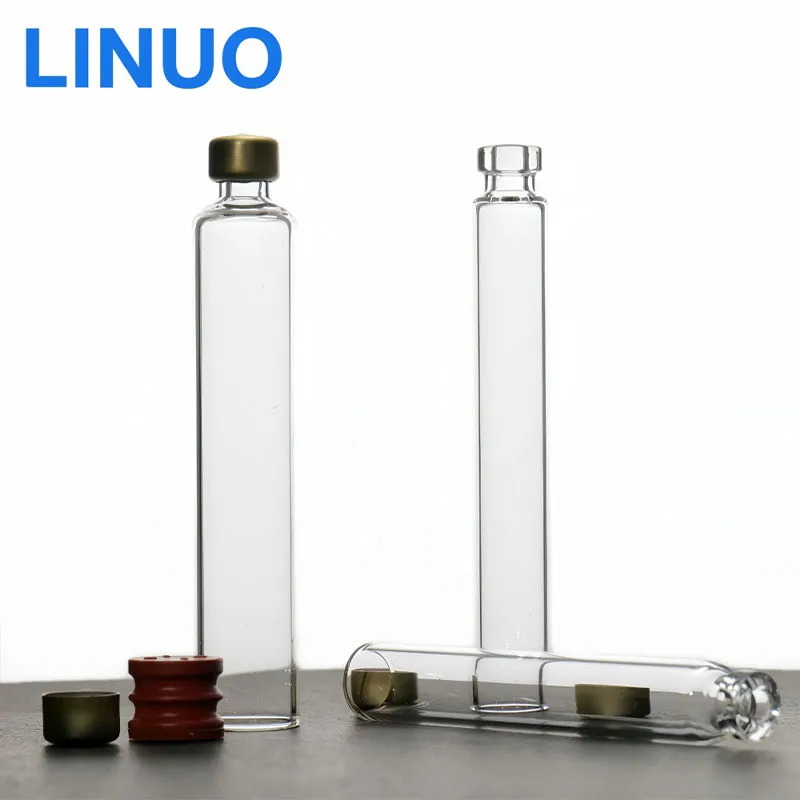
A useful dental glass cartridge supplier inquiry identifies both the container and the scope of supply.
Specify whether the project requires the glass body alone, separately agreed components, or a particular RTU presentation. Do not assume that a glass cartridge quotation includes the diaphragm, retaining cap and rear plunger.
| Purchasing requirement | Detail to define |
| Application | Dental local anesthetic packaging |
| Capacity | Required 1.8 mL format and intended filling specification |
| Glass body | Material, drawing and dimensional tolerances |
| Components | Proposed front closure and rear plunger |
| Syringe | Intended model or interface requirements |
| Presentation | Standard or RTU supply |
| Evaluation | Samples, documentation and acceptance criteria |
Defining these items early helps suppliers prepare comparable technical proposals and quotations.
For buyers searching for 1.8 mL dental cartridge dimensions, the most useful document is the controlled drawing for the exact product being quoted.
The drawing should support a review of every relevant interface: glass-to-closure, glass-to-plunger, cartridge-to-equipment and cartridge-to-syringe.
| Dimensional feature | What buyers should evaluate |
| Overall length | Fit with the intended syringe and processing equipment |
| Outer diameter | Relationship with cartridge holders and the syringe chamber |
| Inner diameter | Fit with the proposed plunger |
| Mouth and neck geometry | Match with the front closure and assembly tooling |
| Wall thickness | Agreed product specification and inspection criteria |
| Tolerances | Acceptable variation in the dimensions critical to the project |
LINUO’s Standard Precision glass cartridge information describes customization support for inner and outer diameters and other specification requirements. Buyers should discuss these options using their intended container and equipment requirements.
For second-source evaluation, compare the proposed drawing with the existing approved specification. Identify differences before ordering qualification samples rather than treating matching capacity as evidence of equivalence.

Sealing evaluation should connect the glass body with the selected front closure and rear plunger.
A glass mouth designed to support stable crimping still needs assessment with the actual closure components and assembly process. Similarly, plunger performance should be evaluated inside the selected cartridge body.
Front Closure and Diaphragm
For the proposed front closure, establish:
The purchasing specification should identify the agreed components clearly enough to avoid substitutions being treated as equivalent without review.
Rear Plunger
For the rear plunger, focus on fit, movement and sealing within the proposed glass cartridge.
The qualification plan should define the applicable break-loose or starting force, sustained plunger movement or glide-force requirements, movement continuity and leakage acceptance criteria, using an agreed test method for the assembled cartridge.
Closure compatibility is a property of the selected configuration. It should not be inferred from the glass capacity or a general product description.
Inner-Surface Treatment and Plunger Movement
LINUO describes baked-on siliconization for its Standard Precision cartridges to support a smoother inner surface and gliding-force control. Its product information also identifies thermal laser cutting as a process intended to help reduce debris risk.
For a dental anesthetic cartridge project, connect the proposed surface treatment to the selected plunger and processing conditions.
The sample evaluation should address:
Any numerical force requirement should be agreed together with its test method. General statements about smooth movement do not replace project-specific performance criteria.
Sealing performance should be evaluated on the assembled cartridge rather than inferred from the glass body, front seal or plunger stopper alone. The assessment should reflect the selected formulation, filling and crimping process, intended processing conditions, transport, storage and shelf-life requirements. Acceptance criteria and test methods should be agreed for the specific container-closure system.
Compatibility should be assessed with the intended dental cartridge syringe. Provide the syringe model, technical interface requirements or available device information when discussing cartridge selection.
Organize the assessment around the following functions:
| Compatibility area | Evaluation focus |
| Loading and retention | Correct seating and retention of the cartridge |
| Front interface | Relationship between the cartridge closure and intended needle arrangement |
| Plunger engagement | Interaction with the syringe mechanism |
| Movement | Operation using the selected glass and plunger configuration |
| Aspiration, where applicable | Function with the intended syringe and plunger |
This approach is more useful than asking whether a cartridge fits “all dental syringes.”
Standards should be applied to the correct part of the system. ISO 11040-1 addresses glass cylinders for dental local anaesthetic cartridges, while ISO 11040-2 and ISO 11040-3 address the corresponding plunger stoppers and seals. ISO 9997 applies to dental cartridge syringes, and ISO 11499 addresses performance requirements for the completed single-use dental local anaesthetic cartridge. The applicable edition and project-specific acceptance criteria should be confirmed before qualification.
ISO 11499:2014 addresses single-use cartridges for dental local anesthetics, including the 1.8 mL nominal capacity. Its scope includes leakage, plunger movement, extractable volume, underfilling and overall dimensions relevant to syringe fit. Buyers can use these subjects when developing their qualification requirements; this does not establish product-specific LINUO compliance with the standard.
Supply presentation affects the customer’s preparation and handling arrangements.
LINUO’s published RTU glass cartridge information identifies Nest & Tub as the standard packaging format. Availability of an RTU 1.8 mL dental cartridge should nevertheless be confirmed for the exact cartridge specification, component configuration, filling line and project requirements.
| Selection point | Standard presentation | RTU presentation |
| Supplied condition | Define receipt condition and customer preparation steps | Define the agreed processing and release condition |
| Handling | Match packing to preparation and filling operations | Match packaging to unpacking, transfer and filling |
| Equipment review | Include preparation, filling and assembly | Include presentation-specific transfer and filling interfaces |
| Documents | Agree product and batch-release records | Agree additional applicable RTU documentation |
When reviewing RTU glass cartridge options, identify which operations are covered by the supplier and which remain within the customer’s process.
RTU selection should remain connected to the same dimensional, component and syringe evaluation used for the dental cartridge project.
RTU delivery does not determine whether the filled drug product will be aseptically processed or terminally sterilized. The drug manufacturer should separately define the filling and sterilization strategy and evaluate its effect on the glass cartridge, front seal, plunger stopper, siliconization, sealing performance and drug–container compatibility.
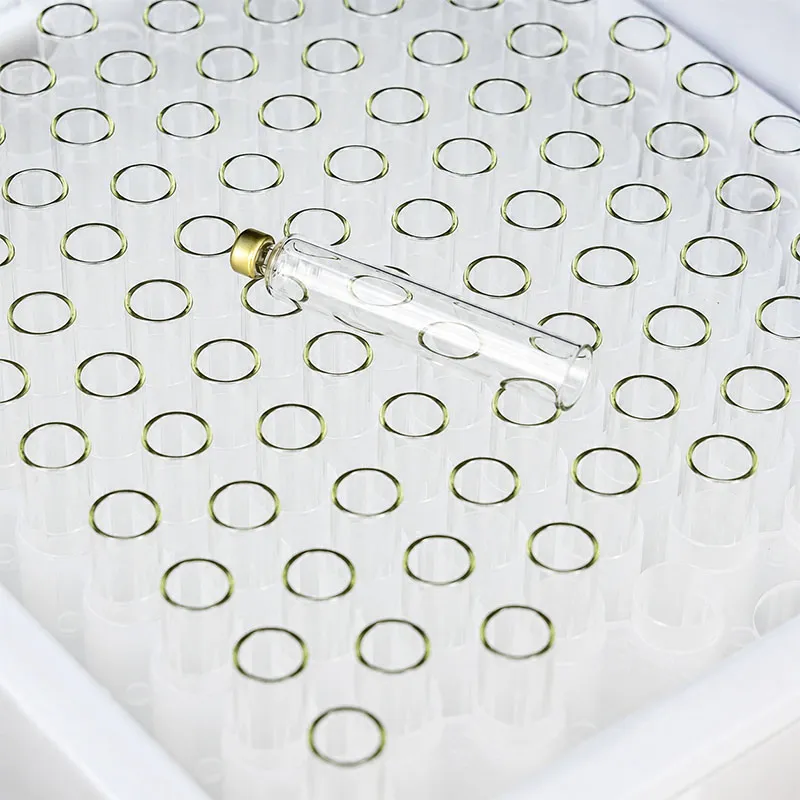
A practical qualification package should identify the product being purchased and the evidence supporting its agreed specification.
LINUO’s quality and documentation information describes support that may include specifications, certificates of analysis, inspection and testing records, MES-based traceability and supplier qualification assistance, depending on the product and project.
Prioritize the documents needed for your decision:
Any regulatory filing requirements should be discussed for the selected product and target market.
To obtain a useful quotation, send the cartridge drawing or dimensional requirements together with the intended syringe information and proposed closure and plunger configuration.
Include the required supply presentation, sample quantity, estimated purchasing volume, documentation needs and delivery timeline. Compare quotations against the same technical scope before comparing unit prices.
Contact LINUO to discuss the available 1.8 mL glass cartridge configuration and the samples and information needed for your evaluation.
Does LINUO offer 1.8 mL glass cartridges for dental anesthetic packaging?
LINUO lists 1.8 mL glass cartridges and identifies dental local anesthesia among its applications. The proposed specification and supply presentation should be established for the individual project.
Are all 1.8 mL dental cartridges interchangeable?
Capacity alone does not establish interchangeability. Compare dimensions, tolerances, closure components, plunger configuration and intended syringe requirements.
Which dimensions should buyers review?
Review overall length, inner and outer diameters, mouth geometry, wall thickness and critical tolerances using the confirmed product drawing.
Does a glass cartridge quotation include the diaphragm, cap and plunger?
The scope of supply must be specified in the quotation. Identify whether the requirement covers the glass body alone or an agreed component configuration.
Can buyers request RTU 1.8 mL dental cartridges?
LINUO describes RTU cartridge options. Availability, packaging, supplied condition and supporting documents should be confirmed for the required 1.8 mL dental configuration.
We will reply to you within 24 hours. If for urgent case, please add WhatsApp/WeChat: +8615953131507, Or call +8618615646416 directly.
*We respect your confidentiality and all information are protected.
We will only use your information to respond to your inquiry and will never send unsolicited emails or promotional messages.