








Sobre nosotros
Si tiene algún problema durante el uso del producto, no dude en ponerse en contacto con nosotros



Desplácese hacia abajo

 August 24, 2026
 Un envase de vidrio farmacéutico puede cumplir con sus especificaciones dimensionales y aun así presentar riesgos relacionados con partículas de vidrio, el rendimiento de la superficie interior, el sellado, el estrés térmico o la compatibilidad con el medicamento. Si estos riesgos no se evalúan como parte del sistema de envasado completo, pueden afectar al llenado, el almacenamiento, la entrega y la cualificación del proyecto.
Pharmaceutical glass quality control should cover glass particles, delamination, hydrolytic resistance, dimensional accuracy, container closure integrity, thermal shock, drug compatibility, transport protection and batch traceability. Buyers should verify these risks through specifications, inspection records, testing documents and project-specific qualification.
Pharmaceutical packaging quality risks do not come from the glass container alone. The final system may include a glass vial or cartridge, rubber stopper, cap, piston, surface treatment, sterile barrier and secondary packaging.
These components must also work with the drug formulation, filling equipment, sterilization process, storage conditions and delivery device. A vial that meets its individual dimensional specification may still require further evaluation when combined with a particular stopper or capping process. A cartridge must match its piston, cap and pen or pump system.
Procurement and quality teams should therefore evaluate three connected areas:
Supplier inspection can support packaging qualification, but it does not replace the pharmaceutical manufacturer’s compatibility studies, process validation or final drug-product release.
Glass particles may be associated with glass forming, cutting, opening, handling or glass-to-glass contact. The relevant risk depends on the packaging format and the way it is manufactured and used.
For ampoules, the opening system and breaking-force control are important because the container is opened before administration. LINUO offers OPC one-point-cut and CBR color-break-ring ampoules with controlled breaking options and online appearance and dimensional inspection.
For cartridges, LINUO uses thermal laser-cutting technology designed to reduce risks related to jagged edges, glass micro-flakes and inner debris. The company also applies online dimensional and visual inspection to applicable cartridge lines.
For vials and RTU packaging, handling and packing configuration must also be considered. Nest & Tub and Tray formats can reduce direct glass-to-glass contact for applicable RTU products.
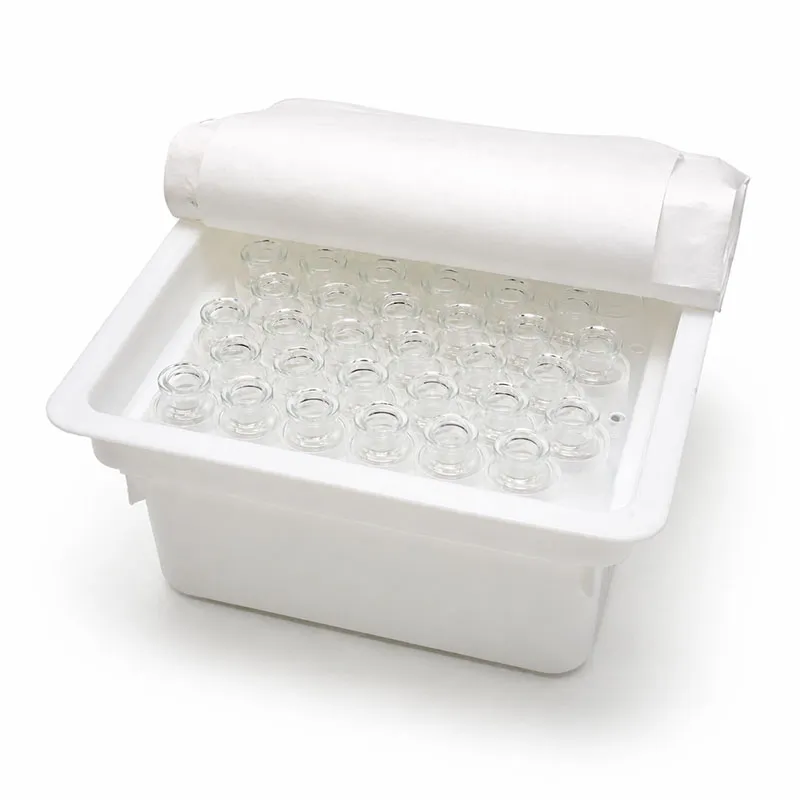
A pharmaceutical glass container should not be described as universally particle-free without defined test methods and acceptance criteria.” Inspection and process controls can reduce risk, but acceptance requirements must be defined and verified for the selected product.
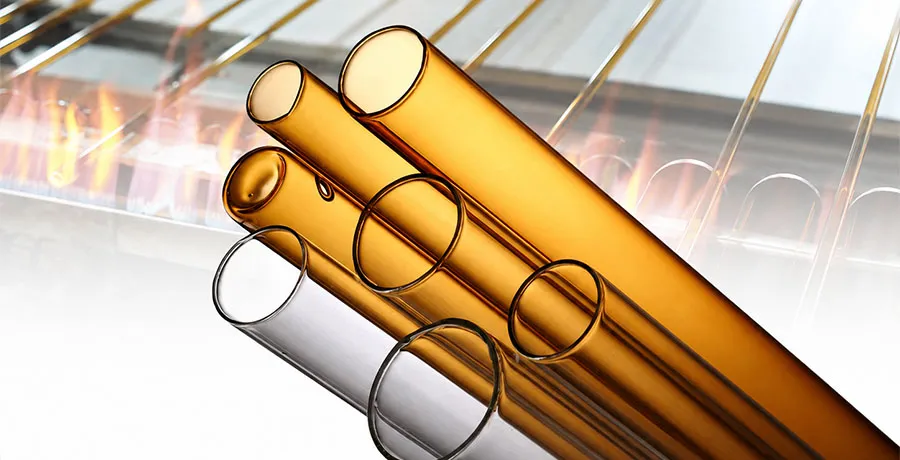
Glass delamination refers to the separation of thin flakes from the inner glass surface. It must be distinguished from particles introduced during forming, cutting, handling or opening.
The risk cannot be assessed from glass type alone. The drug formulation, pH, storage conditions, contact time, glass composition, inner-surface condition and any applied treatment may all be relevant to the final evaluation.
de LINUO Type I borosilicate packaging provides high hydrolytic resistance and chemical durability. LINUO’s cartridge manufacturing information identifies thermal laser-cutting as a method used to reduce risks associated with cutting-related glass micro-flakes, jagged edges and inner debris. This process control should be distinguished from formulation-dependent inner-surface delamination risk.
However, the use of Type I glass or a specific manufacturing method does not prove that delamination cannot occur in every formulation.
Procurement and quality teams should:
LINUO can provide relevant material and product information to support customer evaluation. The final delamination assessment must be based on the customer’s formulation and complete container-closure system.
Hydrolytic resistance describes the resistance of glass to the release of soluble components when it comes into contact with water under defined test conditions. It is an important consideration for pharmaceutical glass containers, particularly for injectable formulations.
LINUO identifies Type I neutral borosilicate glass as offering high hydrolytic resistance, chemical durability, low alkali release and good thermal stability. Its vial, ampoule and cartridge portfolios include Type I borosilicate glass options.The applicable glass composition, hydrolytic-resistance classification and test documentation should be confirmed for the specific product rather than applied automatically across the entire portfolio.
LINUO’s molded pharmaceutical glass portfolio also includes different glass classifications. The availability of Type I, Type II and Type III glass does not mean that every classification is suitable for every injectable drug.
Glass selection should be based on:
The applicable pharmacopoeial requirements and documentation must be confirmed for the selected product and target market.
Dimensional consistency affects more than whether a container fits into a carton. Critical dimensions can influence filling-line handling, stoppering, capping, sealing and assembly with drug-delivery devices.
For glass vials, relevant characteristics may include height, diameter, wall thickness, neck finish and mouth geometry. For cartridges, inside diameter, outside diameter, length and mouth geometry are particularly important because the container must work with the piston, cap and delivery device.
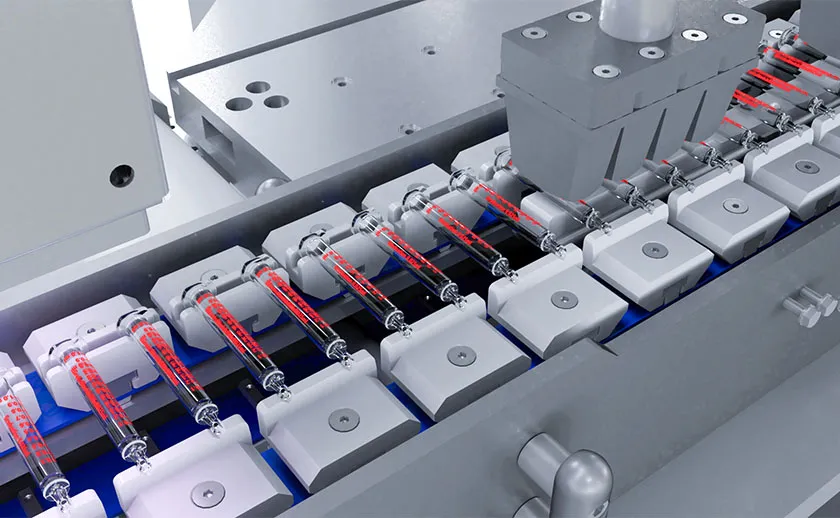
LINUO controls dimensional tolerance through forming equipment, defined product specifications, in-process monitoring and final inspection. Depending on the product line, automated, camera, CCD or AI-based inspection systems are used to evaluate relevant dimensions and appearance.
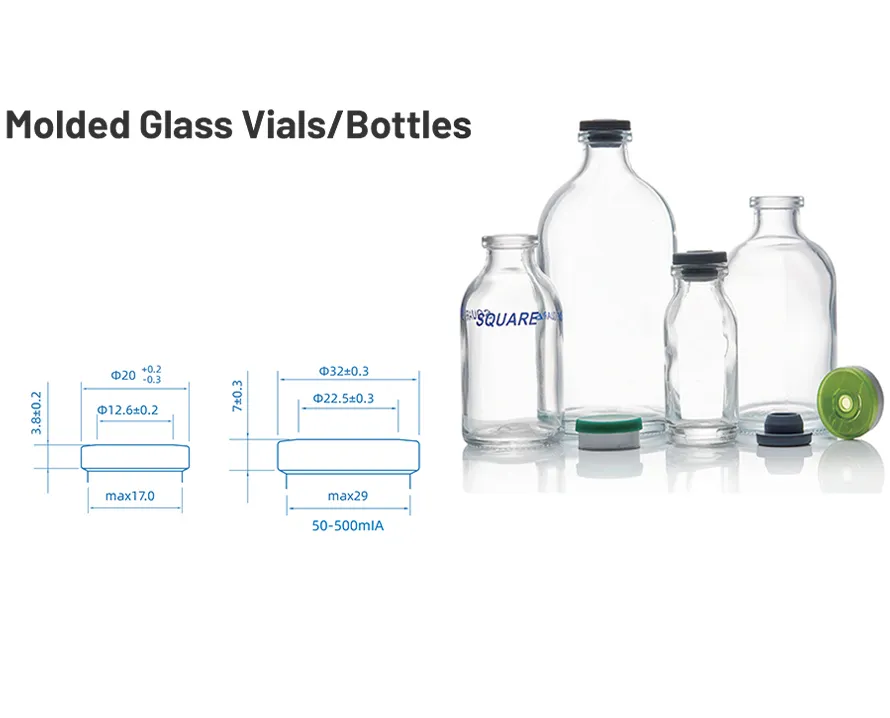
“Compliant with standard dimensions” should not be treated as proof of compatibility with every filling line, closure component or injection device.
The glass container and closure components form one packaging system. Sealing performance cannot be determined from the vial or cartridge alone.
A stoppered vial must be evaluated together with its rubber stopper, cap, neck finish, capping parameters and sterilization process. A cartridge must be evaluated with its piston, plunger, cap, seal and delivery device.
LINUO supplies pharmaceutical rubber stoppers and caps alongside its glass packaging portfolio. It also provides dimensional inspection and relevant physical or mechanical testing support. This allows customers to discuss container and closure requirements within the same project.
However, the availability of matching components does not automatically demonstrate container-closure integrity for a finished drug product.
Buyers should request component specifications and applicable test documents, then complete project-specific system qualification and validation.
Pharmaceutical glass may experience temperature changes during washing, sterilization, lyophilization, filling, storage or handling. If the container and process are not properly matched, thermal stress may contribute to cracking or breakage.
Thermal requirements vary by product. A vial intended for a lyophilization cycle may require different evaluation from an ampoule used for a liquid injection. Molded and tubular containers should not be treated as interchangeable simply because both can be used for pharmaceutical packaging.
de LINUO CNAS-accredited laboratory includes equipment for physical and mechanical testing, including thermal shock, internal pressure and stress evaluation. Laboratory testing can support product assessment, but the applicable method and acceptance criteria must be confirmed for each product and project.
A general thermal-shock test result does not replace validation under the pharmaceutical manufacturer’s actual process conditions.
A container that is suitable for one formulation may not be suitable for another. Compatibility depends on the interaction between the drug, glass, closure components, surface treatments and storage conditions.
For sensitive products such as biologics and peptides, customers may need to consider the complete product-contact interface. If siliconization or another surface treatment is used, that treatment changes the interface between the drug and packaging and must be included in the final assessment.
Relevant considerations may include:
LINUO can provide material and product information to support extractables and leachables assessments and discussions of formulation-related risks. The final evaluation must be completed according to the customer’s formulation, component combination and regulatory strategy.
Supplier certificates provide important supporting evidence, but they may not establish project-specific suitability on their own. Final qualification should also consider the drug formulation, component combination, filling process and applicable regulatory requirements.It requires product-specific data, customer testing and documented qualification of the complete packaging system.
Pharmaceutical glass can be damaged during packing, palletizing, transport, warehouse handling or loading onto a filling line. Breakage risks may be influenced by container design, glass-to-glass contact, protective packaging and logistics configuration.
LINUO manages breakage risk through material control, process stability, dimensional inspection and product-specific packaging. Applicable RTU Nest & Tub and Tray formats are designed to reduce direct contact between glass containers. Automated packing, palletizing and warehouse management also support controlled handling.
These measures can reduce risk, but they do not justify a “zero breakage” guarantee.
When a quality concern occurs, pharmaceutical buyers need to identify the affected batch and review its material, production, inspection, packaging and shipment information.
LINUO uses MES-based traceability and warehouse management to support batch-quality records. Depending on the product and process, traceable information may include raw material batches, production parameters, inspection results, packaging records, finished-product information and shipment data.
Laser coding and other identification options are available on selected product lines to support product identification and batch traceability.
Quality teams should confirm what information is recorded, how it is linked to the finished batch, how long it is retained and what documents can be provided to customers.
A statement that a supplier “uses MES” is not sufficient on its own. The buyer should understand the actual scope of the traceability system for the selected product.
Supplier selection should be based on verifiable documentation rather than broad claims such as “high quality,” “fully compliant” or “zero defects.”
Depending on the product and project, LINUO can support relevant documentation such as product specifications, Certificates of Analysis, compliance statements, material information, batch records, inspection reports and testing documents.
Its CNAS-accredited laboratory supports pharmaceutical glass testing and quality evaluation in areas including material analysis, chemical analysis, dimensional measurement, appearance inspection, and physical and mechanical testing. The applicable CNAS accreditation scope, test method and product coverage should be confirmed for the project.
| Quality risk | Buyer should confirm | Possible supporting evidence |
| Glass particles | Forming, cutting, opening and handling controls | Inspection standard, process information, particle-related test documents |
| Glass delamination | Glass, surface, formulation and storage risk | Material information, testing data, compatibility support |
| Resistencia hidrolítica | Correct glass classification | Product specification, CoA, applicable test report |
| Dimensional variation | Critical dimensions and tolerances | Approved drawing, dimensional inspection record |
| Sealing integrity | Complete container-closure system | Component specifications, dimensional data, project validation |
| Thermal shock | Suitability for the intended process | Thermal shock, stress or applicable performance records |
| Drug compatibility | Formulation-specific interaction risks | Material data, E&L support information, customer compatibility studies |
| Transport breakage | Protective packaging and handling | Packaging specification, logistics or packaging qualification documents |
| Batch consistency | Process and release controls | Batch record, inspection report, CoA |
| Trazabilidad | Connection between material and finished batch | MES records, coding information, shipment record |
Standard product specifications may not cover every requirement of a particular formulation, filling line or delivery device.
LINUO can work with customers to align product specifications, inspection requirements, documentation, packaging configurations and release standards where feasible. It can also support supplier qualification with company information, manufacturing capability details, product documents, quality records and audit cooperation.
Before qualification, customers should define:
Customer audits can be arranged for qualified projects according to the project stage, business needs, quality requirements and confidentiality arrangements.
Pharmaceutical glass packaging risks should be evaluated through product specifications, manufacturing controls, inspection records, testing data and project-specific qualification. Glass particles, delamination, hydrolytic resistance, dimensional variation, sealing integrity, thermal shock, drug compatibility, transport protection and batch traceability require different forms of evidence.
LINUO can support customers with product information, material data, inspection documents, relevant testing and project-specific quality alignment. These supplier controls support packaging evaluation but do not replace the pharmaceutical manufacturer’s compatibility studies, process validation or finished-drug release responsibilities.
Pharmaceutical procurement and quality teams can submit their product specifications, formulation category, filling process, closure or device information, testing requirements and target market for technical review.
No packaging material should be described as eliminating delamination risk for every drug. Type I borosilicate glass provides high hydrolytic resistance and chemical durability, but the final risk assessment must consider the formulation, inner surface, storage conditions and contact time.
Automated inspection can evaluate defined dimensional and visual characteristics, depending on the product line. It does not replace chemical, mechanical, compatibility or complete container-closure system testing.
LINUO can provide relevant material and product information to support customer assessment. Final extractables and leachables evaluation must be based on the customer’s formulation, packaging components and regulatory requirements.
LINUO uses controlled production processes, in-process inspection, final inspection, batch records, MES-based traceability and release procedures. The exact controls and documents should be confirmed for the selected product.
No. CNAS accreditation applies to a defined laboratory scope. The accreditation status, test method and product coverage relevant to a specific project should be confirmed before relying on a report.
Protective packaging, non-contact handling, stable container dimensions and controlled logistics can reduce breakage risk, but no transport system should be presented as providing a universal zero-breakage guarantee.
Le responderemos en un plazo de 24 horas. Si se trata de un caso urgente, añada WhatsApp/WeChat: +8618615646416 o llame directamente al +8618615646416.
*Respetamos su confidencialidad y toda la información está protegida.
Solo utilizaremos su información para responder a su consulta y nunca enviaremos correos electrónicos no solicitados ni mensajes promocionales.