








Sobre nosotros
Si tiene algún problema durante el uso del producto, no dude en ponerse en contacto con nosotros



Desplácese hacia abajo

 September 09, 2026
 RTU glass vials are often selected because they arrive in a prepared sterile format for aseptic filling. For pharmaceutical manufacturers, CDMOs and fill-finish facilities, this can reduce customer-side preparation steps before production. However, an RTU vial should never be evaluated as a standalone glass container.
Before a sterile vial enters the filling line, the project team must confirm how the vial will work with the rubber stopper, aluminum cap or plastic-aluminum cap, crimping process, sterile transfer route and final storage conditions. In injectable drug packaging, the final performance depends on the complete container closure system, not only on the vial itself.
de LINUO Viales de vidrio RTU are supplied washing-free, depyrogenation-free and pre-sterilized. The available size range includes 2R, 4R, 6R, 8R, 10R, 15R, 20R, 25R, 30R and 50R, with Nest & Tub and Tray formats designed for aseptic filling-line integration. LINUO also provides pharmaceutical rubber stoppers, plastic-aluminum flip-off caps, aluminum caps and related vial closure accessories for injection vial packaging projects.
This article explains what pharmaceutical buyers should confirm before combining RTU glass vials with stoppers and caps in an aseptic filling project.
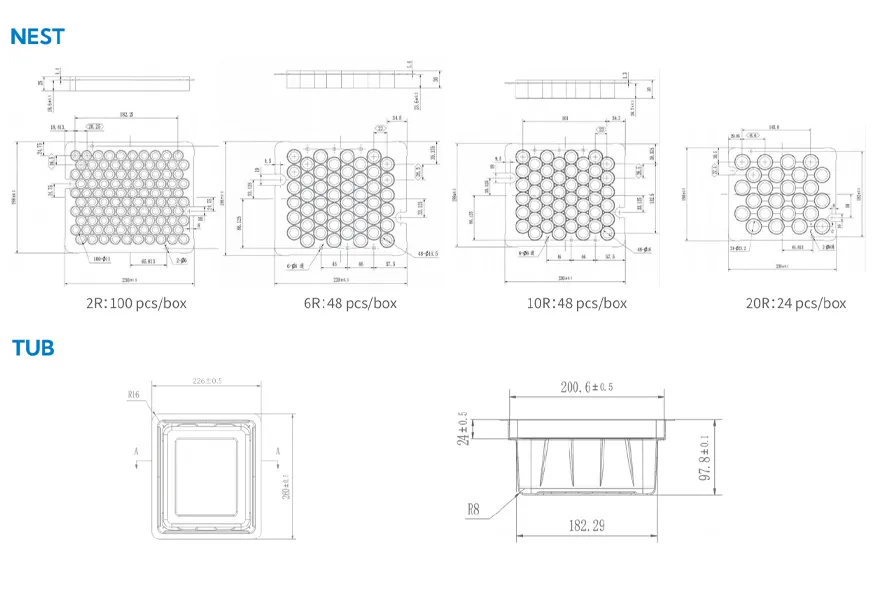
The main value of RTU glass vials is that they can enter the filling workflow in a ready-to-use format. LINUO’s RTU vial information states that its RTU sterile vials support direct loading into sterile production workflows and are compatible with mainstream automated filling machinery.
But after the vial enters the line, it must still be filled, stoppered, capped or crimped, inspected and released according to the customer’s process. If the vial, stopper and cap are not properly matched, the project may face sealing variation, stoppering instability, crimping defects, line adjustment issues or additional validation work.
This is why closure compatibility should be reviewed before the filling project starts, not after commercial production has already been planned.
For RTU glass vial projects, compatibility should begin with the customer’s filling workflow.
The buyer should confirm:
This approach is more practical than checking the vial, stopper and cap separately. Even if each component meets its own specification, the full system still needs to work together under the customer’s real process.
The vial neck finish is one of the first details to confirm. It affects stopper fit, cap matching and crimping performance.
For RTU glass vials, the project team should check:
If the neck finish does not match the selected stopper and cap, the project may experience inconsistent stopper placement, unstable closure appearance or capping process issues. The problem may not appear during document review, but it can become obvious during filling-line trials.
Therefore, dimensional matching should be confirmed at the project stage, especially when the customer uses existing filling, stoppering or crimping equipment.
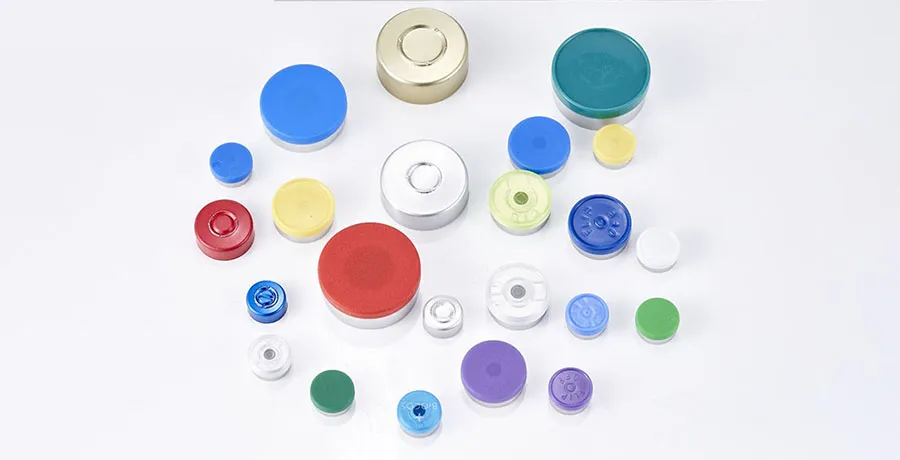
The rubber stopper is not only a plug for the vial. It is part of the drug-contact and sealing system.
LINUO’s rubber stopper and cap page lists rubber stopper options including 13mm, 20mm, 28mm and 32mm. It also states that bromobutyl and chlorobutyl rubber materials are available to support chemical stability and compatibility requirements for pharmaceutical packaging projects.
For RTU vial projects, buyers should confirm:
For sensitive injectable drugs, the stopper should be evaluated together with the formulation, storage condition and final closure design. A stopper that fits dimensionally may still need formulation-specific compatibility review.
The cap completes the outer closure system after stoppering. It helps secure the closure and supports product identification, tamper evidence and handling convenience.
LINUO provides plastic-aluminum flip-off caps and aluminum caps. Its product page describes plastic-alu caps as using an aluminum alloy and plastic structure with a flip-off design to support secure closure and user-side opening convenience.
For cap matching, the buyer should review:
LINUO’s cap technical information lists aluminum caps under ISO 8362-2 and provides Φ13mm and Φ20mm cap dimensions, while noting that color, inner diameter and inner height can be customized according to customer requirements.
The key point is simple: cap selection should not be left until the end of the project. It should be confirmed together with the vial, stopper and capping process.
RTU glass vials are not handled like loose bulk vials. The packaging format affects how the containers are transferred, loaded, filled and moved before stoppering and capping.
LINUO’s RTU vial page describes standardized RTU Nest & Tub and RTU Tray formats for filling-line integration. It also lists Tyvek double breathing bags, reinforced cartons and non-contact handling as part of the RTU vial packaging design.The RTU tray vial page further describes ready-to-use tray format, non-contact handling, Tyvek double breathing bags and ETO terminal sterilization with controlled process monitoring.
For closure planning, this means the buyer should confirm:
The RTU format can reduce preparation work, but it still needs to match the customer’s filling and closure process.

Compatibility Review Checklist Before RTU Vials Enter the Filling Line
| Project Item | What to Confirm |
| RTU Format | Nest & Tub or Tray, vial size, sterile packaging format, and filling-line interface |
| Vial Dimensions | Neck finish, mouth dimension, height, diameter, tolerance, and approved drawing |
| Rubber Stopper | Size, material, stopper fit, formulation contact, and stoppering process |
| Cap | Cap type, inner diameter, inner height, flip-off design, and crimping requirement |
| Filling Line | Vial presentation, automated handling, stoppering sequence, and equipment compatibility |
| Sterile Transfer | Tyvek components, double sterile bags, unpacking method, and cleanroom transfer route |
| Capping / Crimping | Equipment settings, closure appearance, crimping stability, and final closure requirements |
| Documentation | Product specifications, material information, batch inspection records, and applicable quality documents |
| Project Validation | Filling-line trial, closure-system confirmation, and final customer-side qualification |
A common mistake is assuming that standard-sized vials, stoppers and caps will automatically work together. In practice, the final combination depends on the actual vial neck, stopper dimensions, cap structure, capping parameters, filling equipment and formulation requirements.
LINUO’s quality-risk article also makes this point clear: sealing performance cannot be determined from the vial alone, and a stoppered vial should be evaluated together with the rubber stopper, cap, neck finish, capping parameters and sterilization process. It also notes that the availability of matching components does not automatically demonstrate container-closure integrity for a finished drug product.
For this reason, RTU vial projects should include project-specific compatibility review before routine production.
LINUO’s product portfolio includes RTU glass vials, standard glass vials, pharmaceutical rubber stoppers, plastic-aluminum caps and aluminum caps. The rubber stopper and cap page states that standard stopper and cap sizes support vial packaging from 1ml to 30ml, helping buyers match different glass vial and pharmaceutical bottle formats.
For RTU glass vial projects, LINUO can support discussions around:
However, final compatibility should always be confirmed according to the customer’s formulation, filling process, closure system, equipment and regulatory requirements.
RTU glass vials can support aseptic filling projects by reducing customer-side preparation steps before production. But the vial itself is only one part of the final injectable packaging system.
For pharmaceutical manufacturers, the key question is not only whether the vial is ready to use. The more important question is whether the vial, rubber stopper, aluminum cap, crimping process, sterile packaging format and filling workflow can work together under the real project conditions.
Before using RTU glass vials in an aseptic filling project, buyers should confirm vial neck finish, stopper fit, cap matching, capping process, sterile transfer route, filling-line compatibility and required project documents. When these factors are reviewed together, the RTU vial system can better support controlled aseptic filling, stable closure performance and reliable injectable drug packaging.
A container closure system for RTU glass vials includes the glass vial, rubber stopper, cap, vial neck finish, capping or crimping process, sterile packaging and related handling conditions.
Because the final sealing performance depends on the combined system. The vial, stopper, cap, crimping process and filling workflow must be reviewed together.
Yes. LINUO provides pharmaceutical rubber stoppers, plastic-aluminum flip-off caps, aluminum caps and related vial closure accessories for injection vial packaging projects.
LINUO states that its RTU sterile vials are compatible with mainstream automated filling machinery and support direct loading into sterile production workflows. Final line compatibility should still be confirmed for each project.
No. Standard size matching does not automatically prove compatibility for a finished drug product. The final container closure system should be confirmed according to the formulation, process and project requirements.

Le responderemos en un plazo de 24 horas. Si se trata de un caso urgente, añada WhatsApp/WeChat: +8618615646416 o llame directamente al +8618615646416.
*Respetamos su confidencialidad y toda la información está protegida.
Solo utilizaremos su información para responder a su consulta y nunca enviaremos correos electrónicos no solicitados ni mensajes promocionales.